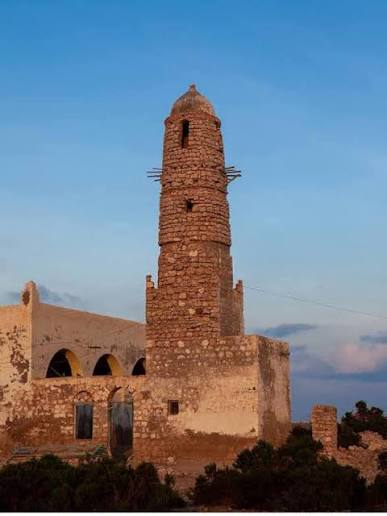
Bandar Jazeera is associated with the rich archaeological landscape of Somaliland's northern coast, a region shaped for centuries by maritime trade, pastoralism, Islam, and interaction across the Gulf of Aden. The coastal settlements of this region formed part of wider commercial networks connecting the Horn of Africa with Arabia, the Red Sea, and the Indian Ocean.
The phrase “Medieval Ruins” reflects the importance of Somaliland's coastal archaeological remains, although the identification and chronology of a specific site called Bandar Jazeera should be treated cautiously. Ancient and medieval place names in the Horn of Africa are difficult to match precisely with modern names, and archaeological interpretation often depends on pottery, inscriptions, architecture, and historical geography rather than a single written source.
Nevertheless, the archaeological landscape represented by Bandar Jazeera provides an opportunity to examine how coastal communities participated in the medieval Islamic world.
Somaliland and the Medieval Indian Ocean
The Gulf of Aden was one of the most important maritime corridors in the medieval world.
It connected:
the Horn of Africa;
Yemen;
the Red Sea;
Arabia;
Persia;
India;
and eventually Southeast Asia.
Ships carried goods across these waters using seasonal wind systems.
Somaliland's coastline therefore occupied a strategically important position.
Coastal Settlements
Medieval coastal settlements could serve several functions simultaneously.
They could operate as:
fishing communities;
trading ports;
caravan connections;
religious centers;
and political settlements.
A settlement did not have to be a massive city to participate in international commerce.
Small ports could provide ships with:
fresh water;
food;
shelter;
repair facilities;
and opportunities to exchange goods.
The Archaeological Importance of Pottery
Ceramics are among the most valuable archaeological indicators of medieval trade.
Fragments of imported pottery can reveal connections with distant regions.
Researchers examine:
clay composition;
glaze;
decoration;
manufacturing techniques;
and vessel shapes.
A single imported ceramic tradition can sometimes demonstrate contact with a region hundreds or thousands of kilometers away.
Islamic Influence
Islam became deeply established along the Somali coast through centuries of contact with Muslim merchants and communities.
Mosques and Islamic burial traditions became important features of coastal settlements.
Islam also influenced:
legal traditions;
literacy;
architecture;
personal names;
and commercial practices.
The Inland Connection
Coastal trade depended heavily on inland communities.
Merchants could obtain products from pastoralists and agricultural populations and transport them toward the coast.
Important regional products historically included:
livestock;
hides;
aromatic resins;
ivory;
and other natural resources.
In return, inland communities could receive:
textiles;
ceramics;
metal objects;
beads;
and other imported goods.
Caravan and Maritime Networks
The coast and interior formed a connected economic system.
Goods arriving by ship could travel inland by caravan.
Conversely, products from inland regions could reach coastal ports.
This meant that even communities far from the sea could participate indirectly in Indian Ocean commerce.
Architecture and Ruins
Medieval ruins can preserve:
foundations;
walls;
mosques;
tombs;
storage structures;
and domestic buildings.
The remains may be modest compared with monumental cities elsewhere, but they are extremely valuable because they reveal everyday life.
Environmental Challenges
The preservation of archaeological sites in Somaliland is affected by:
wind erosion;
temperature extremes;
coastal erosion;
development;
and looting.
The dry climate can preserve some materials exceptionally well while simultaneously accelerating the deterioration of exposed structures.
Why Bandar Jazeera Matters
The archaeological landscape associated with Bandar Jazeera illustrates the importance of the Somaliland coast within medieval maritime networks.
It provides a framework for understanding:
Islamic expansion;
coastal trade;
inland-caravan connections;
and cultural interaction across the Gulf of Aden.
Conclusion
Bandar Jazeera represents the broader medieval heritage of Somaliland's coast, where maritime and overland networks connected African communities with the wider Islamic and Indian Ocean worlds.
Its significance lies not simply in surviving ruins, but in what those ruins reveal about the movement of people, goods, ideas, and religious traditions across the Horn of Africa.