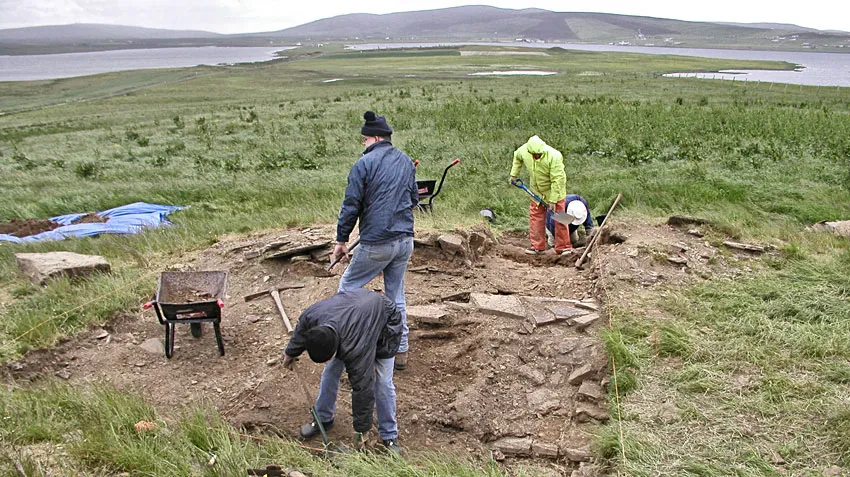
The Bookan Chambered Cairn is a prehistoric funerary monument on Mainland Orkney associated with the island's remarkable Neolithic chambered-tomb tradition.
Its internal organization and relationship to other Orkney monuments make it important for understanding how prehistoric communities designed burial spaces and maintained relationships with the dead.
Chambered Tombs
Chambered cairns were among the most important monuments built by Neolithic communities.
They combined:
stone architecture;
burial;
ritual;
and landscape symbolism.
The Tripartite Arrangement
The description “tripartite tomb” refers to the division of the internal monument into multiple spaces.
Such divisions could create different ritual zones.
The architecture controlled how people moved through the tomb.
Passage and Chamber
A typical chambered cairn could contain:
an entrance;
a passage;
and internal chambers.
The movement from the exterior into the interior may have had symbolic significance.
Collective Burial
These monuments often received multiple individuals.
The tomb could therefore serve as a communal ancestral space.
Rather than representing one person's final resting place, it may have represented a group's relationship with its predecessors.
The Importance of Ancestors
Ancestors could provide communities with a sense of:
identity;
continuity;
belonging;
and connection to the land.
A monumental tomb created a permanent physical reminder of those relationships.
Construction
The builders used local stone.
Large slabs had to be:
quarried;
transported;
positioned;
and stabilized.
The construction process required coordinated labor.
The Orkney Tomb Tradition
Bookan belongs to a much larger family of prehistoric monuments across Orkney.
Other important examples include:
Maeshowe;
Unstan;
Cuween Hill;
Quoyness;
Taversoe Tuick;
and Knowe of Yarso.
Pottery and Artifacts
Archaeological material from chambered cairns can include:
pottery;
stone tools;
animal remains;
and human remains.
These artifacts help researchers reconstruct how monuments were used.
Landscape Position
Orkney's tombs were frequently placed in prominent landscapes.
A monument could be visible from:
settlements;
fields;
coastlines;
and neighboring monuments.
This visibility may have reinforced its role as a territorial or ancestral landmark.
Ritual Activities
Possible activities included:
burial ceremonies;
offerings;
feasting;
and visits to ancestral remains.
The archaeological evidence does not preserve the spoken words, songs, or beliefs that accompanied these activities.
Why Bookan Matters
Bookan contributes to our understanding of:
Neolithic funerary architecture;
collective burial;
ritual movement;
social identity;
and landscape organization.
Conclusion
Bookan Chambered Cairn demonstrates how Neolithic communities used architecture to structure relationships with death and ancestry.
Its divided internal spaces were not simply practical burial chambers.
They formed part of a broader ceremonial system in which architecture, human remains, community identity, and the surrounding Orkney landscape were closely connected.