Dining blends with underwater cultural discovery at New Taipei museum
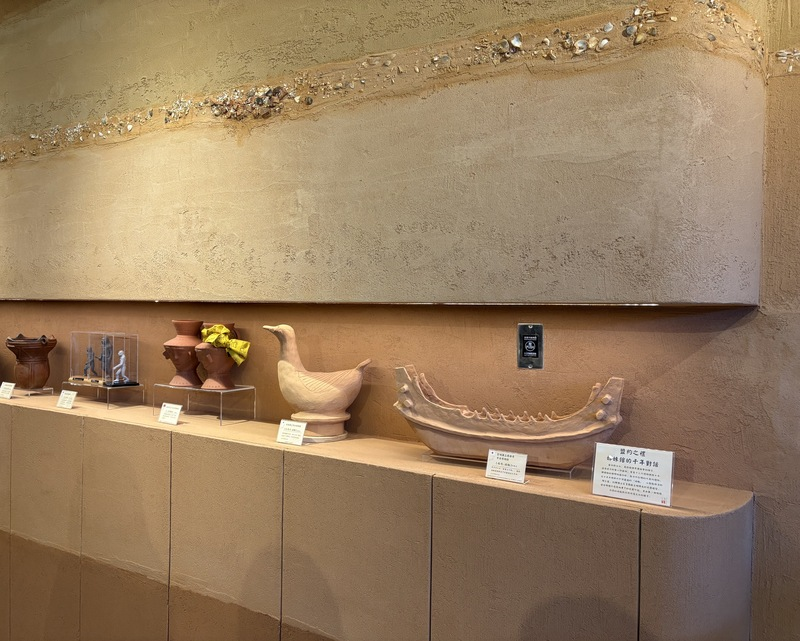
Items on display inside 13 Cafe.
TAIPEI (Taiwan News) — Food and history come together at New Taipei’s Shihsanhang Museum of Archaeology, where a newly launched cafe guides visitors from dining into Taiwan’s seafaring past.
The 13 Cafe opened on Wednesday alongside the museum’s refreshed permanent exhibition focused on underwater archaeology. According to the New Taipei City Government, the cafe integrates food service with exhibition elements, creating a seamless shift from eating to exploring the museum.
Guests pass from the cafe into exhibition halls displaying shipwreck relics and prehistoric fossils that highlight links between Taiwan’s maritime heritage and cultural development. As visitors enter the cafe, they are met with large walls designed to resemble archaeological layers, finished with locally sourced natural coatings applied by hand to mimic layers of soil and clay, CNA reported.
Displayed within the space are replica souvenirs from partner museums in Japan and South Korea, including boat-shaped haniwa figures and ceramic vessels with human faces. The menu itself is also archaeology-inspired, with dishes subtly reflecting themes of excavation, history, and locality.
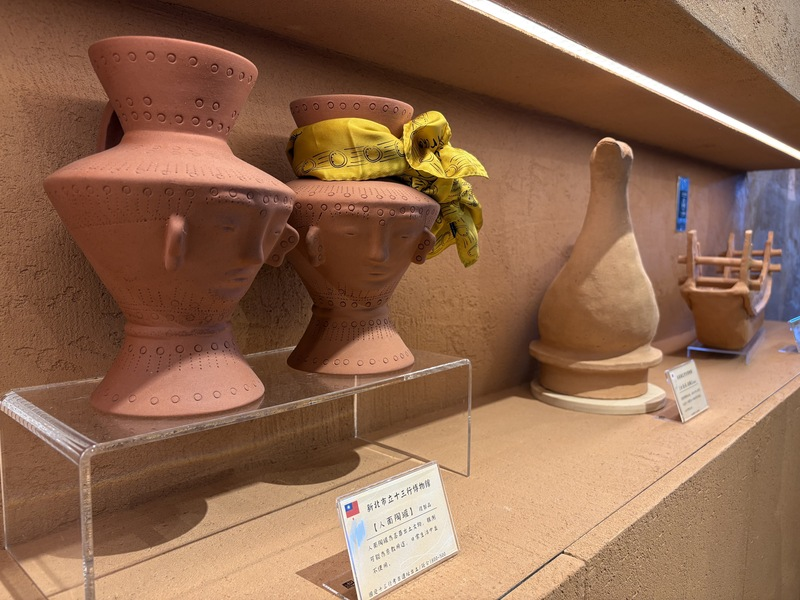
Human-faced ceramic vessel replicas displayed in 13 Cafe.
Just nearby, the exhibition shifts the focus from flavor to visuals, showcasing rare relics from the Bokhara shipwreck. The British luxury vessel SS Bokhara went down near Penghu during a typhoon on Oct. 10, 1892, killing 125 of the 173 people aboard, Capitan Creative reports.
While shipwrecks are the most well-known examples of underwater cultural heritage, they are only one part of a much broader narrative. These sites also encompass submerged inland settlements, structures lost due to land subsidence or rising sea levels, and other traces of the past, according to the Investigation Bureau.
Enhancing the immersive atmosphere is a remarkably preserved prehistoric water buffalo skull from the museum’s collection. Visual elements throughout the gallery are designed to make visitors feel as though they are beneath the ocean’s surface.
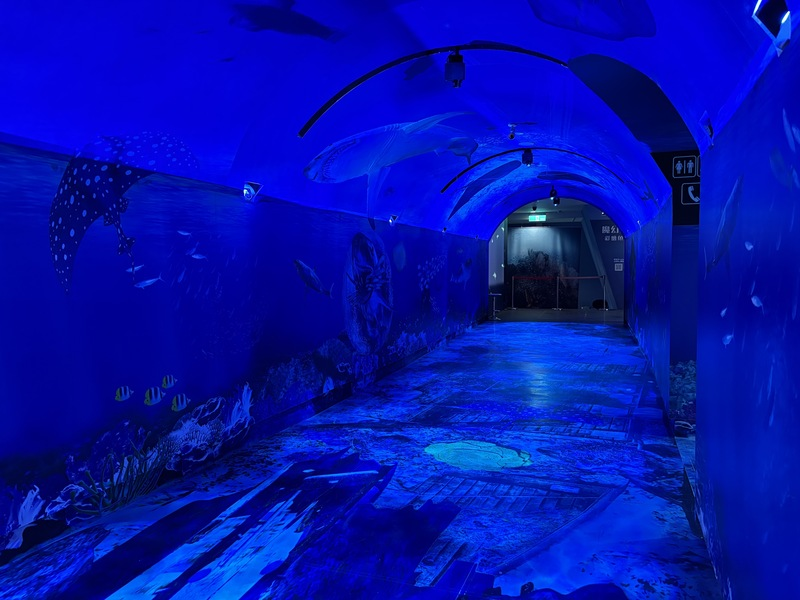
Underwater projection at Shihsanhang Museum of Archaeology's permanent exhibition.
Encircled by the ocean and abundant in marine resources, Taiwan has historically depended on the sea for livelihoods such as fishing, tourism, and maritime trade, giving rise to a wide range of cultural characteristics. Its position at the intersection of key land and sea routes further encouraged interaction and exchange between Eastern and Western societies.
Today, technological advancements enable researchers to uncover and protect these concealed heritage sites, addressing past obstacles like technical constraints and destruction caused by trawling activities.