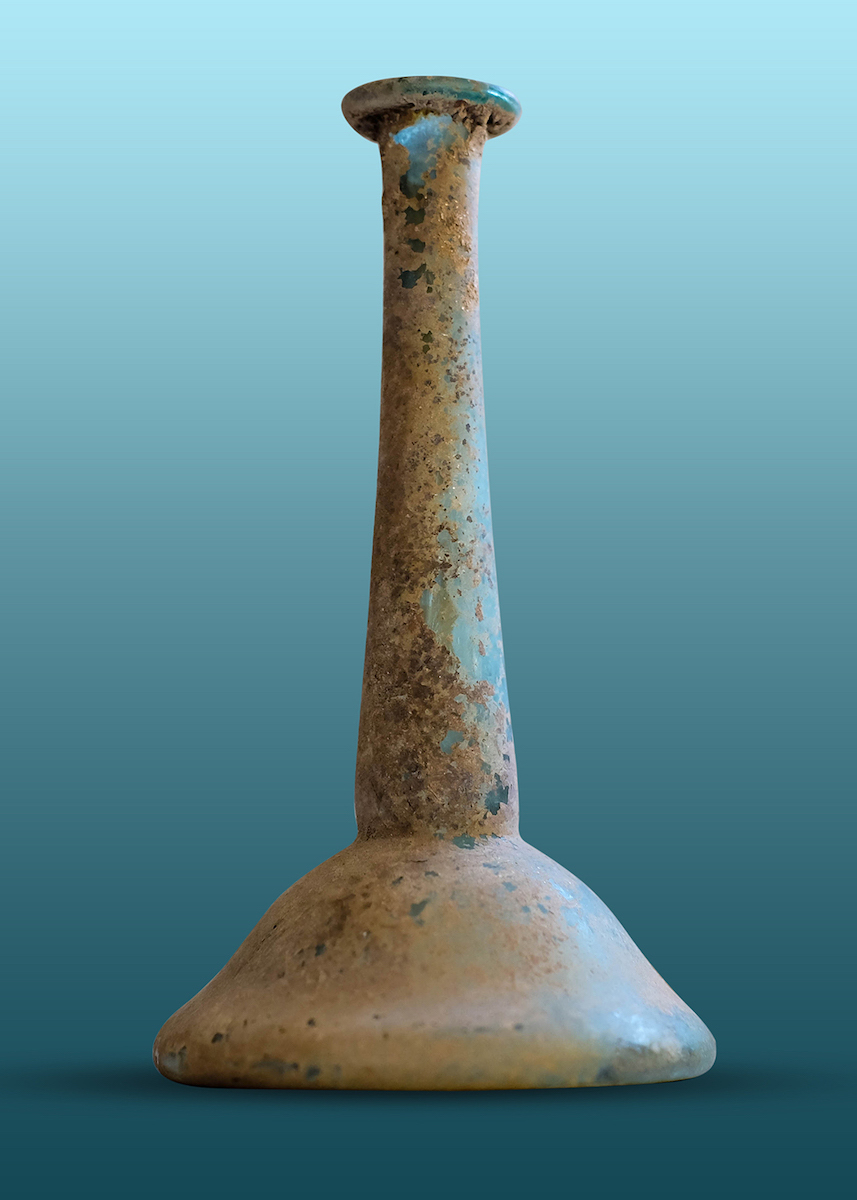
SIVAS, TURKEY — Researchers have uncovered remarkable evidence of Roman medical practices through chemical analysis of residues in glass vials from Pergamon, western Turkey. A team comprising archaeologist Cenker Atila (Sivas Cumhuriyet University), chemist İlker Demirbolat (Istanbul Kent University), and medical historian Rana Babaç Çelebi (Istanbul Medipol University) studied the contents of these Roman containers using gas chromatography-mass spectrometry.
Out of several vials, conclusive results came from a sealed unguentarium found in a tomb in ancient Pergamon, once home to the famous second-century A.D. physician Galen. The analysis identified two organic compounds, coprostanol and 24-ethylcoprostanol, which are produced in the digestive tracts of animals that metabolize cholesterol. The ratio of these compounds indicated that the material was human feces.
Interestingly, the substance was mixed with thyme, likely to mask its strong odor. “Because we are well-acquainted with ancient textual sources, we immediately recognized this as a medicinal preparation used by the famous Roman physician Galen,” explained Atila.
Medicinal recipes containing feces were historically believed to treat inflammation, infections, and reproductive disorders. To make them more tolerable, herbs, wine, or vinegar were added. The findings suggest that Galen’s written prescriptions were grounded in actual medical practice, reflecting a combination of empirical knowledge and traditional remedies.
This study provides a rare chemical confirmation of historical texts, offering direct insight into ancient Roman pharmacology and therapeutic methods.