• MAIN PAGE
  • LATEST NEWS
    • Lost Cities
    • Archaeology's Greatest Finds
    • Underwater Discoveries
    • Greatest Inventions
    • Studies
    • Blog
  • PHILOSOPHY
  • HISTORY
  • RELIGIONS
    • Africa
    • Anatolia
    • Arabian Peninsula
    • Balkan Region
    • China - East Asia
    • Europe
    • Eurasian Steppe
    • Levant
    • Mesopotamia
    • Oceania - SE Asia
    • Pre-Columbian Civilizations of America
    • Iranian Plateau - Central Asia
    • Indus Valley - South Asia
    • Japan
    • The Archaeologist Editor Group
    • Scientific Studies
    • Aegean Prehistory
    • Historical Period
    • Byzantine Middle Ages
    • Predynastic Period
    • Dynastic Period
    • Greco-Roman Egypt
  • Rome
  • PALEONTOLOGY
  • About us
Menu

The Archaeologist

  • MAIN PAGE
  • LATEST NEWS
  • DISCOVERIES
    • Lost Cities
    • Archaeology's Greatest Finds
    • Underwater Discoveries
    • Greatest Inventions
    • Studies
    • Blog
  • PHILOSOPHY
  • HISTORY
  • RELIGIONS
  • World Civilizations
    • Africa
    • Anatolia
    • Arabian Peninsula
    • Balkan Region
    • China - East Asia
    • Europe
    • Eurasian Steppe
    • Levant
    • Mesopotamia
    • Oceania - SE Asia
    • Pre-Columbian Civilizations of America
    • Iranian Plateau - Central Asia
    • Indus Valley - South Asia
    • Japan
    • The Archaeologist Editor Group
    • Scientific Studies
  • GREECE
    • Aegean Prehistory
    • Historical Period
    • Byzantine Middle Ages
  • Egypt
    • Predynastic Period
    • Dynastic Period
    • Greco-Roman Egypt
  • Rome
  • PALEONTOLOGY
  • About us

Medieval Burial Found in Croatian Bronze Age Burial Mound

February 3, 2026

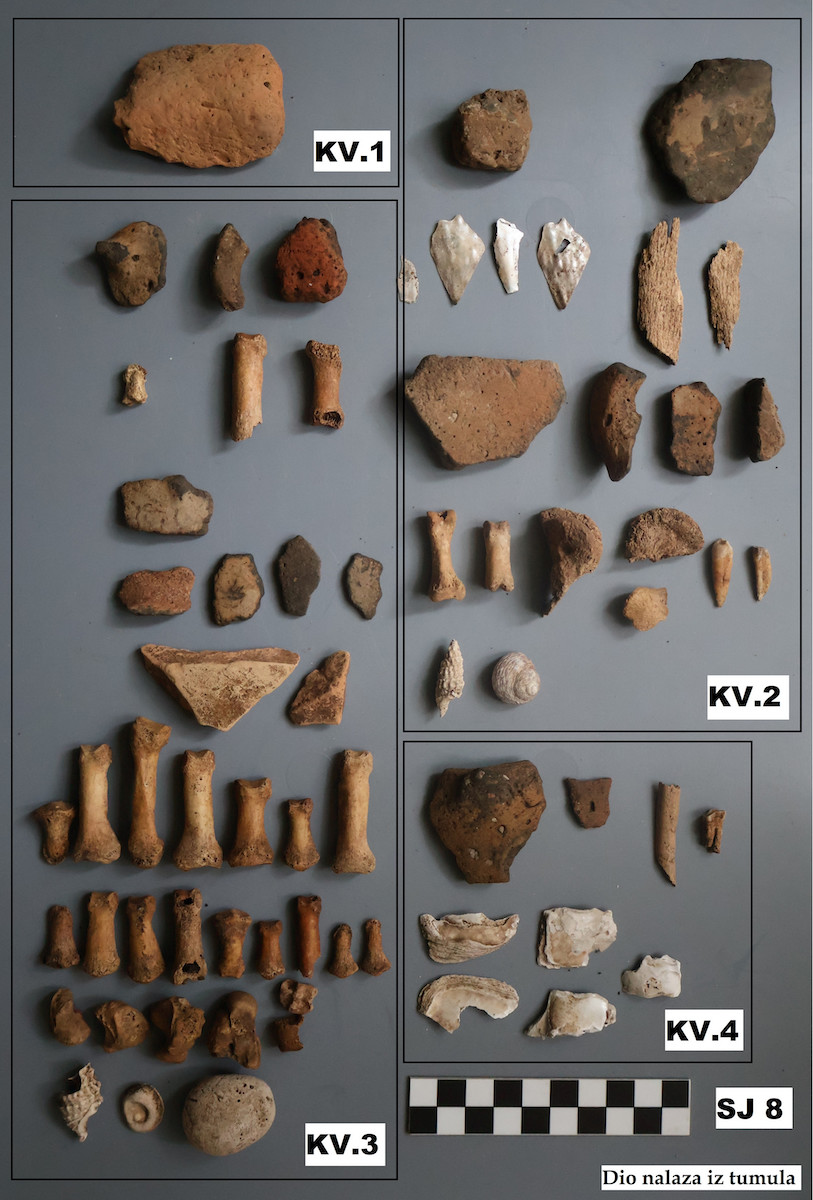
PULA, CROATIA — Researchers from Juraj Dobrila University of Pula have conducted excavations at Vrh Kosir, a Bronze Age burial mound located on Veli Brijunin Island within Brijuni National Park. While the tumulus dates back over 3,000 years, the team also discovered a secondary burial that has been radiocarbon dated to the first half of the 14th century.

In addition to the medieval interment, archaeologists recovered a human jaw, numerous bone fragments, and more than 50 teeth from multiple individuals on the opposite side of the mound. These findings highlight the mound’s long-term use as a burial site spanning several millennia.

The excavation provides valuable insight into both Bronze Age and medieval funerary practices in the region, revealing how burial sites were reused and adapted over centuries.
← Neanderthals and early humans may have interbred over a vast areaContents of 1,900-Year-Old Roman Vial Analyzed →
Featured
image_2026-02-03_185028605.png
Feb 3, 2026
Lost knife belonging to WW1 soldier to be displayed at archaeology open day in Susse
Feb 3, 2026
Read More →
Feb 3, 2026
image_2026-02-03_184056677.png
Feb 3, 2026
Neanderthals and early humans may have interbred over a vast area
Feb 3, 2026
Read More →
Feb 3, 2026
image_2026-02-03_184007492.png
Feb 3, 2026
Medieval Burial Found in Croatian Bronze Age Burial Mound
Feb 3, 2026
Read More →
Feb 3, 2026
image_2026-02-03_183912818.png
Feb 3, 2026
Contents of 1,900-Year-Old Roman Vial Analyzed
Feb 3, 2026
Read More →
Feb 3, 2026
image_2026-02-03_171109113.png
Feb 3, 2026
news Webuild secures Rome Metro C section T1 contract reinforcing leadership in sustainable metro construction
Feb 3, 2026
Read More →
Feb 3, 2026
image_2026-02-03_170105371.png
Feb 3, 2026
The freezer organization trick that cuts food waste in half
Feb 3, 2026
Read More →
Feb 3, 2026
read more

Powered by The archaeologist