Cuween Hill, on Mainland Orkney, contains one of the most unusual chambered cairns in the British Isles.
The monument is a Neolithic burial structure containing human remains and the bones of several dogs.
The presence of the dog remains is particularly intriguing because it suggests that dogs may have had an important symbolic or practical role in the community that used the monument.
The Chambered Cairn
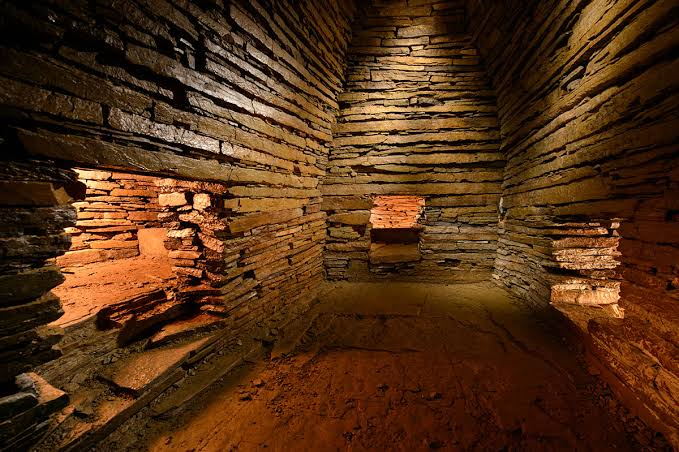
Cuween Hill is a stone-built passage grave.
A narrow passage leads into a central chamber.
Smaller side cells extend from the central area.
This architectural arrangement resembles other Neolithic chambered cairns in Orkney.
Human Remains
The cairn contained the remains of multiple individuals.
The accumulation of remains suggests that the monument was used over time rather than representing a single burial event.
This pattern is common in prehistoric communal tombs.
The Dog Bones
The discovery of dog remains is what makes Cuween Hill particularly unusual.
The remains represent several animals.
Their placement within the cairn suggests that dogs were intentionally included rather than simply appearing accidentally.
Why Were Dogs Buried Here?
Several interpretations are possible.
Dogs may have been:
hunting companions;
livestock guardians;
household animals;
symbols of social identity;
or ritual animals.
The archaeological evidence cannot tell us exactly which explanation is correct.
Dogs in Neolithic Society
Dogs had already been domesticated for thousands of years by the Neolithic.
They could assist humans in:
hunting;
guarding;
managing livestock;
and protecting settlements.
Their usefulness would have made them valuable companions.
Symbolic Importance
The deliberate burial of dogs could indicate emotional attachment.
It could also reflect symbolic associations.
Dogs might have been viewed as:
protectors;
guides;
companions;
or intermediaries between humans and the supernatural.
These interpretations remain hypotheses.
Architecture and Ritual
The cairn's internal design suggests that the monument was not merely a practical burial container.
Its passage and chambers created a carefully organized ritual environment.
Entering the tomb required deliberate movement from the outside into an enclosed interior.
The Dead as Ancestors
The repeated use of the cairn may indicate that the community maintained a relationship with ancestors.
Burial monuments could help establish:
lineage;
territorial claims;
community identity;
and social continuity.
Orkney's Dog Symbolism
The presence of dogs at Cuween Hill fits within a broader archaeological record showing that animals could occupy symbolic roles in prehistoric societies.
However, the specific meaning of dogs in Neolithic Orkney remains unknown.
Modern Scientific Analysis
Modern archaeological techniques can extract considerable information from human and animal remains.
Researchers can study:
age;
sex;
health;
diet;
trauma;
and genetic relationships.
Isotopic analysis can also provide information about mobility and diet.
Why Cuween Hill Matters
Cuween Hill is important because it provides evidence for:
communal burial;
Neolithic ritual;
human-animal relationships;
and the social importance of dogs.
Conclusion
Cuween Hill is one of the most fascinating burial monuments in Orkney because it brings humans and animals together within a sacred prehistoric structure.
The dog remains raise questions that archaeology cannot completely answer.
Were these animals beloved companions, hunting partners, guardians, ritual symbols, or something more?
Whatever their precise meaning, their presence demonstrates that dogs occupied an important position within the social and symbolic world of Neolithic Orkney.
The cairn therefore preserves not only the memory of the dead, but also evidence of the relationships between humans and animals more than 5,000 years ago.