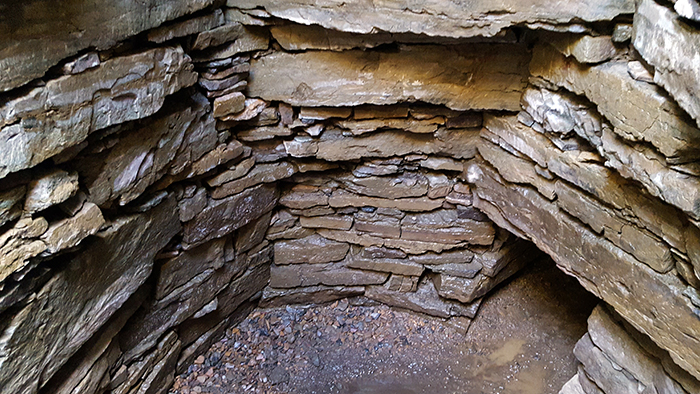
Wideford Hill, overlooking the landscape of Mainland Orkney, contains a significant Neolithic chambered cairn.
The monument belongs to the extraordinary funerary tradition of prehistoric Orkney, where communities constructed stone burial monuments that could serve as places of remembrance, ritual, and connection with ancestors.
Chambered Cairns
A chambered cairn is a stone-built funerary monument containing one or more internal chambers.
The structure was usually covered with a mound of stone.
People could enter the chamber through an organized passage.
Monumental Construction
Building a cairn required:
quarrying stone;
transporting blocks;
designing chambers;
constructing walls;
and creating the outer mound.
The labor required demonstrates substantial communal cooperation.
Burial Practices
Chambered cairns could contain human remains.
The dead were sometimes placed within the chamber over extended periods.
This suggests that the monument could function as a collective ancestral space rather than simply a single grave.
Passage and Chamber
The architecture created a transition between:
outside world → passage → inner chamber.
This physical movement may have had symbolic significance.
The interior could represent a special or sacred space.
The Dead and the Living
Neolithic communities did not necessarily separate the dead completely from everyday life.
Returning to ancestral monuments could reinforce:
family identity;
territorial claims;
social memory;
and community traditions.
Orkney's Monumental Landscape
Wideford Hill belongs to a much larger collection of Neolithic monuments.
Orkney contains:
chambered cairns;
standing stones;
stone circles;
settlements;
and ceremonial complexes.
The monuments were part of an interconnected cultural landscape.
Astronomy
Some Orkney monuments appear to have been deliberately aligned with astronomical events.
Researchers have examined orientations toward:
the setting Sun;
the winter solstice;
and lunar positions.
However, astronomical interpretations must be supported by architectural evidence rather than assumed automatically.
Landscape Position
Wideford Hill's elevated location is particularly significant.
The monument would have been visible across a substantial area.
This visibility may have helped establish it as a landmark.
Construction Materials
Local stone was the primary building material.
The ability to construct substantial monuments using locally available resources demonstrates technological adaptation.
Ritual Activity
Activities around chambered cairns may have included:
funerary ceremonies;
offerings;
communal gatherings;
and ancestral rituals.
The exact ceremonies are unknown.
Why Wideford Hill Matters
The cairn contributes to our understanding of:
Neolithic burial;
ancestor worship;
monument construction;
landscape organization;
and community identity.
Conclusion
Wideford Hill's chambered cairn is more than an ancient grave.
It represents a society that invested enormous effort in creating monuments intended to preserve connections between the living and the dead.
Within the wider Neolithic landscape of Orkney, such monuments helped transform the natural environment into a cultural landscape filled with ancestral memory and ritual meaning.