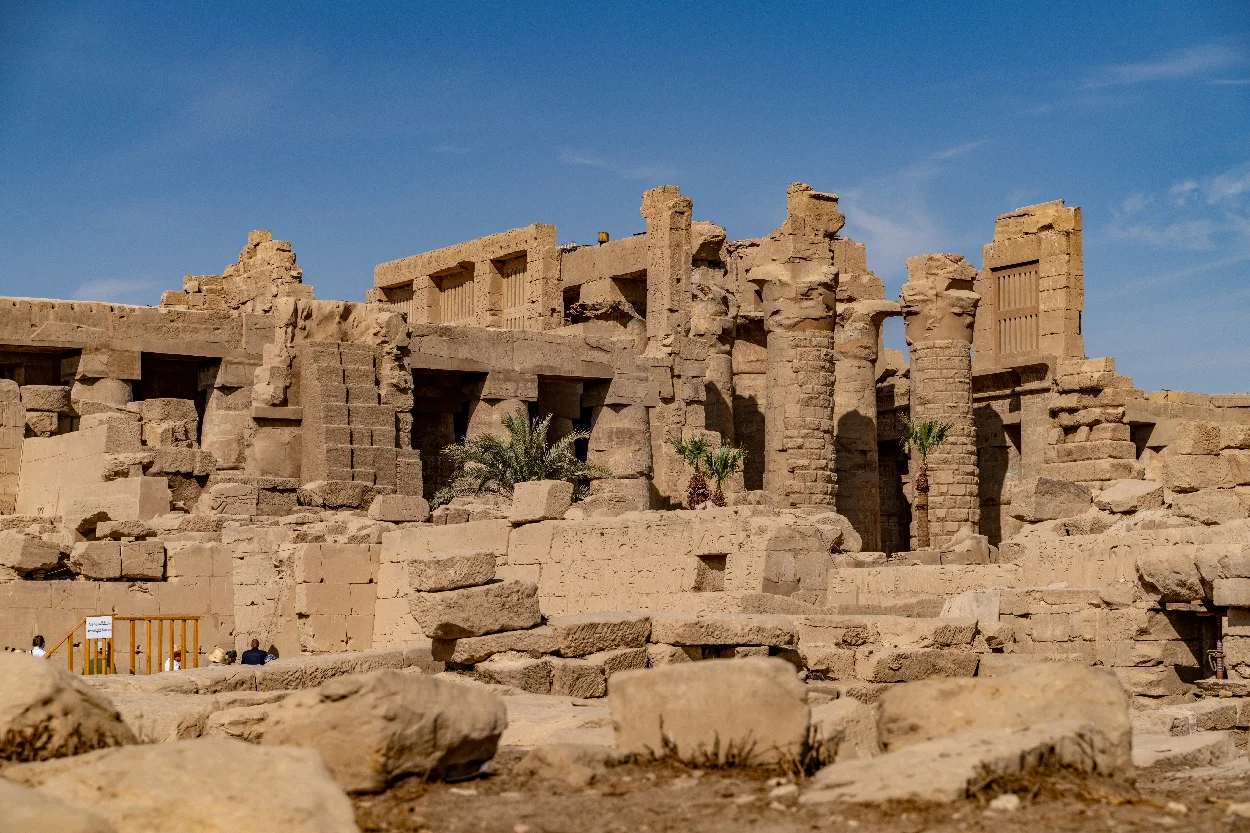
Recent archaeological investigations at the Karnak Temple Complex in Luxor, Egypt, have uncovered a previously unknown sacred lake. The discovery was officially announced during a press conference by a joint Egyptian–Chinese archaeological mission.
Karnak, one of the largest temple complexes in ancient Egypt, functioned as a major religious, political, and economic centre for more than a thousand years. Although the presence of a sacred lake had long been hypothesised, its confirmation provides important new evidence for understanding temple organisation and ritual practice in ancient Egyptian religion.
A core concept in Egyptian temple theology was Nun, the primordial waters from which creation emerged. Sacred lakes symbolised this cosmic ocean and played a vital role in ritual purification and daily cult activities. The most significant of these lakes were located within major temple complexes.
The newly identified lake covers approximately 50 square metres and consists of a stone basin situated within the temple precinct. According to the excavation team, its construction and placement correspond closely with the architectural and symbolic features of known sacred lakes, supporting its interpretation as a ritual structure rather than a practical water source.
Vincent Rondot, Egyptologist and honorary director of the Department of Egyptian Antiquities at the Louvre Museum, explained that sacred lakes functioned as “essential theological instruments,” enabling temples to operate independently and perform their ritual duties. Priests used the water for purification rites prior to ceremonies, highlighting the lake’s central role in religious life.
Additional discoveries from the same excavation area further emphasise Karnak’s archaeological significance. Within a chapel dedicated to the god Osiris, archaeologists uncovered three shrines, animal bones, and several small statuettes. These finds indicate sustained ritual activity, including animal sacrifice, and reinforce Karnak’s role as an active religious centre over an extended period.