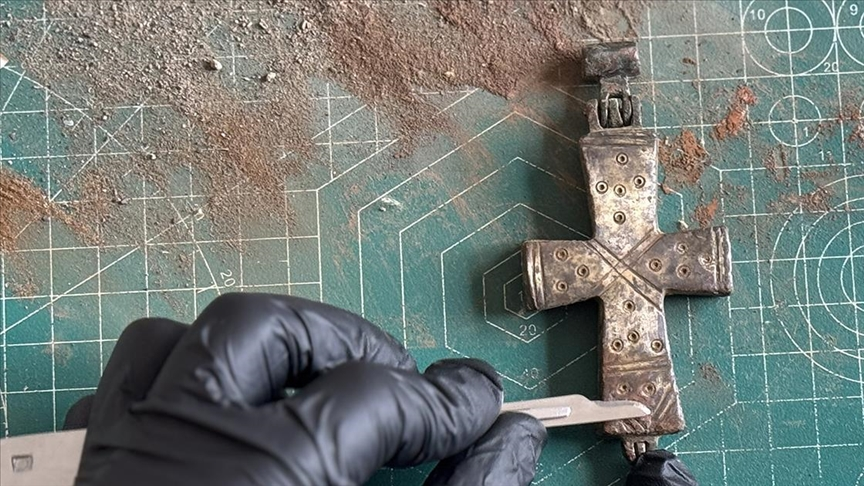
Archaeologists working at the ancient city of Lystra in central Türkiye have restored a rare medieval bronze reliquary cross found intact and permanently sealed, offering important insights into early Christian devotional practices in Anatolia. Dating to between the 9th and 11th centuries, the cross was discovered in a burial area associated with a church and is considered exceptional because of its remarkable state of preservation.
The find was made in Lystra, located in Konya province’s Meram district, a site traditionally linked to the missionary journeys of Saint Paul. According to Christian tradition, Paul visited the city during his first mission in the 1st century CE, making Lystra an early focal point for the spread of Christianity in Asia Minor.
The bronze reliquary is composed of two fitted plates joined using a riveting technique, forming a permanently sealed cross. Unlike most similar artifacts, which are typically recovered broken or deliberately opened, this example was found exactly as it had been manufactured centuries ago. Archaeologists say this rare condition makes the object particularly valuable for understanding medieval religious craftsmanship and burial practices.
Excavation director İlker Mete Mimiroğlu of Necmettin Erbakan University explained that although several reliquary crosses have been uncovered at Lystra, nearly all were damaged. “This piece was distinctive because it was discovered completely sealed,” he said, noting that conservators chose to clean and stabilize the cross rather than open it, in order to avoid irreversible damage.
Reliquary crosses were common in the Byzantine world and medieval Christian communities. They were often worn on the body or placed in graves and were designed to hold sacred items such as relics of saints, cloths believed to have touched holy figures, or fragments of the True Cross. These objects were believed to offer spiritual protection, healing, and divine favor.
In many cases, such reliquaries were intentionally sealed during production and never meant to be opened. Scholars suggest that permanently sealed crosses like the example from Lystra were often created specifically for burial, symbolizing the sanctity of their contents and reinforcing beliefs in protection and faith beyond death.
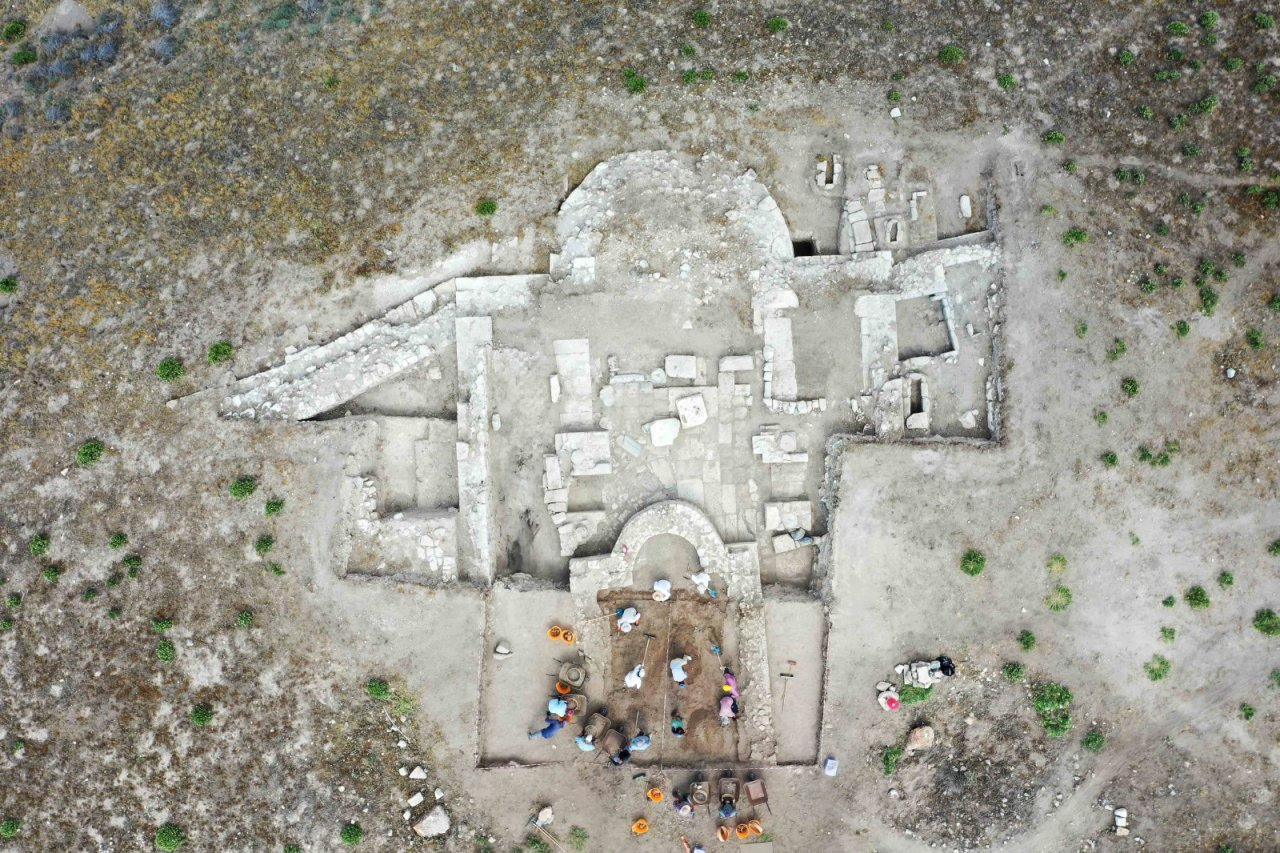
Founded as a Roman colony during the reign of Emperor Augustus, Lystra emerged as one of the most important cities in the Lycaonia region. The city gained lasting prominence in the first century CE when St. Paul and his companion Barnabas visited during their missionary journeys, events that firmly embedded Lystra in early Christian tradition.
Although a small opening in the bronze reliquary cross allowed archaeologists to visually inspect its interior, no clearly identifiable relic was observed. However, a fragment of fabric resembling a burial shroud was visible near the gap, suggesting the cross may once have contained a sacred object wrapped in cloth—a common practice in medieval Christian ritual.
The cross is decorated with simple geometric motifs characteristic of regional Byzantine metalwork from the Middle Ages. Its restrained design suggests it may have belonged to a cleric or a devout member of the local Christian community rather than an elite individual.
Lystra holds profound historical and religious significance. After flourishing as a Roman colony during the early imperial period, the city became part of the Byzantine world. According to Christian tradition, it was in Lystra that St. Paul healed a crippled man and was later stoned by hostile crowds, surviving the attack and continuing his mission. The city subsequently became a bishopric, reflecting its enduring role as a Christian center.
Archaeological excavations at Lystra have uncovered churches, burials, inscriptions, and everyday objects that trace the city’s transition from a Roman settlement to a Christian religious hub. The discovery of multiple reliquary crosses at the site highlights the strength and continuity of Christian belief in the region during the medieval period.
Excavations are being carried out under the supervision of Necmettin Erbakan University, with support from Türkiye’s Ministry of Culture and Tourism and local authorities. Researchers hope ongoing investigations will further illuminate the relationship between faith, craftsmanship, and daily life in central Anatolia during the Byzantine era.
The sealed reliquary cross stands as a rare and powerful symbol of medieval Christian devotion—preserved untouched beneath the soil of Lystra for nearly a thousand years.