Göbeklitepe-Style T-Shaped Pillars Found in Adıyaman Expand Understanding of Taş Tepeler Culture
A significant new archaeological discovery in southeastern Türkiye is changing how researchers view the Neolithic period. In the Samsat district of Adıyaman, structures resembling the famous T-shaped pillars of Göbeklitepe have been exposed after water levels dropped in the Atatürk Dam reservoir. This suggests that the cultural sphere associated with Göbeklitepe—or the Taş Tepeler culture—was far more extensive than previously thought.
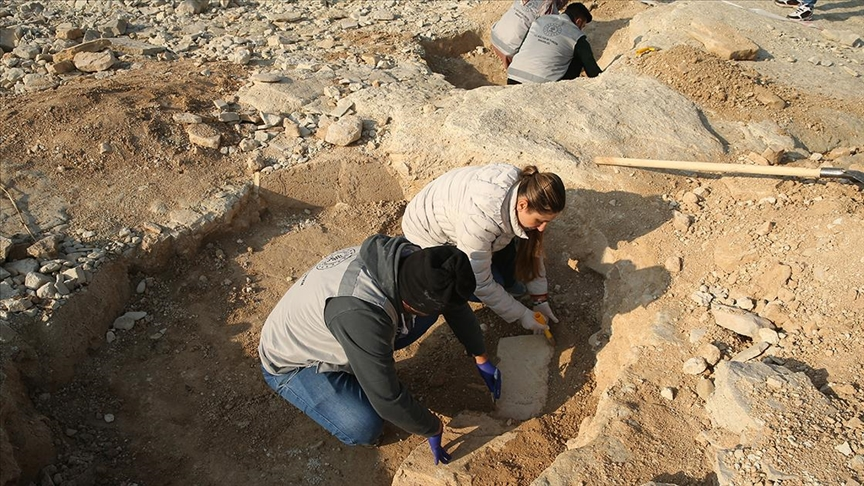
The site, near Kızılöz village, became visible as receding waters revealed stone features along the shore. After a local report, teams from the Adıyaman Museum Directorate investigated and identified T-shaped stone structures dating back roughly 11,000 years, placing them in the Pre-Pottery Neolithic period.
A New Node in the Göbeklitepe Network
Prof. Dr. Sabahattin Ezer of Adıyaman University explains that the newly uncovered structures share architectural and symbolic features with Göbeklitepe and other Taş Tepeler sites in Şanlıurfa. These include small enclosures, stone slabs arranged around pits, and centrally located T-shaped pillars—all key elements of early ritual architecture.
The Taş Tepeler project has already documented several Neolithic sites, including Karahantepe, Sayburç, Sefertepe, Kurttepesi, and Çakmaktepe. The Adıyaman find shows that this cultural horizon extended northwest into the Euphrates basin, reinforcing the idea of a widespread and interconnected prehistoric landscape.
Meaning of the T-Shaped Stones
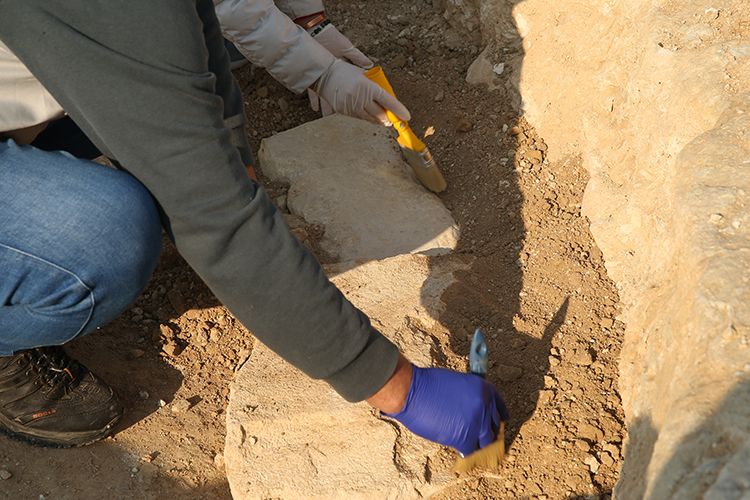
The T-shaped pillars remain some of the most intriguing features of early human history. At Göbeklitepe, these monumental stones are often interpreted as stylized human figures, complete with carved arms, hands, belts, and depictions of symbolic animals. While the Adıyaman examples are smaller, their shape and arrangement suggest they served similar ritual or communal purposes.
Their presence in Adıyaman points to shared belief systems, architectural knowledge, and social organization across a wide region. This challenges earlier views of Göbeklitepe as a unique outlier and instead supports the idea of a broader regional tradition of monumental construction predating widespread agriculture.
Regional Expansion and the Upper Mesopotamian Context
The Samsat discovery is particularly significant given its location near the Euphrates River—a major route for movement, communication, and resource exchange in the Neolithic period. This context reinforces the idea that Taş Tepeler sites functioned as a network of ritual centers rather than isolated locations.
Researchers increasingly argue that communities across Upper Mesopotamia participated in shared ceremonial practices, gathering periodically at monumental sites. The Adıyaman structures may reflect a local adaptation of this wider tradition, maintaining key symbolic elements while responding to regional conditions.
Threats and Rescue Archaeology
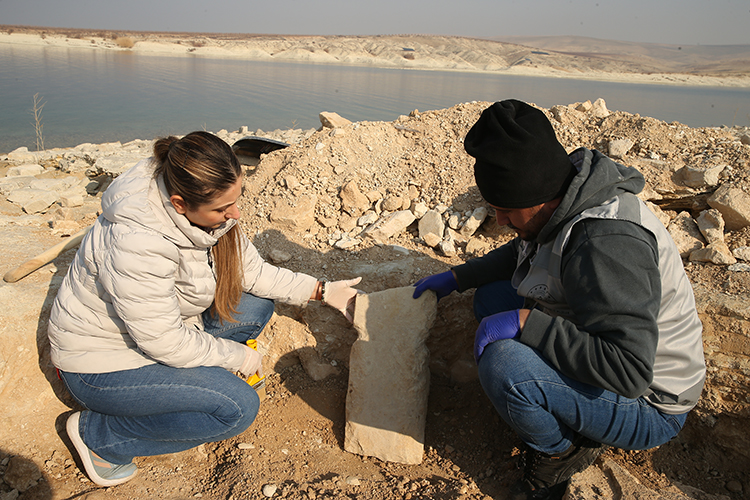
Museum Deputy Director Mustafa Çelik noted that the site was originally buried 2–3 meters below the surface, but fluctuating water levels in the Atatürk Dam reservoir gradually eroded the sediment, exposing the structures. While this process allowed the discovery, it also poses a serious threat to the site’s preservation.
Rescue excavations are now underway to document and safeguard the remains before rising waters submerge them again. Discoveries like this highlight both the vulnerability of submerged heritage and the importance of systematic archaeological surveys in reservoir zones.
From Local Find to Global Significance
Artifacts from the site are now displayed at Perre Ancient City, giving the public a chance to engage with one of humanity’s earliest monumental traditions. More importantly, the discovery strengthens the argument that southeastern Türkiye was a central hub of innovation during the Neolithic transition.
Ongoing excavations may reveal additional structures, potentially uncovering a larger settlement or ritual complex. Each new find reinforces a transformative conclusion: the origins of complex symbolic behavior and monumental architecture were regional, collaborative, and deeply rooted in Upper Mesopotamia.