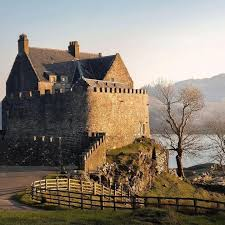
Duntrune Castle and its surrounding archaeological landscape occupy a strategically important position on the western coast of Scotland.
The site is associated with a long history of fortification and settlement, reflecting the importance of coastal strongholds in Argyll from the prehistoric and early medieval periods onward.
A Strategic Coastal Position
Duntrune overlooks the water and occupies a location where maritime movement could be observed.
For communities in western Scotland, this was extremely valuable.
The sea provided:
transportation;
trade;
fishing;
communication;
and military access.
Dark Age Argyll
The term “Dark Ages” is often used for the centuries following the collapse of Roman authority in Britain.
Modern historians increasingly prefer terms such as early medieval period because the era was not simply an age of cultural decline.
Western Scotland contained active kingdoms and international connections.
Fortified Landscapes
Strongholds were important centers of power.
A fort could serve as:
a residence;
defensive position;
political center;
storage facility;
or ceremonial location.
Gaelic Kingdoms
Argyll became an important center of Gaelic political power.
Dál Riata connected western Scotland with northeastern Ireland.
This created a maritime cultural zone across the Irish Sea.
Maritime Connections
People could travel between communities by boat.
This facilitated:
trade;
migration;
warfare;
religious exchange;
and political alliances.
Later Medieval Castle
The later castle represents another stage in the site's long history.
Medieval Scottish elites continued to value fortified coastal locations.
Why Reuse Strategic Sites?
A location that provides:
elevation;
visibility;
natural defenses;
and access to water
remains valuable regardless of political changes.
This explains why many Scottish castles occupy places that were important centuries earlier.
Archaeological Evidence
Archaeological investigation of such landscapes can reveal:
defensive walls;
occupation layers;
pottery;
metalwork;
animal remains;
and structural features.
Social Power
Fortifications communicate authority.
A stronghold visible from surrounding territory can demonstrate that a particular family or political group controls the area.
Why Duntrune Matters
Duntrune represents the importance of fortified coastal landscapes in western Scotland.
It illustrates how geography influenced political development over centuries.
Conclusion
Duntrune's archaeological and historical significance lies in its strategic location and long association with fortified settlement.
The site reflects a broader pattern in Argyll, where rocky coastal positions became centers of defense, political authority, maritime communication, and elite power.
From the early medieval period into the age of medieval castles, the same landscape advantages continued to shape the history of western Scotland.