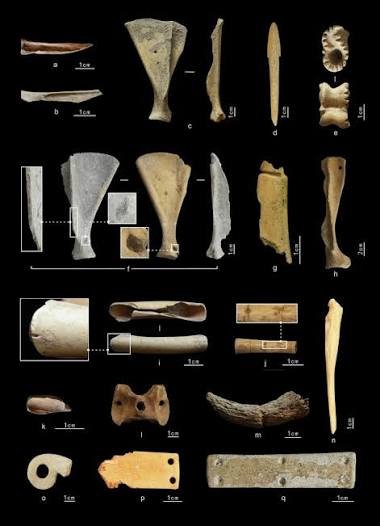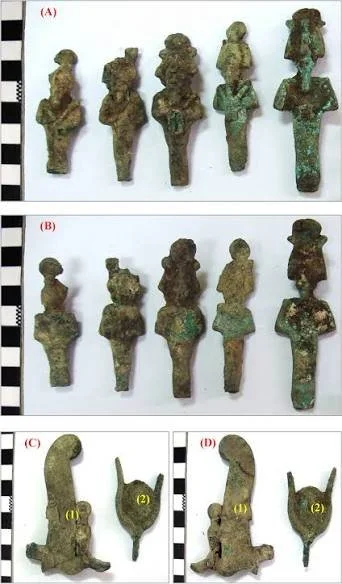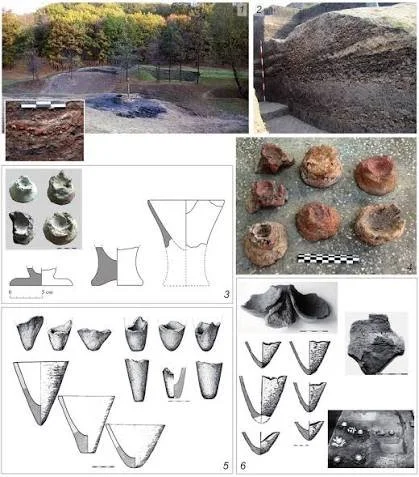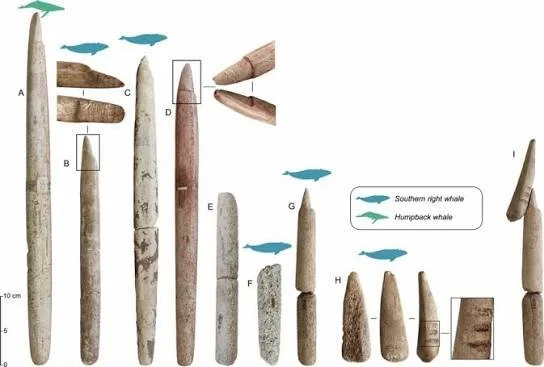
Harpoons are specialized tools designed to strike and retain aquatic animals, making them important evidence for the history of fishing, hunting, and human adaptation to water-based environments. They are often associated with Arctic communities because of the prominent role that marine mammals played in many northern subsistence systems. However, specialized hunting equipment used in aquatic environments developed in many regions of the world. Studying harpoon-like technologies outside the Arctic allows archaeologists to investigate how different communities responded to similar practical challenges and whether particular designs spread between populations or emerged independently.
A harpoon generally differs from a simple spear or pointed fishing implement because it is designed to improve the chance of retaining an animal after impact. Some examples include a detachable head connected to a shaft by a line or other fastening arrangement. Others use barbs, toggling points, or different mechanisms that help prevent the prey from escaping. The exact design depends on the intended target, the material used, and the hunting conditions. Not every pointed bone object or barbed implement should automatically be classified as a harpoon. Archaeologists must examine its shape, manufacturing marks, wear patterns, and archaeological context to establish its likely function.
The development of aquatic hunting technology was closely connected to local environments. Communities living near rivers, lakes, wetlands, and coastlines encountered different prey species and different conditions for hunting. A tool suitable for capturing large marine animals would not necessarily be practical for catching fish in a shallow river. Water depth, visibility, current, animal behavior, and the distance between hunter and prey all influenced how tools were designed and used. These environmental differences help explain why aquatic hunting technologies could vary significantly between regions even when communities faced broadly similar challenges.
Materials also shaped the development of harpoons. Bone and antler could be carved into strong, relatively lightweight points, while ivory was suitable for some specialized forms in regions where it was available. Wood could provide shafts, although it rarely survives in many archaeological settings. In other periods, metal components became possible as metalworking technologies developed and spread. The survival of these materials is uneven. Stone, bone, and antler may remain recognizable after long burial, while wood, cord, and other organic components often decay. Archaeologists therefore need to consider the possibility that the surviving archaeological record represents only part of the original tool.
The discovery of similar harpoon designs in distant regions raises questions about technological diffusion. Diffusion occurs when ideas, techniques, or objects spread between communities through contact. Such contact may happen through trade, migration, intermarriage, travel, or the movement of individuals with specialized knowledge. If a distinctive harpoon design appears in several regions, researchers may investigate whether the similarities reflect a shared technological tradition. However, similarity alone does not prove direct contact. People living in comparable environments may independently develop similar solutions to the same practical problems.
Distinguishing diffusion from independent invention requires more than comparing the general appearance of tools. Researchers examine details such as the shape of the head, the position of barbs, the method used to attach the point, the manufacturing sequence, and the materials selected. A cluster of highly specific similarities may be more informative than a broad resemblance. Chronology is equally important. If a design appears in one region long before it is documented elsewhere, researchers can investigate possible routes of transmission, although the earliest surviving example does not necessarily mark the actual beginning of the technology. Earlier examples may have disappeared or remain undiscovered.
Intermediate forms can provide additional evidence. If related designs occur at sites between two distant regions, they may help researchers reconstruct how a technology changed as it moved between communities. Yet the absence of intermediate examples does not automatically rule out contact, especially when archaeological preservation is poor or large areas remain insufficiently investigated. Researchers must also consider whether similar forms could have been produced through local experimentation. Technological traditions are not always copied without modification; communities may adapt an imported idea to suit their own materials, prey species, and hunting practices.
Secure dating is essential for these comparisons. Archaeologists may use radiocarbon dating on associated organic material or, when appropriate, on the bone or antler from which a harpoon was made. Stratigraphic evidence can establish the relative sequence of deposits, while other dating techniques may help determine the age of surrounding structures or occupation layers. Marine materials require particular care because radiocarbon dates can be affected by reservoir effects. Aquatic organisms may contain carbon that is older than the carbon in the contemporary atmosphere, meaning that uncorrected dates can make an object appear older than it actually is. Local environmental conditions and the animal's diet can influence the size of this effect.
Harpoons also provide insight into the relationship between technology and social organization. Producing specialized tools may require knowledge of material selection, shaping, repair, and the behavior of target animals. Some equipment could have been made by individual hunters, while other forms may have reflected shared traditions maintained within a community. The use of detachable heads and lines, where documented, could involve coordinated hunting practices and an understanding of how to recover prey after the initial strike. Nevertheless, the presence of sophisticated equipment does not automatically indicate a highly centralized society or a particular level of social complexity. Tool design must be interpreted within the broader evidence for settlement, subsistence, exchange, and community life.
Animal remains found alongside harpoons can help researchers evaluate how the tools were used. The species represented, the age and size of the animals, and the pattern of butchery marks may reveal whether hunting focused on particular prey. The location of a site near a river, lake, or coast may offer further clues, although ancient shorelines and watercourses may differ substantially from those visible today. Evidence of repeated occupation could suggest that hunting took place seasonally, while specialized equipment and processing remains might indicate that aquatic resources played a major role in the local economy.
Global comparisons must also account for differences in archaeological research and preservation. Some regions have extensive records of bone tools, while others have produced few examples because organic materials decay rapidly. Modern excavation methods can also influence which objects are recovered. Small fragments may be missed at sites where sediment is not carefully screened, and older collections may contain tools whose original contexts were poorly recorded. These limitations make it difficult to compare the apparent frequency of harpoon technology between regions without considering how the evidence was collected.
Research into early harpoons outside the Arctic is therefore not simply a search for matching objects across a map. It involves reconstructing the practical challenges that shaped aquatic hunting, understanding how communities selected and modified materials, and testing whether similarities reflect contact or independent invention. The strongest diffusion arguments rely on secure chronology, distinctive technological details, evidence from intermediate regions, and a plausible history of interaction. By combining these approaches, archaeologists can develop a more balanced account of how aquatic hunting technologies emerged, spread, and changed across different parts of the world.