The production of leather was an important activity in many past societies, providing materials for clothing, footwear, containers, harnesses, protective equipment, and other everyday objects. Although leather rarely survives in ordinary archaeological conditions, the tools and materials associated with its production can sometimes remain in the archaeological record. Ceramic vessels are particularly interesting in this context because they may have been used to hold liquids, mix substances, heat materials, or store ingredients involved in hide processing. Microscopic residues preserved on their surfaces could potentially offer clues about tanning practices, although identifying these traces requires careful scientific investigation.
Tanning is the process of treating animal hides so that they become more durable and resistant to decomposition. Fresh animal skin can decay relatively quickly if it is not processed, making preservation an important concern for communities that relied on animal products. Different societies developed different methods depending on the materials available to them, the properties they wanted in the finished leather, and the local environment. Some methods relied on plant materials containing tannins, while others involved fats, oils, smoke, mineral substances, or combinations of treatments. These methods did not necessarily produce the same archaeological residues, and the evidence may vary considerably depending on how the process was carried out.
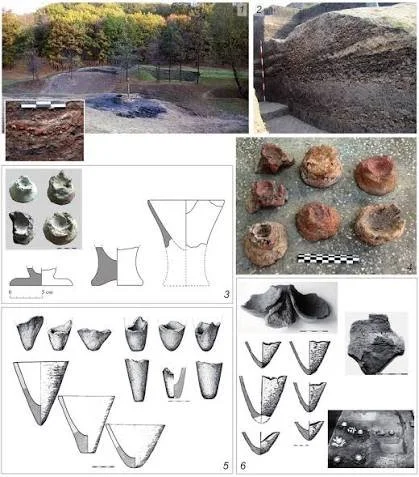
Plant-based tanning often involved materials rich in tannins, naturally occurring compounds found in the bark, leaves, wood, and other parts of certain plants. Hides could be exposed to prepared plant extracts over a period of time, allowing the compounds to interact with the skin's structure. The precise method depended on the community and the resources available. In some settings, tanning materials might have been crushed, soaked, heated, or mixed in containers before being applied to hides. Ceramic vessels could have served some of these functions, but their presence at a site does not automatically mean that they were used for leather production. Similar containers were also needed for cooking, dyeing, fermentation, medicinal preparations, and many other activities.
The challenge for archaeologists is to determine whether microscopic chemical traces are consistent with tanning rather than another use. Ceramic bodies are often porous, allowing liquids and dissolved substances to enter small openings in the material. Residues may remain inside these pores or become trapped in cracks, especially when vessels were repeatedly used with particular substances. The outer surface can also preserve deposits resulting from spills, handling, heating, or contact with nearby materials. Researchers may examine these traces to determine their composition and distribution, looking for patterns that are consistent with a proposed activity.
Surface impressions introduce another layer of evidence. Archaeological ceramics sometimes preserve marks made when soft clay came into contact with woven materials, cords, plant fibers, or other objects during manufacture. Other impressions may result from handling, abrasion, or later contact with surrounding materials. If a vessel has impressions that appear to resemble woven or fibrous surfaces, researchers might investigate whether it was associated with a production process involving animal hides or plant materials. However, the impressions alone cannot demonstrate that tanning occurred. They may reveal how the vessel was made or handled rather than what it contained.
Chemical analysis can help clarify the possibilities. Researchers may use methods designed to identify organic compounds, elemental compositions, or microscopic residues preserved in ceramic pores. Certain chemical signatures could be compatible with plant-derived tanning materials, while lipid residues might indicate contact with fats or oils. Yet these results are rarely straightforward. Plant compounds can degrade over time, and similar substances may have been used in several unrelated activities. Fats can come from cooking, food storage, animal processing, or other household tasks. A chemical trace therefore needs to be interpreted alongside the vessel's form, surface condition, archaeological location, and associated artifacts.
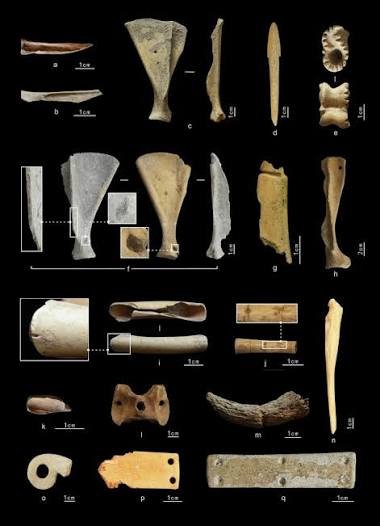
The surrounding archaeological context can strengthen or weaken a tanning interpretation. Evidence of animal slaughter, hide scraping, specialized cutting tools, and concentrations of animal remains may suggest that a settlement included hide-processing activities. The presence of plants potentially suitable for tanning could also be relevant, although identifying a plant in the local environment does not prove that it was used for leather production. Researchers must consider whether the proposed activity fits the broader pattern of occupation and whether other explanations account for the same evidence equally well.
Experimental archaeology can be particularly helpful in this field. Researchers can recreate selected tanning processes using clay vessels made from comparable materials, then examine how residues develop under controlled conditions. They can compare vessels used for tanning with vessels used for cooking, dyeing, or storing other substances. These experiments may reveal whether particular compounds penetrate ceramic walls, how heating affects their preservation, and whether surface impressions are likely to survive repeated use. Experimental results cannot reproduce every condition experienced by an ancient object, but they can help establish which interpretations are chemically and physically plausible.
The preservation of residues also depends on what happened after a vessel was discarded. Soil chemistry, moisture, temperature, microbial activity, and contact with other materials can alter the original deposits. Some compounds may disappear almost completely, while others can be introduced into the ceramic after burial. Conservation treatments and modern handling can further complicate analysis if they introduce chemicals that interfere with laboratory results. Careful sampling procedures and comparisons with surrounding sediment are therefore essential when researchers investigate suspected tanning residues.
Understanding ancient tanning is important because leather production connected animal husbandry, hunting, craft specialization, trade, and everyday life. Evidence of hide processing may reveal how communities used animal resources beyond meat and bone, while differences in production methods may reflect local traditions or changing economic demands. Ceramic residues could contribute to this research, especially when more visible evidence has not survived. Nevertheless, a convincing interpretation requires several lines of evidence rather than a single chemical result or unusual surface mark. Through the combined study of ceramics, animal remains, tools, plant materials, and experimental reconstructions, archaeologists can investigate the possibility that ordinary vessels played an important role in the production of one of the most useful materials in the ancient world.