
Introduction
Gebel Adda was an important archaeological site in Lower Nubia, an area historically shaped by interactions among Nubian kingdoms, Egypt, Rome, Byzantium, Christianity, and Islam.
The site became particularly significant during the medieval period, when Nubian Christian kingdoms controlled parts of the Nile Valley.
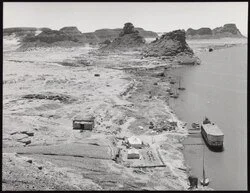
The title Gebel Adda: Nubia's Medieval Fortress refers to the fortified settlement that developed on the rocky elevation overlooking the Nile.
Gebel Adda is especially important because archaeological work at the site preserved evidence from multiple historical periods before the area was affected by the creation of Lake Nasser.
Nubia and the Nile
Nubia occupies the Nile Valley south of Egypt.
The region was never simply a peripheral zone.
It developed powerful kingdoms and participated in long-distance networks connecting northeastern Africa with the Mediterranean and sub-Saharan Africa.
The Nile served as both transportation route and source of agricultural productivity.
A Strategic Location
Gebel Adda occupied an elevated position.
Such locations were strategically valuable because they allowed inhabitants to observe movement along the river.
A settlement overlooking a major transportation route could serve military, administrative, and economic purposes.
The site's defensive characteristics were therefore closely connected with its geography.
Christian Nubia
During the medieval period, much of Nubia became Christian.
The Christian kingdoms of Nobadia, Makuria, and Alodia developed distinctive religious and political traditions.
Churches, monasteries, cemeteries, and fortified settlements became important features of the landscape.
Gebel Adda was associated particularly with the political world of Nobadia and later Makurian influence.
Architecture
Fortified Nubian settlements could include:
defensive walls,
towers,
gateways,
residential buildings,
churches,
storage spaces,
and administrative structures.
The use of mud brick was particularly important because it was readily available in the Nile environment.
Stone was also used for selected architectural features.
Christianity and Material Culture
Archaeological excavations at medieval Nubian sites have recovered evidence of Christian religious life.
This can include:
crosses,
church architecture,
painted plaster,
inscriptions,
liturgical objects,
and Christian burials.
Such evidence helps reconstruct both religious practice and the political importance of Christianity.
Medieval Nubian Administration
Fortified settlements were not only military installations.
They could function as administrative centers.
Officials needed to collect taxes, organize agricultural production, manage trade, and communicate with regional authorities.
A strategically positioned settlement could therefore serve several functions simultaneously.
Islamic Transition
Over time, Islamic influence expanded through Nubia.
The transition was gradual rather than instantaneous.
Christian communities continued for centuries.
Eventually, political and demographic changes transformed the region.
Gebel Adda therefore preserves evidence from a period of major cultural transition.
Archaeological Rescue
The construction of the Aswan High Dam and the resulting Lake Nasser transformed Lower Nubia.
Many archaeological sites were threatened by inundation.
International and Egyptian archaeological campaigns documented and excavated numerous locations.
Gebel Adda became part of this enormous archaeological rescue effort.
Conclusion
Gebel Adda: Nubia's Medieval Fortress represents a crucial chapter in the archaeology of Christian Nubia.
Its strategic position, fortifications, churches, domestic structures, and historical sequence demonstrate that Nubian settlements were sophisticated political and economic centers.
The site's history also illustrates the vulnerability of archaeological heritage to modern environmental transformation.
Much of what is known about Gebel Adda exists because archaeologists documented the site before the Nile landscape was permanently transformed by modern dam construction.





