
Introduction
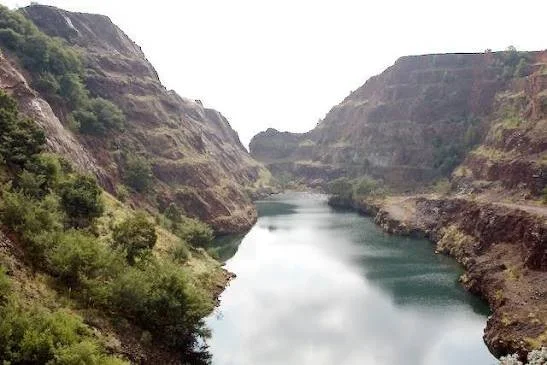
Ngwenya Mine is one of Eswatini's most important archaeological and industrial heritage sites.
Located in the northwestern part of the country, the mine is famous for evidence of ancient mineral extraction, particularly iron ore and hematite.
It is often described as one of the world's oldest known mining areas.
The title Ngwenya Mine: Eswatini's World's Oldest Mine reflects this remarkable reputation, although the phrase "world's oldest mine" should be understood in the context of what is being mined and how archaeological mining sites are defined.
Ancient Mining
Mining is much older than written history.
Prehistoric communities extracted:
ochre,
flint,
stone,
salt,
copper,
and other minerals.
Mining required knowledge of geology and the physical properties of materials.
Ngwenya and Hematite
Ngwenya is particularly associated with hematite and iron-rich minerals.
Hematite can be used as a pigment.
Red ochre derived from iron-rich minerals was important in prehistoric symbolic practices.
It could be used for:
body decoration,
rock painting,
ritual activity,
and possibly burial practices.
Evidence for Ancient Extraction
Ancient mining can leave distinctive traces.
These include:
open pits,
shafts,
hammerstones,
stone tools,
discarded ore,
working surfaces,
and sediment deposits.
At Ngwenya, archaeological research has documented evidence of ancient extraction.
Mining Before Iron Smelting
One of the most important distinctions is between extracting iron-rich ore and smelting iron.
People could mine hematite long before they developed iron-smelting technology.
The mineral's pigment value may have been more important during earlier periods.
Later communities could exploit the same geological resources for metallurgical purposes.
Dating the Mine
Dating mining activity can be difficult because the geological feature itself is extremely old.
Archaeologists date human activity through associated artifacts and deposits.
Radiocarbon dating can sometimes date charcoal from mining contexts.
Other techniques may be used depending on the site.
The Significance of Ochre
Ochre has extraordinary archaeological importance.
It appears at prehistoric sites across Africa.
Its repeated use suggests that color played an important role in human symbolic behavior.
Red pigments may have been associated with life, blood, ritual, identity, or transformation, although interpretations vary.
Industrial Mining
Ngwenya's significance continued into the modern period.
The mine became an industrial resource, particularly during the twentieth century.
This creates a rare archaeological landscape where ancient extraction and modern industrial mining can be studied together.
Heritage Conservation
Ancient mining landscapes can be vulnerable to modern extraction, erosion, vandalism, and tourism.
Preserving the site requires documenting both archaeological and geological features.
Interpretation should explain that the mine's importance extends across thousands of years.
Conclusion
Ngwenya Mine: Eswatini's World's Oldest Mine represents one of Africa's most important examples of ancient mineral exploitation.
Its significance lies not simply in the age of the mining activity but in what it reveals about prehistoric technological knowledge.
People understood the properties of minerals, identified valuable geological resources, developed extraction techniques, and transported materials across landscapes.
Ngwenya demonstrates that sophisticated resource management existed in southern Africa long before written records.





