• MAIN PAGE
  • LATEST NEWS
    • Lost Cities
    • Archaeology's Greatest Finds
    • Underwater Discoveries
    • Greatest Inventions
    • Studies
    • Blog
  • PHILOSOPHY
  • HISTORY
  • RELIGIONS
    • Africa
    • Anatolia
    • Arabian Peninsula
    • Balkan Region
    • China - East Asia
    • Europe
    • Eurasian Steppe
    • Levant
    • Mesopotamia
    • Oceania - SE Asia
    • Pre-Columbian Civilizations of America
    • Iranian Plateau - Central Asia
    • Indus Valley - South Asia
    • Japan
    • The Archaeologist Editor Group
    • Scientific Studies
    • Aegean Prehistory
    • Historical Period
    • Byzantine Middle Ages
    • Predynastic Period
    • Dynastic Period
    • Greco-Roman Egypt
  • Rome
  • PALEONTOLOGY
  • About us
Menu

The Archaeologist

  • MAIN PAGE
  • LATEST NEWS
  • DISCOVERIES
    • Lost Cities
    • Archaeology's Greatest Finds
    • Underwater Discoveries
    • Greatest Inventions
    • Studies
    • Blog
  • PHILOSOPHY
  • HISTORY
  • RELIGIONS
  • World Civilizations
    • Africa
    • Anatolia
    • Arabian Peninsula
    • Balkan Region
    • China - East Asia
    • Europe
    • Eurasian Steppe
    • Levant
    • Mesopotamia
    • Oceania - SE Asia
    • Pre-Columbian Civilizations of America
    • Iranian Plateau - Central Asia
    • Indus Valley - South Asia
    • Japan
    • The Archaeologist Editor Group
    • Scientific Studies
  • GREECE
    • Aegean Prehistory
    • Historical Period
    • Byzantine Middle Ages
  • Egypt
    • Predynastic Period
    • Dynastic Period
    • Greco-Roman Egypt
  • Rome
  • PALEONTOLOGY
  • About us
No results found

Georgia's Dmanisi: 1.8M-Year-Old Cranial Diversity Shock

June 24, 2026

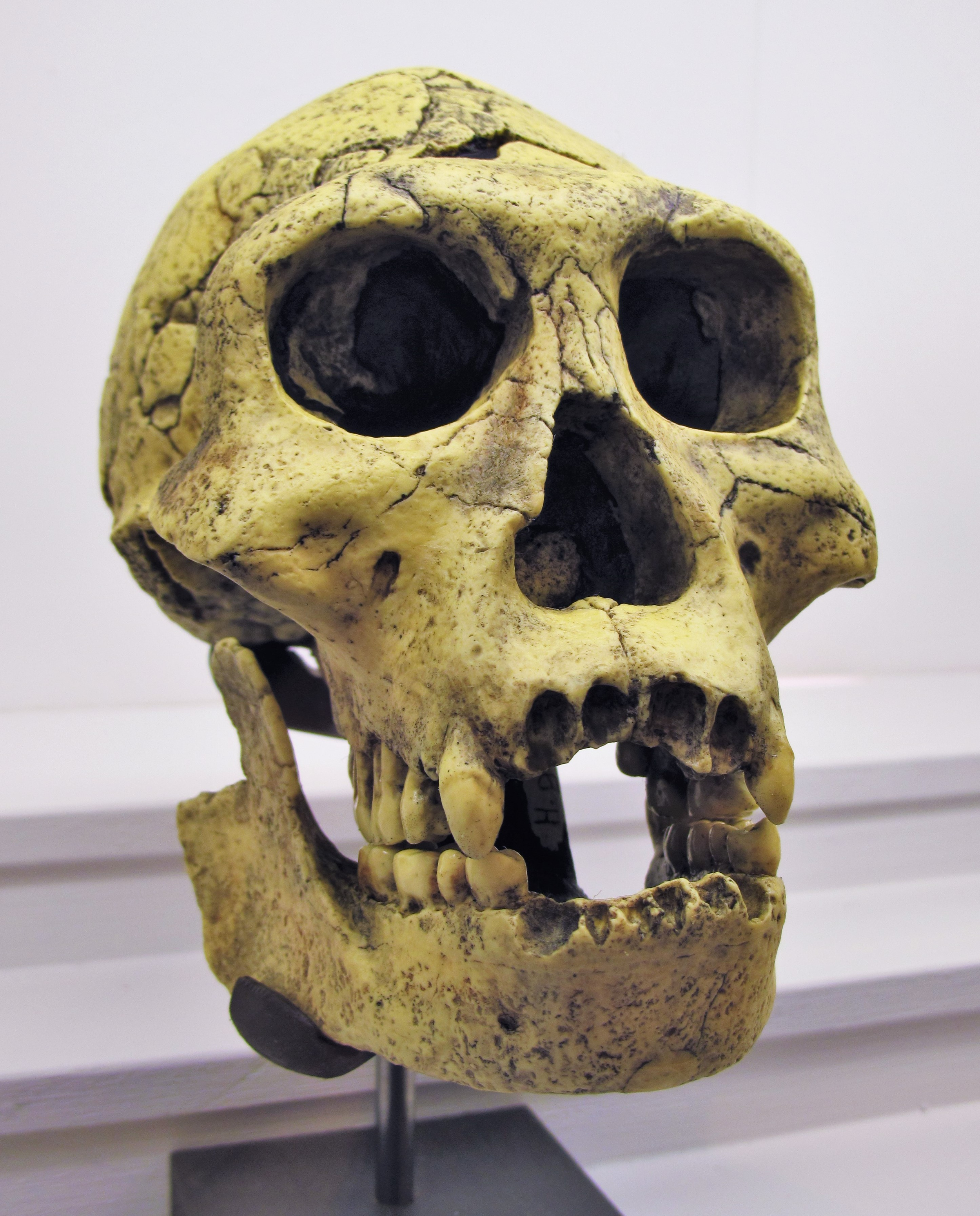
The volcanic promontory of Dmanisi in southern Georgia stands as a monumental gateway for human migration out of Africa. Excavations at the site recovered an extraordinary taphonomic sample sealed beneath a basalt lava layer dated precisely to 1.85 million years ago, including five exceptionally well-preserved hominin skulls, complete postcranial skeletons, primitive stone tools, and thousands of extinct animal bones. The morphological variation contained within this single, synchronous population sent shockwaves through paleoanthropology, completely disrupting long-held linear models of human speciation.

The skeletal variation within the Dmanisi population was so pronounced that early researchers struggled to categorize them into a single species. Skull 5 possesses the smallest, most primitive neurocranium of the entire cohort, measuring a tiny 546 cubic centimeters, a brain volume barely larger than a chimpanzee's. Yet, this tiny braincase is anchored to a massive, projecting, and hyper-robust face with an enormous jaw and large chewing teeth. The remaining four skulls from the same deposit display significantly larger braincases and more gracile facial features, creating an intense anatomical spectrum within a single timeframe.

If these five skulls had been discovered in different geographic regions or distinct stratigraphic layers across Africa, they would have inevitably been classified as completely separate species—some designated as Homo habilis, others as Homo ergaster or Homo erectus. Because they were found together in the same mud layer within the same collapsed cave chamber, they prove they belong to a single, highly variable population of early Homo erectus. This demonstrates that before our evolutionary branch split into separate lineages, early human ancestors possessed a diverse, rugged anatomy, suggesting that many named early human species may simply be natural variations within a single evolutionary line.
← Liang Bua: Flores Island's Tiny Hobbit Fossils UpdateAfontova Gora: Siberia's 17,000-Year-Old DNA Links →
Featured
image_2026-06-22_223518130.png
June 24, 2026
Devil's Lair: Australia's 48,000-Year Ochre Use
June 24, 2026
Read more →
June 24, 2026
image_2026-06-22_223408714.png
June 24, 2026
Laili Cave: East Timor's 44,000-Year Colonizers
June 24, 2026
Read more →
June 24, 2026
image_2026-06-22_223326842.png
June 24, 2026
Callao Cave: Philippines' 67,000-Year Footprints
June 24, 2026
Read more →
June 24, 2026
image_2026-06-22_223243265.png
June 24, 2026
Liang Bua: Flores Island's Tiny Hobbit Fossils Update
June 24, 2026
Read more →
June 24, 2026
image_2026-06-22_223215806.png
June 24, 2026
Georgia's Dmanisi: 1.8M-Year-Old Cranial Diversity Shock
June 24, 2026
Read more →
June 24, 2026
image_2026-06-21_222438932.png
June 24, 2026
Afontova Gora: Siberia's 17,000-Year-Old DNA Links
June 24, 2026
Read more →
June 24, 2026
read more

Powered by The archaeologist