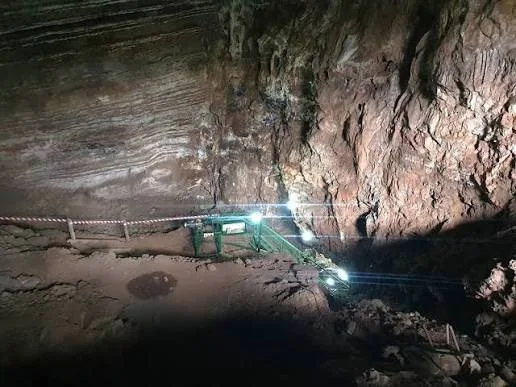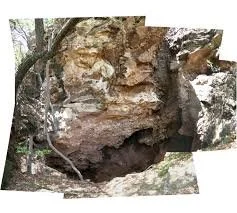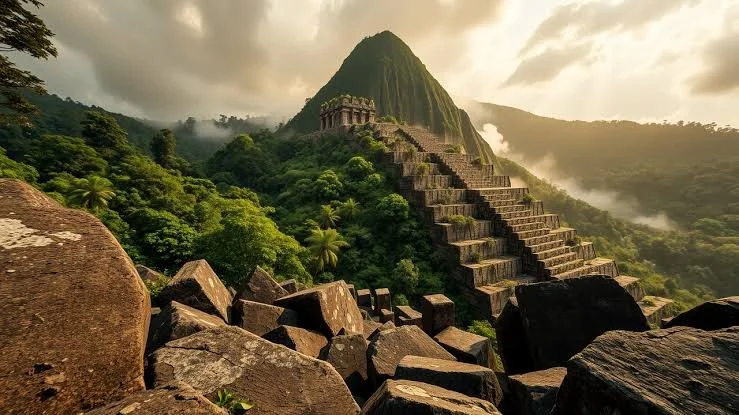
Located in West Java, Indonesia, Gunung Padang stands at the center of an intense geological and archaeological controversy. The site consists of a series of stone terraces stepped up a prominent hill, covered with thousands of columnar basalt blocks formed by ancient volcanic activity. While local folklore has long revered the hill as a sacred megalithic site built by a legendary king, a series of comprehensive sub-surface geological surveys utilizing ground-penetrating radar (GPR), seismic tomography, and core drilling has triggered an explosive international scientific debate regarding the site's true age and origins.
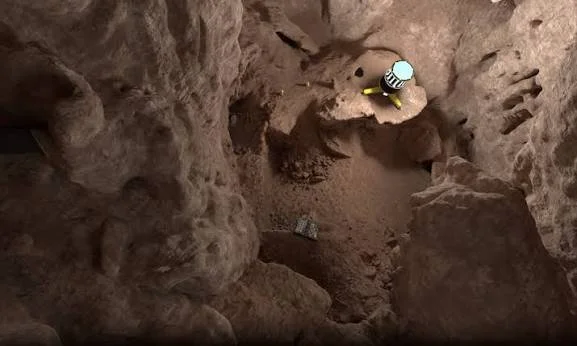
The controversy stems from a structural model that divides the hill into four distinct, subterranean anthropogenic layers. The uppermost layer, Unit 1, consists of visible stone terraces and arrangements indisputably constructed by megalithic communities around 500 BCE. However, deep core samples extracted from Unit 2 and Unit 3—extending up to 30 meters beneath the surface—turned up organic soils and charcoal fragments that yielded radiocarbon dates stretching from 9,000 to over 25,000 years ago. Proponents of the human-made hypothesis argue these dates prove that prehistoric humans systematically carved, shaped, and wrapped a natural volcanic lava dome in multiple layers of meticulously arranged stone masonry during the last Ice Age, making it the oldest pyramid-like structure in the world.
This claim has met fierce opposition from mainstream archaeologists and volcanologists. Critics argue that the deep basalt columns are entirely natural formations created by the slow cooling of underground magma chambers (columnar jointing). They maintain that the ultra-ancient radiocarbon dates merely reflect the natural age of ancient soil layers trapped beneath volcanic landslides rather than human construction work, and warn that treating natural geological features as prehistoric architecture risks fabricating an unproven, advanced Ice Age civilization in Southeast Asia.