Stone axes and prehistoric technology
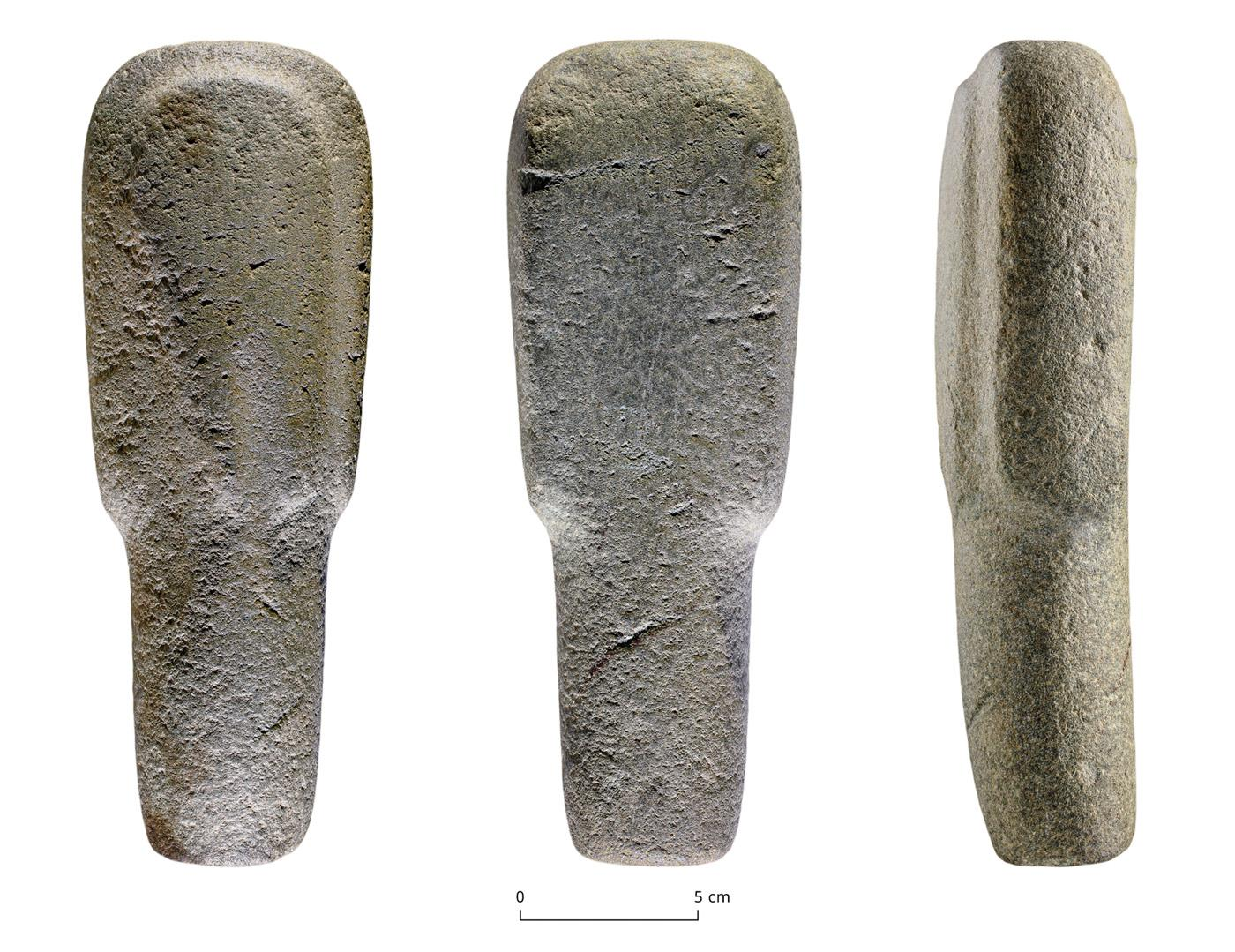
Stone axes were among the important tools of prehistoric communities. They were used in woodworking, clearing vegetation, construction, agricultural activities, and other tasks requiring cutting or shaping. Their production involved selecting suitable raw materials, shaping the stone through percussion, and sometimes polishing the surface to improve durability and efficiency.
The discovery of stone axes in a riverbed near Drama would be archaeologically interesting because river environments can contain materials displaced from their original locations. Water movement, erosion, flooding, and sediment deposition may transport objects away from the settlements where they were originally used.
Raw materials and technological choices
The type of stone used in an axe can reveal important information about prehistoric resource acquisition. Some communities relied on locally available materials, while others obtained stone from distant geological sources.
Petrographic analysis could help determine the composition of the axes and compare them with known geological formations. If the material originated from a distant source, it could provide evidence of exchange, movement, or specialized procurement.
The manufacturing process could also be examined through traces of flaking, grinding, polishing, and hafting. These characteristics allow archaeologists to reconstruct how the tool was produced and how it might have been used.
Riverbeds as archaeological environments
Riverbeds are complicated archaeological settings. Objects may become buried under sediment, exposed by erosion, or carried downstream. Their present location may therefore be unrelated to their original use.
A stone axe discovered in a riverbed could have originated from a nearby prehistoric settlement, an agricultural area, a burial site, or an older deposit disturbed by later activity. Without stratigraphic evidence, its exact age and original context would remain uncertain.
Regional prehistoric significance
The broader region of northern Greece has evidence of prehistoric settlement, agricultural development, and interaction between communities. Stone tools can contribute to understanding these processes by revealing technological adaptation, resource use, and changing ways of life.
A hypothetical collection of axes from a Drama riverbed would be especially valuable if it could be connected with settlement evidence, workshop remains, or a securely dated prehistoric layer. Such findings could help researchers examine how communities transformed their environment and developed practical technologies.