
Introduction
Kawa was one of the most important religious centers of the ancient Kingdom of Kush.
Located in northern Sudan along the Nile, the site became particularly important during the Napatan period.
The title Kawa: Nubia's Napatan Pyramid Town combines two elements of Kushite civilization: the religious importance of Kawa and the royal funerary tradition represented by pyramids elsewhere in Nubia.
Kawa itself is best known particularly for its temples and inscriptions rather than for being primarily a pyramid cemetery.
This distinction is important for accurately understanding the archaeological landscape.
Kawa and Kush
Kawa was located within the territory of the ancient Kingdom of Kush.
The site became especially prominent during the Napatan period, when Kushite rulers maintained strong religious connections with the god Amun.
Amun at Kawa
The great temple at Kawa was dedicated to Amun.
Amun was one of the most important gods in the Kushite religious system.
The temple connected the Kushite monarchy with divine authority.
Royal inscriptions emphasize the relationship between kingship and the god.
Napatan Kings
The Napatan rulers are particularly famous because several Kushite kings conquered and ruled Egypt during the Twenty-Fifth Dynasty.
Kings such as Piye, Shabaka, Shebitku, and Taharqo participated in a political system linking Nubia and Egypt.
Their monuments demonstrate the strength of Kushite civilization.
Temple Architecture
The temples at Kawa incorporated Egyptian architectural traditions.
They included monumental entrances, columns, courts, sanctuaries, and decorated walls.
However, their existence in Nubia also demonstrates that Egyptian architectural forms were adapted within Kushite society.
Inscriptions
Kawa is especially important because of its inscriptions.
Royal texts record:
religious devotion,
royal achievements,
building projects,
military events,
and relationships with the gods.
Such inscriptions provide some of the most valuable evidence for reconstructing Napatan political history.
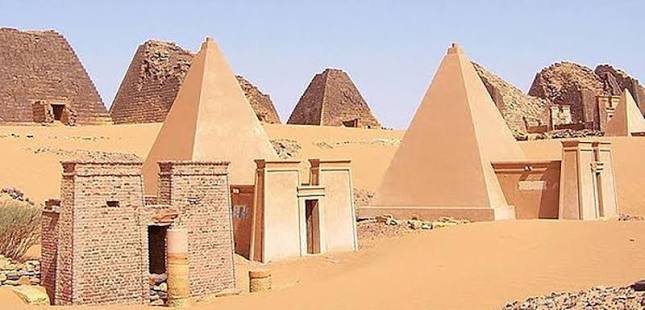
Pyramids and Kushite Burials
Kushite kings were buried in pyramids.
The major royal cemeteries were located at sites including El-Kurru, Nuri, and Meroe.
These pyramids were smaller and steeper than many Egyptian pyramids but represented an important continuation and transformation of the pyramid tradition.
Why Kawa Matters
Kawa demonstrates that Kushite civilization was deeply connected to Egyptian religious traditions without simply being Egyptian.
Kushite rulers adopted the worship of Amun and monumental architecture while maintaining their own political institutions and cultural identity.
Archaeological Excavation
Archaeological excavations at Kawa have produced architecture, inscriptions, pottery, sculpture, and other material.
These finds allow researchers to reconstruct both elite religious life and aspects of everyday settlement.
The Nile Environment
Kawa's position beside the Nile was fundamental.
The river provided water, agricultural resources, transportation, and communication.
Without understanding the Nile environment, it is difficult to understand the success of Kushite settlements.
Conclusion
Kawa: Nubia's Napatan Pyramid Town is best understood as a major Napatan religious and royal center rather than simply a pyramid settlement.
Its temples, inscriptions, and connection to Kushite kingship reveal the extraordinary political and religious sophistication of the Kingdom of Kush.
The pyramids of Kush are essential to Nubian history, but sites such as Kawa demonstrate that Kushite civilization was equally dependent on temples, river settlements, agricultural systems, and religious institutions.





