
Introduction
Sanam is an important archaeological site in Sudan associated with the Kingdom of Kush and particularly the Napatan period.
The site lies near the Nile and forms part of a broader archaeological landscape that includes temples, cemeteries, settlements, and royal monuments.
The title Sanam: Nubia's Amun Temple Complex highlights the site's connection with the worship of Amun.
Sanam is especially important because it demonstrates how religious architecture operated alongside administrative and residential spaces within Kushite society.
The Napatan World
The Napatan period represents an important stage in the development of the Kingdom of Kush.
During this era, Kushite rulers maintained strong religious connections with Amun.
They also interacted extensively with Egypt.
Kushite rulers adopted and transformed elements of Egyptian political and religious traditions.
The Temple of Amun
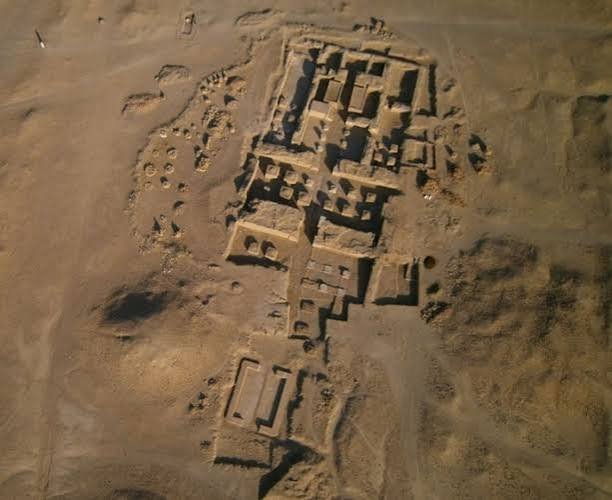
The temple complex at Sanam was dedicated to Amun.
Amun was associated with kingship and divine authority.
Temples dedicated to him could therefore serve important political functions.
Religious institutions were closely connected with royal ideology.
Temple Architecture
A large ancient temple could contain several architectural zones.
These might include:
entrance structures,
courtyards,
columns,
offering areas,
sanctuaries,
storage rooms,
and priestly spaces.
The organization of the temple controlled movement from public to increasingly sacred areas.
Religious Practice
Temple rituals could involve offerings of:
food,
drink,
incense,
textiles,
precious objects,
and animals.
Priests performed rituals according to established religious traditions.
Although the exact daily routine is difficult to reconstruct, inscriptions and comparative evidence help scholars understand the role of temples in ancient Nubia.
Sanam and the Wider Landscape
Sanam should not be considered independently from nearby archaeological sites.
The region around the Nile contains a network of ancient settlements and cemeteries.
Royal pyramids, temples, administrative buildings, and residential areas formed interconnected landscapes.
The location of Sanam within this network helps explain its significance.
The Cemetery
Sanam is also associated with a substantial cemetery.
Burial evidence can reveal social differences.
Grave size, architecture, objects, and burial treatment can provide clues about status and identity.
The cemetery therefore complements evidence from the temple.
Everyday Life
Temples depended on people.
Farmers produced food.
Craft workers manufactured goods.
Administrators organized supplies.
Transport workers moved materials.
Priests maintained rituals.
The archaeological remains around temple complexes therefore provide opportunities to reconstruct a society extending far beyond kings and gods.
Kushite and Egyptian Connections
Sanam illustrates the cultural relationship between Kush and Egypt.
The worship of Amun and the use of Egyptian architectural traditions demonstrate strong connections.
But Kushite society developed its own political and cultural identity.
It is therefore misleading to describe Kush simply as a southern extension of Egypt.
Conservation
Sudan's archaeological heritage faces serious challenges.
Environmental erosion, development, looting, political instability, and limited conservation resources can threaten sites.
Digital documentation and international archaeological collaboration are important tools for preserving information.
Conclusion
Sanam: Nubia's Amun Temple Complex provides a powerful example of how religion, politics, economy, and settlement were interconnected in ancient Kush.
The temple of Amun was not merely a place where people worshipped.
It formed part of a wider institutional system involving priests, administrators, craftspeople, farmers, traders, and rulers.
Together with its cemetery and surrounding settlement landscape, Sanam helps reconstruct the complexity of Napatan Nubia and demonstrates that the civilization of Kush deserves to be understood on its own terms—as one of the great civilizations of ancient northeastern Africa.
Final Perspective
Across Coldstream, Eswatini, and Nubia, these archaeological landscapes demonstrate how much human history can survive outside famous monumental centers.
Stone circles reveal settlement organization.
Rockshelters preserve traces of hunter-gatherer life.
Granite landscapes record the interaction between geology and human activity.
Iron furnaces reveal technological expertise.
Royal kraals connect livestock with political authority.
Rock art preserves symbolic traditions.
Ancient mines demonstrate sophisticated resource extraction.
Further north, Nubian fortresses, temples, pyramids, and cemeteries reveal powerful African kingdoms whose histories were deeply connected to Egypt while remaining culturally distinctive.
Together, these sites demonstrate an essential principle of archaeology: the past is not represented only by spectacular monuments. It is also preserved in walls, hearths, pigments, slag, burial grounds, tools, landscapes, and the ordinary spaces where people lived, worked, worshipped, and remembered their ancestors.





