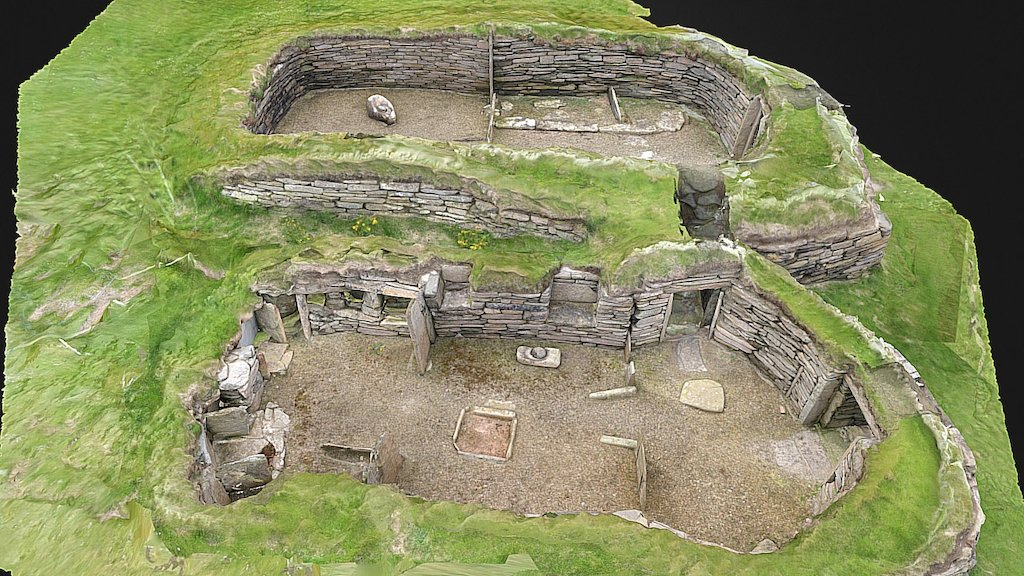
The Knap of Howar, located on the island of Papa Westray in Orkney, contains two stone-built houses dating to approximately 5,500 years ago.
The structures are among the oldest known preserved stone houses in northern Europe and provide extraordinary evidence for early farming communities.
Their architecture demonstrates that Neolithic people were already constructing durable homes and maintaining long-term relationships with the landscape.
One of Europe's Oldest Stone Houses
The Knap of Howar houses were constructed using local stone.
They were partially built into the ground, providing protection from Orkney's cold and windy climate.
The houses remained occupied for generations.
House Design
The two houses were connected by a low passage.
Inside were:
hearths;
stone beds;
storage compartments;
and work areas.
Their similarity suggests that they formed part of a planned settlement.
Farming
The inhabitants practiced agriculture and animal husbandry.
They likely cultivated cereals such as:
barley;
wheat;
and related crops.
They also raised livestock.
Cattle and Sheep
Livestock provided:
meat;
milk;
hides;
bones;
and labor.
Animals were also important socially.
Owning livestock could contribute to household wealth and status.
Marine Resources
Despite their farming lifestyle, the inhabitants continued to exploit the sea.
Their diet could include:
fish;
shellfish;
seabirds;
and other marine resources.
This demonstrates that Neolithic economies were diverse.
Stone Construction
Stone was abundant on Papa Westray.
Builders could use slabs and blocks without requiring large quantities of timber.
This was particularly advantageous in an environment with limited woodland.
Food Preparation
The hearth was the center of domestic life.
Fire allowed inhabitants to:
cook grain;
roast meat;
heat water;
and keep warm.
Grinding stones were used to process cereals.
Storage
Agriculture requires storage.
Harvested grain had to be protected from:
moisture;
pests;
and spoilage.
Stone storage spaces could help maintain food supplies.
Community Life
The construction of permanent houses indicates a significant degree of social stability.
People repeatedly returned to the same buildings.
This suggests:
attachment to place;
household organization;
and long-term management of agricultural land.
Climate
The Neolithic climate of Orkney was different from today but still challenging.
Strong winds and cool temperatures made sturdy buildings particularly valuable.
The partially subterranean design provided insulation.
Why Knap of Howar Matters
The Knap of Howar is important because it preserves evidence for:
early farming;
permanent settlement;
stone architecture;
domestic organization;
and mixed agricultural-marine economies.
Conclusion
The Knap of Howar demonstrates that Neolithic farmers in Orkney were capable of creating durable homes and organizing their lives around long-term settlement.
The houses provide an unusually intimate glimpse into prehistoric domestic life.
They show that more than 5,000 years ago, people were already building houses that could remain standing for generations.