Rome Built a Giant Military Fortress in Algeria—Then an Entire City Grew Around It
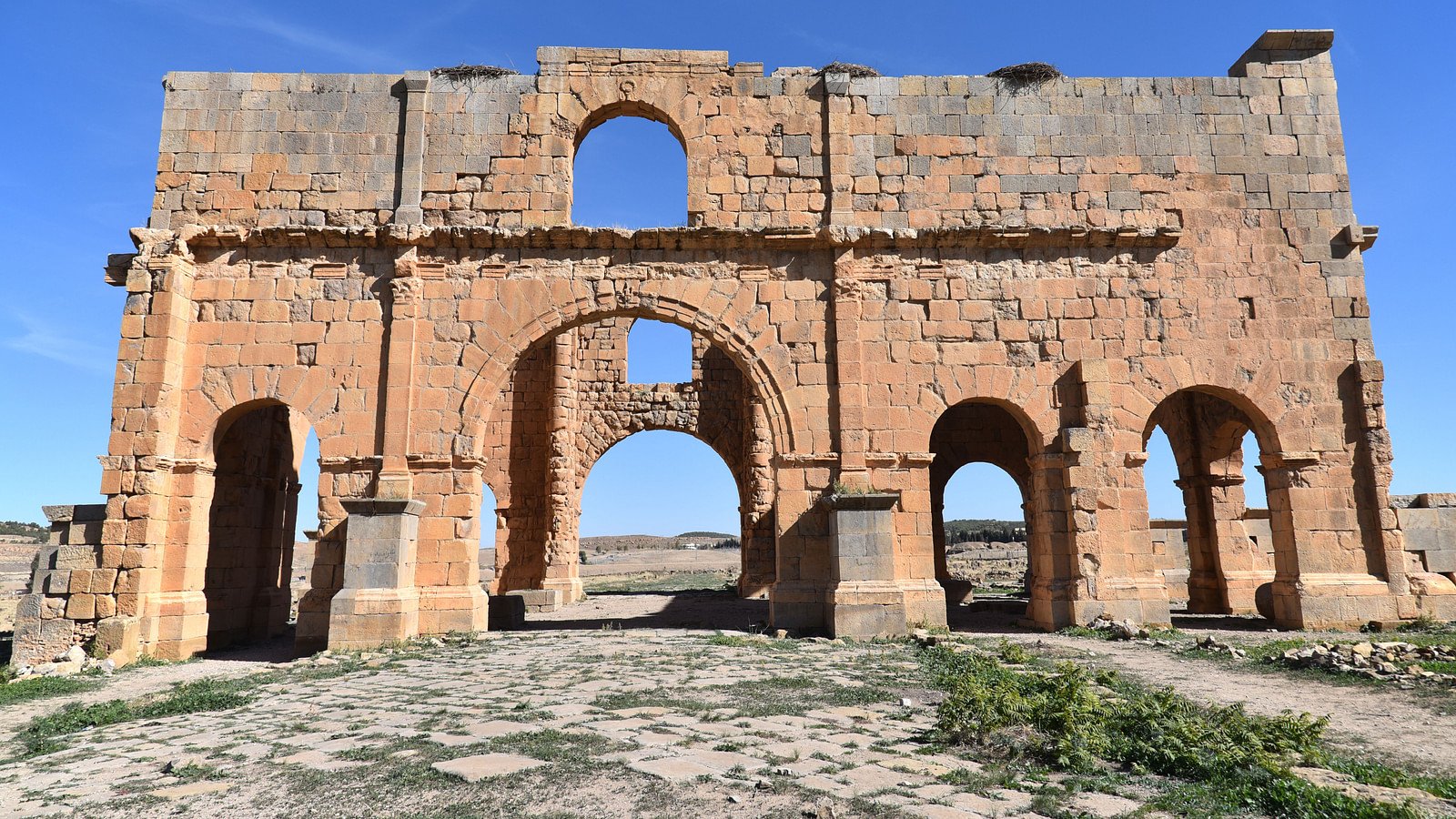
In the Aurès Mountains of Algeria lie the remains of Lambaesis, one of the most important Roman military sites in North Africa.
Unlike Timgad, which began primarily as a colonial settlement, Lambaesis developed around the presence of one of Rome's most powerful institutions:
the legion.
For centuries, the site served as the headquarters of the Legio III Augusta, a major Roman legion responsible for military operations across North Africa.
The history of Lambaesis reveals how Rome controlled distant provinces—not simply through monuments and administrators, but through permanent military infrastructure.
The Roman Legion
A Roman legion was a highly organized military institution.
During the imperial period, a legion could include several thousand soldiers.
It required:
Barracks.
Training grounds.
Storage facilities.
Workshops.
Administrative offices.
Roads.
Water supplies.
A permanent legionary base was therefore effectively a small city.
Why Lambaesis Was Strategically Important
The location allowed Roman forces to operate near the Aurès Mountains and surrounding frontier regions.
Military forces could respond to unrest.
Roads connected the fortress with other settlements.
The legion also supported broader Roman authority.
The presence of soldiers affected the economy.
Merchants supplied food.
Artisans provided equipment.
Families and civilians settled nearby.
A military camp gradually produced an urban community.
The Fortress
Roman military camps were carefully organized.
Typical features included:
Defensive walls.
Gates.
Straight internal roads.
Headquarters buildings.
Barracks.
Granaries.
Workshops.
The layout reflected discipline.
Military space was controlled.
Movement could be organized.
The Legio III Augusta
The Legio III Augusta became the central military force associated with Roman Numidia.
Its history reflects changing imperial policies.
The legion participated in military campaigns and frontier security.
At certain points, political decisions affected its status.
Its presence or absence had major consequences for regional stability.
Soldiers as Builders
Roman soldiers did more than fight.
They built.
Military units could construct:
Roads.
Bridges.
Fortifications.
Public buildings.
Water infrastructure.
In frontier provinces, the Roman army played a major role in engineering.
Lambaesis therefore became a center of technical expertise.
Civilian Settlement
A major military base attracted civilians.
A settlement developed around the fortress.
People supplied the soldiers with:
Food.
Clothing.
Equipment.
Entertainment.
Services.
Over time, the boundary between military and civilian life became increasingly important.
The Praetorium and Command
The headquarters building served as an administrative center.
Military records, official ceremonies, and command functions were organized from such spaces.
The Roman army depended on bureaucracy.
Orders had to travel.
Supplies had to be recorded.
Personnel had to be managed.
The ruins of Lambaesis reveal the administrative side of imperial power.
Religion in a Military Community
Roman soldiers came from diverse regions.
They brought religious traditions with them.
Military communities could worship:
Jupiter.
Mars.
Local deities.
Eastern Mediterranean gods.
Imperial cult figures.
Religion was therefore part of military identity.
Inscriptions provide evidence for individual soldiers and their beliefs.
Inscriptions and Forgotten Lives
One of the greatest sources of information about Lambaesis comes from inscriptions.
These can record:
Names.
Military ranks.
Units.
Dedications.
Construction projects.
Funerary memorials.
An inscription may preserve the name of a soldier who would otherwise be completely forgotten.
For historians, these texts transform anonymous ruins into human history.
Decline of the Military System
Roman frontier organization changed over time.
Political instability affected the empire.
Military units were reorganized.
Economic systems changed.
Eventually, the great legionary base lost its earlier importance.
But the physical remains survived.
Why Lambaesis Matters
Lambaesis demonstrates how the Roman Empire actually functioned on the ground.
Rome did not control North Africa from Italy alone.
It built permanent institutions.
It stationed soldiers.
It created roads.
It established administrative systems.
And around one enormous legionary fortress, an entire city developed.
The ruins are therefore evidence of something extraordinary:
an empire could build a military machine so powerful that its permanent camp became a civilization of its own.