Flourishing from the Late Bronze Age through the Early Iron Age (c. 1300–500 BCE), the Lusatian culture formed a dense network of highly organized communities across Poland, extending into parts of eastern Germany, Czechia, and Slovakia. They are defined by their unique funerary landscape, characterized by sprawling, multigenerational "urn fields" that contain thousands of cremation burials.
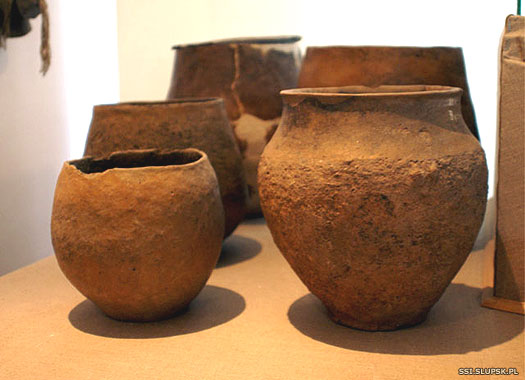
The Cremation Shift: The transition from traditional inhumation to cremation was not merely a change in burial preference; it represented a massive ideological and spiritual revolution across Central Europe. Bodies were burned on large pyres, and the remaining bone fragments were carefully washed and placed inside beautifully decorated ceramic urns. These urns were often accompanied by mini "accessory vessels" meant to hold food and drink for the journey to the afterlife.
The Biskupin Masterpiece: The ultimate expression of Lusatian societal complexity is found at Biskupin in northwestern Poland. Discovered in northern marshes, this lakeside settlement dates precisely to the winter of 748–747 BCE based on tree-ring dating (dendrochronology). Biskupin was a masterclass in prehistoric urban planning.
Communal Engineering: The site featured a fortified oval layout built on a swampy island, ringed by a massive breakwater and a wooden, earth-filled rampart over 6 meters wide. Inside, a single wooden corduroy road connected 11 parallel streets, lined with 105 identical, interconnected log cabins. This strict architectural uniformity strongly suggests an egalitarian communal structure with highly synchronized labor coordination, capable of housing over 1,000 people in a heavily defended, hostile environment.