Over 50 Skeletons Unearthed in Aarhus Reveal Early Christian History
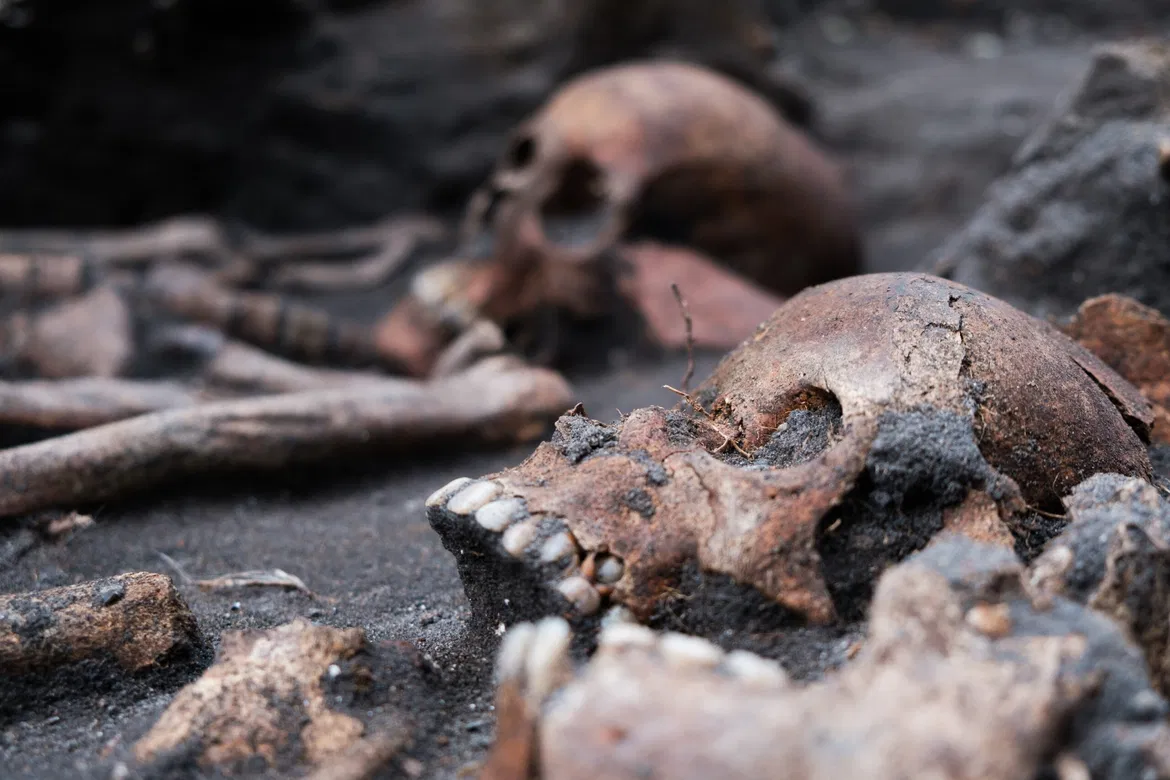
Archaeologists in Denmark have uncovered more than 50 skeletons in central Aarhus, shedding light on the city’s earliest Christian period. The excavation, led by Moesgaard Museum, is taking place at a historic burial ground along St. Oluf’s Street, near the former defensive ramparts of Aros, the Viking settlement that eventually became modern Aarhus.
Some burials are believed to date back around 900 years, to the 12th century, a time when Christianity was becoming firmly established in the region. The cemetery once belonged to St. Oluf’s Church, which collapsed in 1548 after a storm and was later demolished, though the cemetery remained in use until 1813.
Moesgaard archaeologist Mads Ravn emphasized the significance of the find: “The cemetery marks the tangible entry of Christianity into the city at the end of the Viking Age and the beginning of the Middle Ages. The burial customs reflect this transition and offer a rare opportunity to study the lives, illnesses, and beliefs of the first Aarhusians, as well as the role of Christian cultural heritage in the city’s development.”
Burials to Undergo Further Study
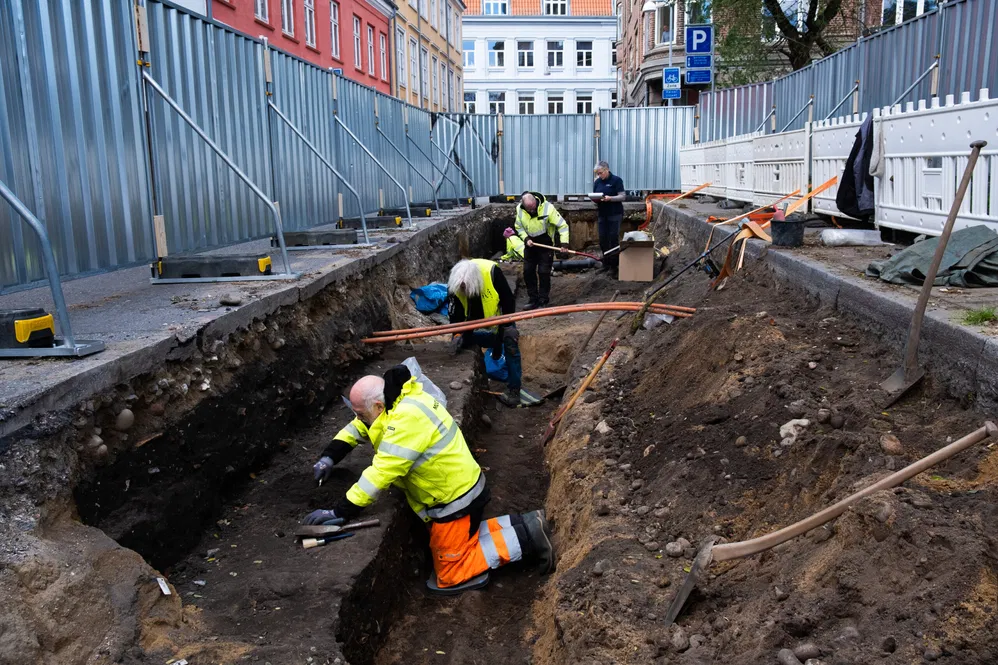
Archaeologists excavate in Sct. Olufs Gade.
Excavation Sparked by Infrastructure Work, Reveals Church Dedicated to Viking King
The Aarhus excavation was triggered by municipal work to install underground waste containers, a frequent cause of archaeological discoveries in European city centres where medieval remains often lie just beneath modern streets.
St. Oluf’s Church, once standing beside the cemetery, was named for Olav Haraldsson, the Viking chieftain who became king of Norway in 1015. Olav played a key role in spreading Christianity across Scandinavia, and after his death, his cult grew rapidly, leading to many churches being dedicated to him throughout medieval northern Europe.