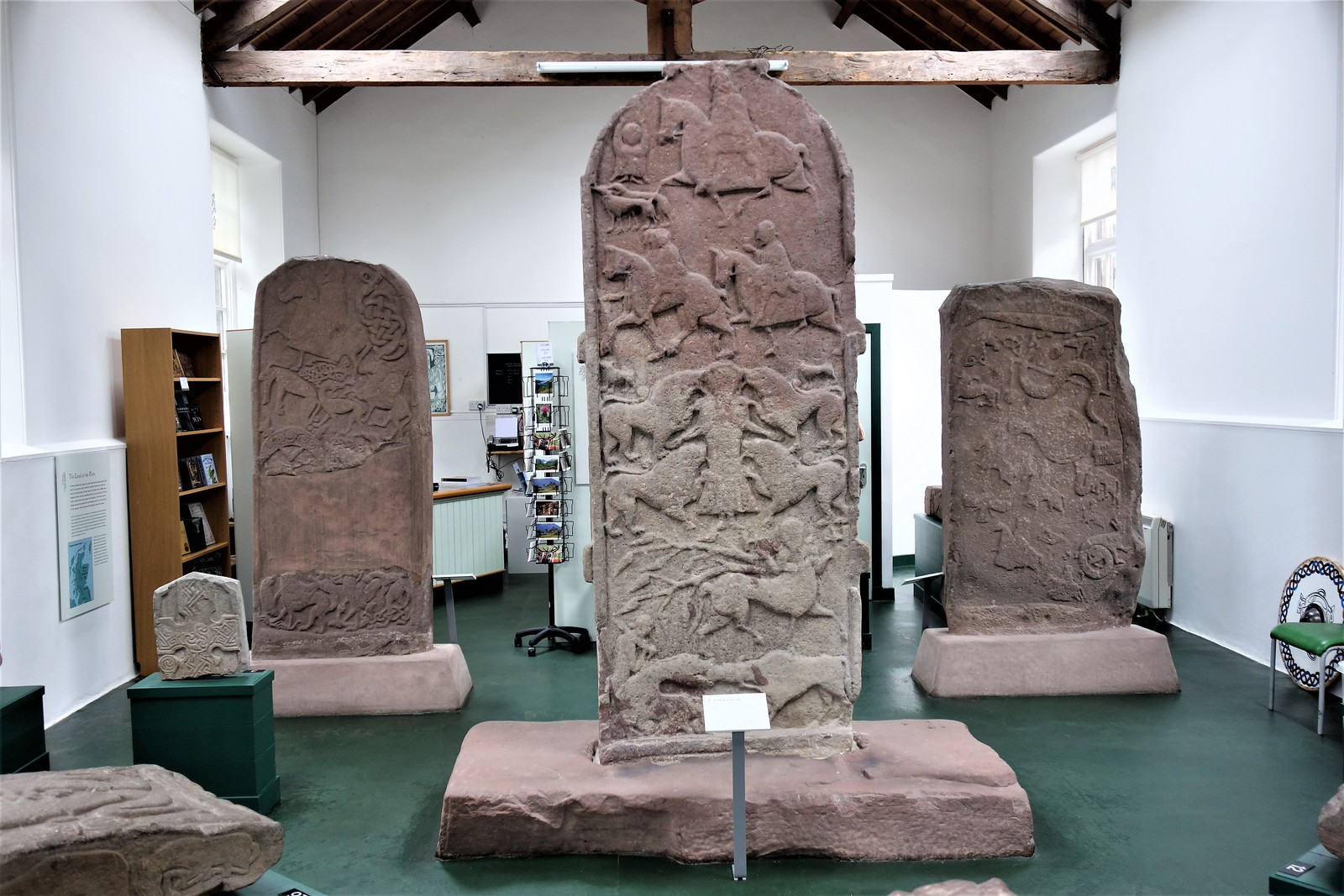
The Meigle Sculptured Stones represent one of the most important collections of early medieval carved stones in Scotland. Located in Perthshire, the collection preserves an extraordinary range of Pictish artistic traditions, including elaborate crosses, animals, warriors, mythical creatures, interlace, and symbolic designs.
Meigle is especially significant because the stones demonstrate how Pictish communities used monumental sculpture to communicate religious, political, and social ideas.
The Pictish World of Meigle
The Picts occupied much of northern and eastern Scotland during the early medieval period.
Although they left relatively few written records, their carved stones provide important evidence for their society.
The monuments at Meigle belong largely to the period between approximately the seventh and ninth centuries.
A Remarkable Collection
Meigle was once associated with a much larger group of carved stones.
Today, a substantial collection survives and is preserved and displayed through the local archaeological heritage.
The stones vary considerably in:
size;
shape;
decoration;
subject matter;
and artistic style.
Christian Crosses
Several stones contain elaborate Christian crosses.
These crosses are often surrounded by intricate ornament.
The designs may incorporate:
interlace;
spirals;
geometric patterns;
animals;
and human figures.
Pictish Symbols
Traditional Pictish symbols also appear in the collection.
These include:
animals;
serpent-like creatures;
discs;
rods;
mirrors;
and abstract geometric motifs.
Their precise meanings remain unknown.
Mythical Creatures
Some stones contain unusual creatures that cannot be easily identified with real animals.
These may represent:
mythical beings;
symbolic creatures;
religious imagery;
or artistic conventions.
Human Figures
Warriors and other human figures appear on some Pictish monuments.
They may provide clues about:
clothing;
weapons;
social status;
and military culture.
The Story of Vanora
Meigle became associated with later traditions concerning Vanora, a legendary figure sometimes identified with Guinevere in medieval storytelling.
According to local tradition, a carved stone became associated with her burial.
However, the connection is part of later folklore rather than established Pictish history.
Folklore and Archaeology
The relationship between folklore and archaeology is important.
Local legends can preserve memories of ancient monuments, but they should not automatically be treated as historical records.
Nevertheless, folklore demonstrates that communities continued to attach meaning to the stones long after their original creators had disappeared.
Artistic Techniques
Pictish sculptors demonstrated exceptional skill.
They carved:
shallow and deep relief;
interlaced patterns;
curved lines;
animal bodies;
and complex geometric forms.
Christianity and Pictish Identity
The Christian imagery demonstrates that Pictish society participated in the wider Christian world.
However, Pictish artistic traditions remained distinctive.
The stones therefore show how Christianity was incorporated into local cultural traditions.
Why Meigle Matters
Meigle provides one of the richest collections for studying Pictish sculpture.
The stones preserve evidence for:
religion;
mythology;
warfare;
artistic skill;
social identity;
and cultural change.
Conclusion
The Meigle Sculptured Stones are an extraordinary record of early medieval Scotland.
Their combination of Christian crosses, Pictish symbols, animals, warriors, and intricate ornament demonstrates that Pictish communities possessed a sophisticated visual culture.
The stones remain among the most important surviving evidence for understanding a society whose written history is still fragmentary.