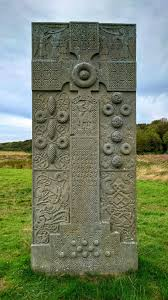
The St Andrews Sarcophagus is one of the greatest surviving examples of Pictish sculpture.
Created during the later Pictish period, probably in the second half of the ninth century, the monumental stone sarcophagus demonstrates extraordinary artistic skill and provides important evidence for elite burial, Christianity, and royal power.
A Monumental Stone Coffin
The sarcophagus was constructed from carefully shaped stone slabs.
Its design is much more elaborate than an ordinary burial container.
The monument was decorated with carved figures and ornamental motifs.
Royal Association
The sarcophagus is traditionally associated with King Óengus, or another member of the Pictish elite.
The exact identity of the individual for whom it was created remains uncertain.
Nevertheless, its scale and decoration indicate that it was intended for someone of exceptional status.
Christian Imagery
The sculpture contains Christian symbolism.
This demonstrates the growing importance of Christianity among the Picts.
Lions and Other Animals
The carvings include animals and human figures.
Animals may have had:
symbolic;
religious;
political;
or decorative meanings.
A Hunting Scene?
One of the most famous elements of the sarcophagus is a hunting scene involving a mounted figure.
The image may represent:
aristocratic hunting;
royal authority;
military power;
or Christian symbolism.
Warrior Imagery
Figures carrying weapons may also appear.
These representations emphasize the connection between elite identity and military authority.
Artistic Influences
Pictish sculpture developed within a broader world of cultural exchange.
The sarcophagus incorporates artistic traditions connected with:
Celtic Christianity;
Insular art;
northern European sculpture;
and local Pictish traditions.
Construction
Creating the sarcophagus required highly skilled stoneworkers.
The sculptor had to plan the design across multiple surfaces.
The figures needed to fit within a three-dimensional object while remaining recognizable.
St Andrews
The sarcophagus is associated with St Andrews, which became one of Scotland's most important religious centers.
The presence of such an elite monument demonstrates the importance of the site.
Christianity and Royal Power
The sarcophagus demonstrates how Christianity and kingship could reinforce one another.
A ruler buried within an important Christian center could associate political authority with sacred legitimacy.
Why the Sarcophagus Matters
The monument provides evidence for:
Pictish kingship;
elite burial;
Christianity;
artistic sophistication;
and international cultural connections.
Conclusion
The St Andrews Sarcophagus is a masterpiece of Pictish sculpture.
Its complex imagery combines Christian themes, animals, warriors, and elite hunting imagery, revealing a society in which religion, kingship, warfare, and artistic expression were deeply connected.