The Ancient Images Hidden on Algeria's Rocks: Who Created Them and Why?
Across North Africa, ancient rock art provides one of the most important records of prehistoric life.
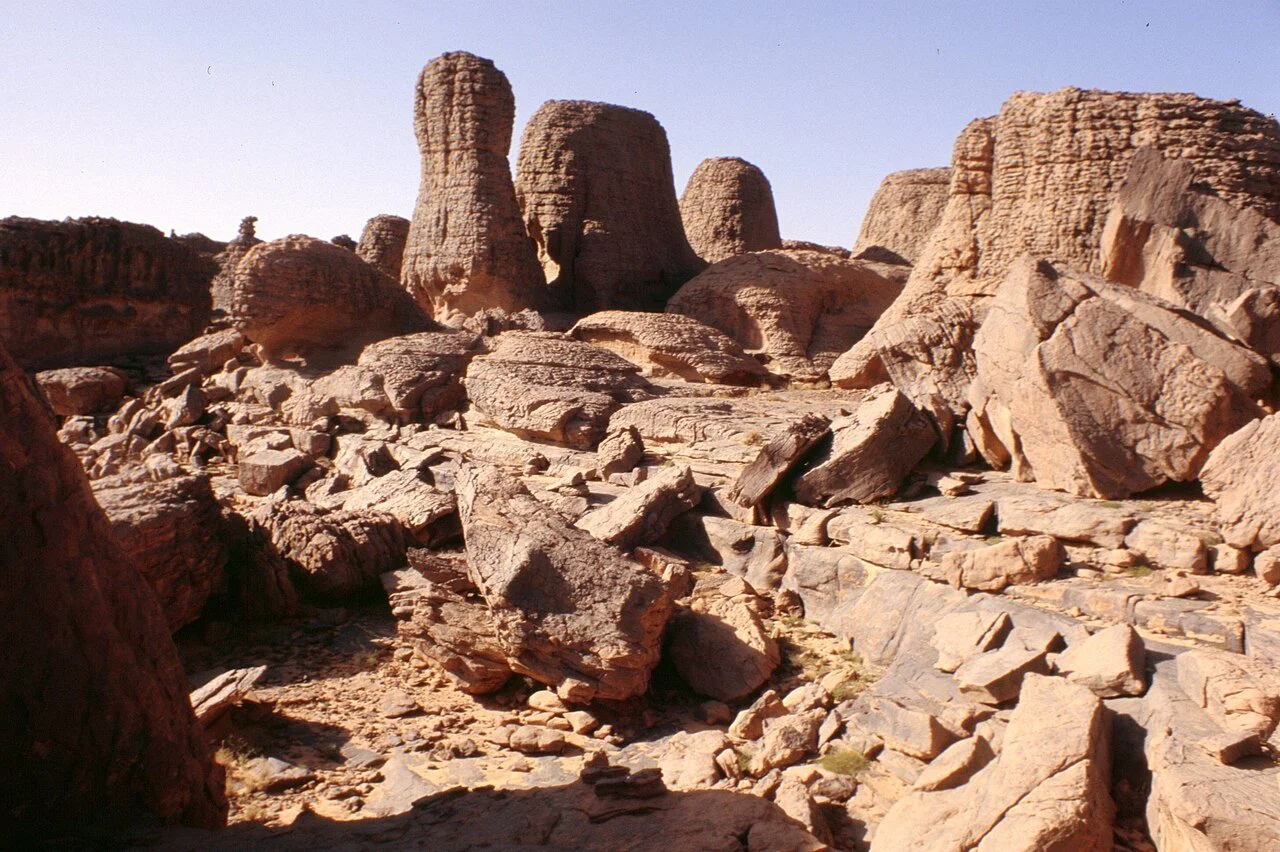
In areas associated with Oued Athmen and other Algerian landscapes, researchers have documented carvings, markings, and artistic traditions that may preserve evidence of ancient communities.
However, individual rock-art sites require careful archaeological identification and dating. Popular lists can sometimes attach broad labels to poorly documented locations, making it essential to distinguish between securely studied sites and generalized descriptions.
The wider story of Algerian rock art is nevertheless extraordinary.
It reveals that landscapes now associated with dry environments were once inhabited by communities whose lives depended on hunting, herding, water sources, and changing climates.
What Is Rock Art?
Rock art includes two major categories.
Petroglyphs are images created by carving, pecking, incising, or abrading rock surfaces.
Pictographs are painted images applied to stone.
The distinction matters because the techniques differ.
A carved image may survive differently from a painted one.
The Problem of Dating Rock Art
Dating ancient images is difficult.
Stone itself cannot simply be radiocarbon dated.
Researchers instead examine:
Archaeological context.
Superimposed images.
Weathering.
Associated organic materials.
Artistic style.
Depicted animals.
For example, an image of an animal no longer present in the Sahara may provide clues about the environmental conditions under which it was created.
But caution is essential.
Style alone rarely provides an exact date.
Ancient Climate Change
One of the most important lessons of North African rock art is that the Sahara has not always looked as it does today.
During periods sometimes referred to as the African Humid Period, large areas of what are now deserts received significantly more rainfall.
Grasslands and lakes existed.
Animal populations were different.
Human communities occupied regions that are now extremely arid.
Rock art preserves visual evidence of this lost environment.
Hunters, Herders, and Artists
The images found across Algeria and the Sahara may depict:
Wild animals.
Domestic cattle.
Hunters.
Human figures.
Weapons.
Ritual scenes.
Geometric symbols.
These changes can help archaeologists trace transformations in human society.
A region dominated by hunting imagery may later display evidence of pastoralism.
The art becomes a visual record of economic change.
Why Oued Athmen Matters
Even lesser-known rock-art landscapes are important because they expand the geographical record of prehistoric North Africa.
The history of ancient Algeria was not limited to the Mediterranean coast.
Human communities occupied valleys, mountains, and desert margins.
The challenge today is ensuring that poorly documented sites are studied rather than sensationalized.
Every authentic engraving may preserve information about a prehistoric community that left no written history.