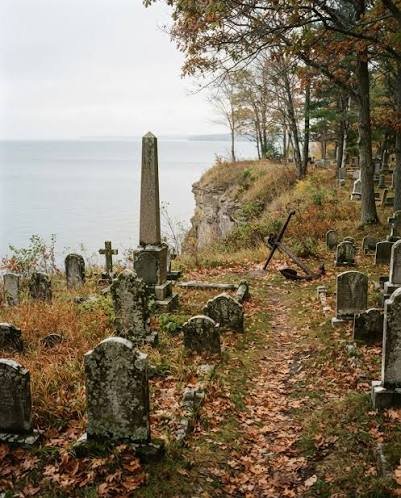
Lakeshores have attracted human communities for thousands of years because they provide access to freshwater, fish, plants, animals, and transportation routes. In prehistoric and historic periods, lakes could also become important places for burial and ritual activity. As water levels changed, former shorelines were abandoned, buried beneath sediment, or submerged, leaving cemeteries in locations that may appear far removed from the present lake edge. The archaeology of paleo-lakeside cemeteries investigates how ancient communities used these changing environments and how burial practices were connected to settlement, landscape, and memory. Identifying such cemeteries requires careful reconstruction of past shorelines as well as reliable archaeological evidence for human burial.
Lakes are dynamic systems. Their water levels respond to precipitation, evaporation, river inflow, groundwater, climate change, and changes in the surrounding drainage basin. Some lakes expand during wetter periods and contract during droughts, while others are affected by glacial processes, tectonic activity, or changes in outlet channels. These fluctuations can shift the boundary between land and water over relatively short periods. A cemetery that once stood near a shoreline may therefore lie inland today, while a burial area once located on dry ground may now be submerged.
Reconstructing an ancient shoreline begins with geological and environmental evidence. Sediment cores can reveal changes from terrestrial soils to lake deposits, or from deep-water sediments to shallow-water environments. Pollen, diatoms, plant remains, and other microfossils can help researchers identify changes in vegetation and water conditions. These records may indicate when a shoreline moved across a particular area. However, environmental evidence alone does not establish that a cemetery existed there. Archaeological survey and excavation are needed to identify graves and determine whether they belong to the period when the reconstructed shoreline was present.
Burials near lakes may take many forms. Some communities buried their dead in organized cemeteries, while others used isolated graves, family burial areas, or locations associated with settlements and ritual sites. Grave construction could include simple pits, stone-lined chambers, wooden containers, or more elaborate monuments. The treatment of the body, orientation of the grave, associated objects, and relationship between individual burials may provide clues about funerary customs. Nevertheless, burial practices vary widely across cultures and periods, and researchers should avoid assuming that every lakeside cemetery served the same social or ritual function.
The position of a cemetery relative to a former shoreline can help illuminate its role in the landscape. A burial area may have been placed near a settlement, on a prominent rise overlooking the water, or at a boundary between cultivated land and wetlands. Such locations could have practical significance, symbolic importance, or both. Water may have formed part of the community's understanding of the transition between life and death, but this interpretation cannot be assumed solely from proximity to a lake. Evidence from grave goods, monuments, settlement patterns, and local traditions is needed to develop a more convincing explanation.
Human remains can contribute information about the people buried at a paleo-lakeside cemetery. Osteological analysis may reveal age at death, biological sex estimates where possible, patterns of injury, and evidence of some diseases or physical stresses. Isotopic analysis of teeth and bones can sometimes provide information about diet and mobility. These findings may help researchers investigate whether the cemetery served a local community or included people who moved into the region. However, skeletal evidence cannot directly establish an individual's ethnic identity, beliefs, or social status without supporting archaeological and historical context.
Grave goods and burial arrangements may reveal social distinctions within a community. Some graves may contain ornaments, tools, weapons, vessels, or other objects, while others contain few or no artifacts. Differences could reflect age, gender roles, occupation, ritual practice, family tradition, or status. Yet the absence of grave goods does not necessarily indicate poverty, and the presence of valuable objects does not automatically prove high political rank. Researchers must consider how objects were selected for burial and whether the cemetery changed over time.
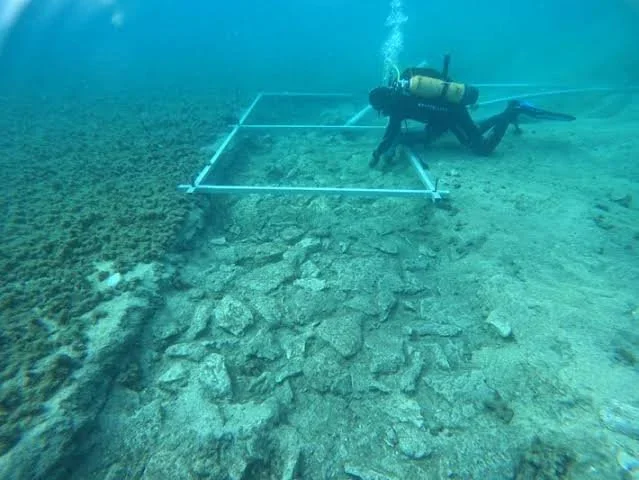
Submerged cemeteries present particular challenges. Water movement can erode graves, displace bones, and redistribute objects. Sediment may conceal burial features, while changing oxygen conditions can affect the preservation of human remains and organic materials. Underwater survey can identify possible grave outlines or concentrations of artifacts, but disturbance may make it difficult to determine whether objects remain in their original positions. In some cases, the best evidence may come from shoreline excavations carried out before inundation or from deposits preserved beneath later sediment.
Dating is essential for connecting a cemetery to a vanished shoreline. Radiocarbon dating of suitable human bone or associated organic materials can provide chronological estimates, but samples must be carefully selected and interpreted. Aquatic food consumption can sometimes affect radiocarbon results because of reservoir effects, in which carbon from older aquatic sources influences the apparent age of human remains. Researchers may need to compare dates from different materials and consider local environmental conditions. Stratigraphic relationships and associated artifacts can provide additional chronological evidence.
The relationship between cemeteries and settlement patterns can reveal how communities responded to environmental change. If a cemetery was established near a lake and later became separated from the water, the change may reflect shoreline movement rather than deliberate relocation. In other cases, declining water levels or changing resources may have influenced settlement decisions. Researchers can compare cemetery chronology with evidence for nearby houses, agricultural fields, fishing installations, and paths to understand whether burial activity continued as the landscape changed.
Paleo-lakeside cemeteries demonstrate how environmental reconstruction can transform the interpretation of archaeological sites. A burial ground that now appears isolated may once have occupied a prominent position beside a lake used for daily subsistence, transportation, and ritual activity. By combining geological evidence, shoreline modeling, burial archaeology, osteological analysis, and scientific dating, researchers can investigate the changing relationship between communities and water. These studies recover not only the physical geography of vanished shorelines but also the ways people placed their dead within landscapes that changed across generations.