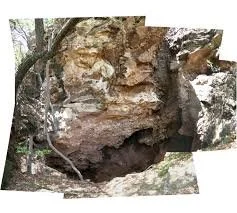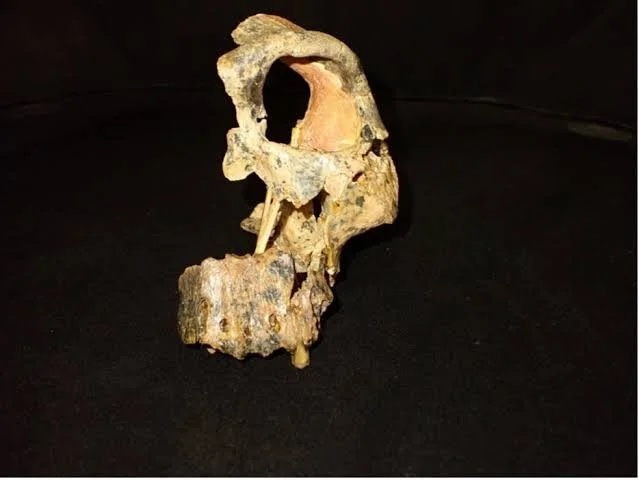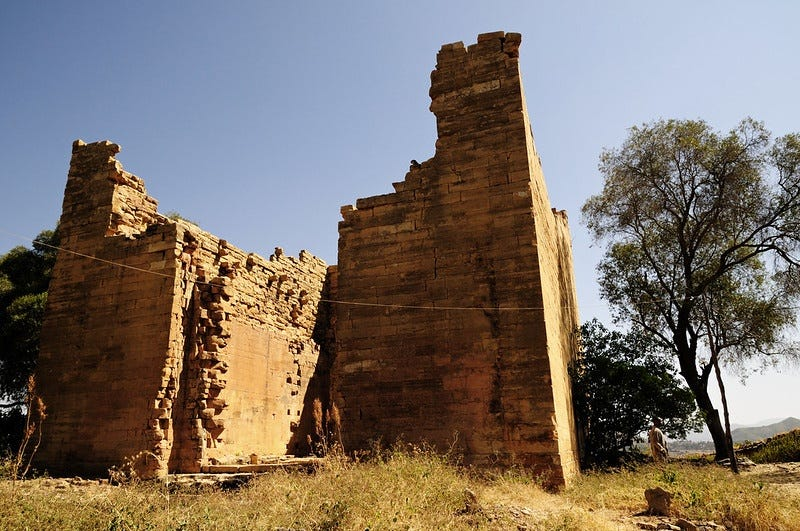
Qaahoti represents the wider archaeological history of Somaliland before the emergence and expansion of the Aksumite civilization.
The label “Pre-Aksumite” is useful for describing archaeological contexts that predate or developed independently of later Aksumite influence, but identifying a specific site such as Qaahoti requires careful attention to archaeological evidence and chronology.
The importance of the region lies in its position between the Horn of Africa, the Red Sea, southern Arabia, and the wider Indian Ocean world.
The Horn of Africa Before Aksum
Aksum became a major kingdom in northern Ethiopia and Eritrea during the first centuries CE.
However, complex societies existed in the Horn of Africa before Aksum.
Communities practiced:
agriculture;
livestock herding;
craft production;
local trade;
and long-distance exchange.
The emergence of Aksum therefore represents a later stage in a much longer history.
The Red Sea Connection
The Red Sea was a major communication corridor.
People living on its western and eastern shores could interact through maritime and coastal networks.
Trade connected the Horn of Africa with:
southern Arabia;
Egypt;
the eastern Mediterranean;
and eventually the Indian Ocean.
Local Communities
Pre-Aksumite communities were not simply waiting for Aksum to appear.
They developed their own technologies and economic systems.
Agricultural production could include:
grains;
legumes;
and other crops adapted to local environments.
Livestock provided:
meat;
milk;
hides;
and transportation.
Trade and Exchange
The Horn of Africa possessed resources that were attractive to external trading partners.
These included:
aromatic resins;
animal products;
ivory;
livestock;
and other materials.
In return, communities could obtain:
ceramics;
metals;
beads;
and other imported objects.
Such exchange helped create increasingly complex regional economies.
Archaeological Evidence
Pre-Aksumite archaeology relies on multiple categories of evidence.
Researchers examine:
pottery;
stone tools;
metal objects;
architecture;
burial practices;
and imported goods.
The presence of foreign objects can demonstrate contact but does not necessarily mean foreign settlement.
A single imported ceramic vessel could have moved through several communities before reaching its final location.
Religious Traditions
Before the widespread adoption of Christianity in the region, communities followed diverse religious traditions.
Archaeological evidence may include:
burial practices;
ritual objects;
monumental structures;
and symbolic art.
However, interpreting prehistoric religion is difficult because the beliefs themselves were not recorded in writing.
A Landscape of Cultural Interaction
Somaliland's position made it part of a wider cultural crossroads.
African and Arabian communities interacted across the Red Sea.
The movement of goods could also carry:
languages;
technologies;
artistic styles;
and religious concepts.
The development of later complex states therefore emerged from long-standing networks.
The Transition Toward Aksumite Influence
As Aksum expanded, its political and economic influence reached broader parts of the Horn of Africa.
The transition was not necessarily a sudden replacement of older cultures.
Local communities could adopt selected Aksumite practices while maintaining their own traditions.
Why Qaahoti Matters
Qaahoti's importance lies in the broader evidence it represents for societies that existed before the dominance of Aksum.
It helps place Aksumite civilization within a longer history of:
regional settlement;
agriculture;
pastoralism;
Red Sea commerce;
and cultural interaction.
Conclusion
The pre-Aksumite archaeological landscape of Somaliland demonstrates that complex human societies existed in the Horn of Africa long before Aksum became a major kingdom.
Communities developed agricultural and pastoral economies, participated in trade, and interacted with neighboring regions across the Red Sea.
Understanding these earlier societies is essential for understanding how the political and economic world that later produced Aksum developed.