
Introduction
Qasr Ibrim is one of the most remarkable archaeological sites in Nubia.
Located on a high promontory overlooking the Nile in what is now southern Egypt, the site preserves an extraordinary sequence of occupation extending from ancient Egyptian periods through the medieval Christian kingdoms of Nubia and into the Islamic era.
Its combination of defensive architecture, religious buildings, administrative structures, and written documents makes Qasr Ibrim exceptionally valuable.
A Fortress Above the Nile
Qasr Ibrim's elevated position provided natural defensive advantages.
The site could overlook surrounding territory and river traffic.
Its defensive walls transformed the elevated settlement into a powerful fortified center.
The strategic position remained important for centuries.
Christian Nubia
During the medieval period, Qasr Ibrim became part of the Christian Nubian world.
The kingdoms of Nobadia, Makuria, and Alodia formed sophisticated political societies south of Egypt.
Christianity became deeply integrated into Nubian political and cultural life.
Churches were constructed throughout the region, and religious institutions became major centers of literacy and administration.
The Cathedral
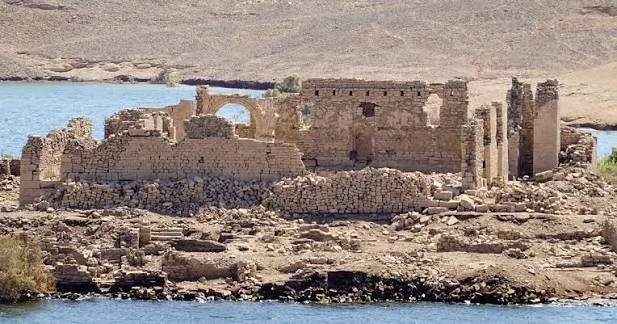
The cathedral at Qasr Ibrim is among the site's most important structures.
Its remains demonstrate the architectural traditions of medieval Nubian Christianity.
Christian buildings in Nubia often incorporated architectural influences connected to Egypt and the wider Christian Mediterranean while developing distinct local characteristics.
Written Documents
Qasr Ibrim is especially famous for the preservation of written materials.
The site's dry environment helped preserve documents that would normally decay.
Texts in languages including Greek, Coptic, Old Nubian, and Arabic have contributed enormously to understanding medieval Nubia.
These documents illuminate political administration, religious practice, legal affairs, personal communication, and economic life.
The Islamic Transition
The Christian period eventually gave way to Islamic political and cultural influence.
The transition was not necessarily instantaneous.
Different communities, institutions, and religious traditions continued to interact.
Archaeological evidence from Qasr Ibrim allows researchers to examine this transformation over long periods rather than treating it as a single historical event.
The Aswan High Dam
Modern archaeology at Qasr Ibrim was profoundly affected by the construction of the Aswan High Dam.
As the reservoir expanded, many archaeological sites in Nubia were threatened by rising water.
Qasr Ibrim's elevated location allowed it to survive above the reservoir, making it one of the few major sites from Lower Nubia still standing in its original landscape.
Conclusion
Qasr Ibrim is one of the most important surviving archaeological sites for medieval Nubia.
Its cathedral, fortress, documents, domestic structures, and long occupational sequence provide an unusually detailed record of Christian Nubian society and its transformation through later centuries.





