The Roman Empire didn’t just master glass; they democratized it. In the span of a few centuries, glass transitioned from a substance more precious than gold to a household staple. This was driven by a singular technological revolution: the invention of glassblowing.
1. Before the Blowpipe: Core-Forming and Casting
Before the 1st century BCE, glassmaking was a slow, laborious process. Artisans used core-forming, where molten glass was wrapped around a clay-and-dung core that was later scraped out.
Luxury Status: Because it took days to make a single small vessel, glass was reserved for the ultra-wealthy, used primarily for perfume "unguentaria" or jewelry.
The "Millefiori" Technique: Romans also excelled at "thousand flowers" glass, created by fusing together slices of multicolored glass canes. While stunning, it was thick, heavy, and extremely expensive.
2. The 1st Century BCE Revolution: Free-Blowing
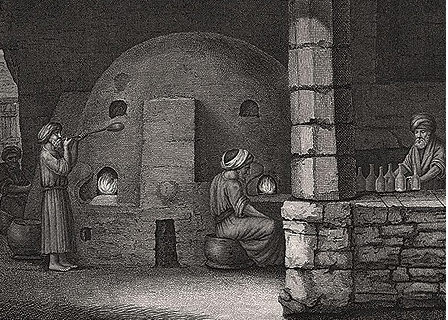
Around 50 BCE, likely in the Phoenician city of Sidon (modern Lebanon), someone discovered that a glob of molten glass could be inflated with a hollow metal tube. This changed everything.
Speed of Production: A skilled glassblower could produce a vessel in minutes rather than days.
Transparency and Thinness: For the first time, glass could be blown thin enough to be truly translucent, leading to the Roman obsession with "clear" glass that mimicked expensive rock crystal.
The "Ennion" Signature: We even know the names of the "star" glassblowers of the era, like Ennion, who signed his mold-blown pieces, marking the birth of "branded" luxury goods.
3. Mass Production: Mold-Blowing
To meet the massive demand of the expanding Empire, the Romans combined blowing with carved molds.
Standardization: Artisans blew glass into multi-part ceramic or stone molds. This allowed for identical shapes, sizes, and intricate relief patterns.
Commercial Utility: This led to the creation of the square bottle (mercury flask). Because they were square, they could be packed tightly into crates with minimal wasted space, revolutionizing the transport of oils, wine, and medicines across the Mediterranean.
4. The Luxury Frontier: Cameo and Diatreta Glass
As common glass became cheap, the Roman elite sought even more complex "high-art" pieces to signal their status.
Cameo Glass: This involved fusing two layers of different colored glass (usually white over dark blue) and carving away the top layer to create a 3D scene. The most famous example is the Portland Vase.
Cage Cups (Diatreta): These are the pinnacle of Roman glass technology. A thick blank of glass was painstakingly ground and undercut until the outer layer was a delicate, detached lace "cage" held to the inner cup by tiny, invisible bridges.
5. The Invention of Window Glass
One of the most profound Roman contributions was the introduction of flat window glass. By the 1st century CE, Romans in colder climates (like Roman Britain) were using glass panes in bathhouses and villas.
The "Muff" Process: They blew a long cylinder of glass, cut it down the side, and flattened it out while hot.
Social Impact: This allowed light into buildings while keeping the heat in—a luxury that vanished from much of Europe for centuries after the Empire fell.
6. The Chemistry of "Roman Green"
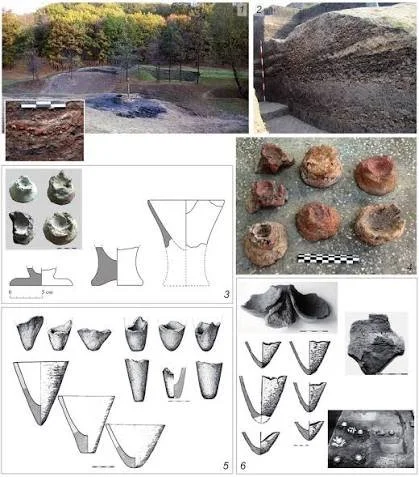
Archaeological analysis of Roman glass factories (like those found in Alexandria or Cologne) shows they used "natron" (a natural soda ash) from the Wadi Natrun in Egypt as a flux.
Recycling Culture: Romans were obsessive recyclers. When glass broke, it was collected and remelted in huge "tank furnaces."
Natural Tint: Most common Roman glass has a blue-green tint caused by iron impurities in the sand. To make clear glass, they added antimony or manganese, which acted as chemical "decolorizers."
The Roman glass industry was a precursor to the modern world: it featured branding, mass production, global supply chains, and a constant tension between functional utility and high-end luxury.