
Introduction
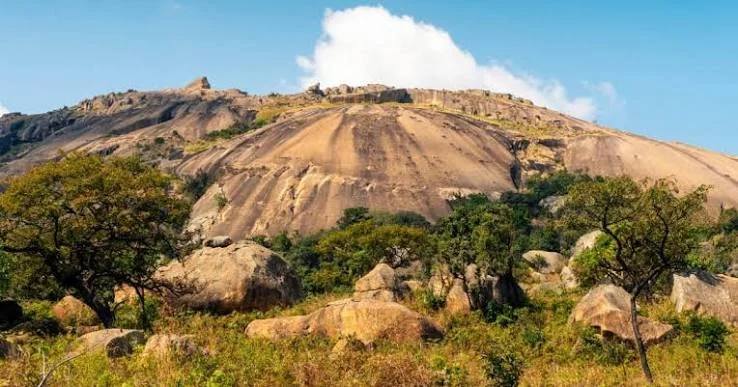
Sibebe Rock is one of Eswatini's most spectacular geological landmarks.
The enormous granite formation rises above the surrounding landscape and is widely recognized for its unusual rock surfaces and dramatic scenery.
The title Sibebe: Eswatini's Granite Dome Carvings suggests the presence of carved or engraved features associated with this granite landscape.
The geological importance of Sibebe is firmly established, while any specific archaeological claim concerning "carvings" requires careful verification.
This distinction is important because natural weathering can produce patterns that resemble deliberate human marks.
The Granite Landscape
Sibebe is part of an ancient granite landscape.
Granite develops through geological processes operating over extremely long periods.
Weathering, erosion, fractures, temperature changes, and water gradually shape exposed rock.
The rounded surfaces of granite domes can therefore appear highly sculptural.
Natural Versus Human-Made Marks
Rock surfaces can contain:
cracks,
grooves,
weathering channels,
mineral veins,
exfoliation patterns,
and erosion scars.
Some may resemble deliberate engravings.
Archaeologists must therefore establish whether a mark has characteristics consistent with human production.
Rock Art and Engravings
Southern Africa contains a rich tradition of rock art.
Engravings can include geometric motifs, animal figures, footprints, cupules, and abstract designs.
Different techniques were used.
Artists could peck, scratch, incise, or abrade the surface.
The resulting marks can sometimes be subtle.
Archaeological Context
Context is crucial.
If suspected carvings occur near archaeological deposits, researchers can compare them with:
stone tools,
pigments,
hearths,
shelters,
occupation layers,
or other confirmed cultural materials.
A concentration of human-made markings can strengthen the archaeological interpretation.
Granite as a Canvas
Granite provides a durable surface.
Unlike organic materials, exposed stone can survive for extremely long periods.
However, durability does not mean preservation is guaranteed.
Weathering can gradually erase shallow engravings.
Modern graffiti can also complicate archaeological interpretation.
Sacred Landscapes
Large natural formations often become culturally meaningful.
Mountains and prominent rocks can function as:
landmarks,
ritual locations,
meeting places,
territorial markers,
or locations associated with oral traditions.
The significance of a landscape can therefore extend beyond the physical archaeological remains.
Indigenous Knowledge
Local communities may preserve stories concerning prominent geological formations.
Oral traditions can provide valuable information about how landscapes have been understood.
However, oral tradition and archaeological dating answer different questions.
A traditional story should not automatically be treated as proof of the age of a carving.
Conservation
Sibebe's popularity as a natural attraction creates conservation challenges.
Visitors can cause physical damage through:
graffiti,
removal of rock fragments,
trampling,
litter,
and uncontrolled access.
Protecting archaeological surfaces requires balancing public access with preservation.
Conclusion
Sibebe: Eswatini's Granite Dome Carvings brings together two remarkable forms of heritage: the geological history of an enormous granite landscape and the possibility of human interaction with that landscape.
Any specific carvings must be authenticated carefully because natural granite weathering can mimic deliberate markings.
If confirmed archaeological engravings are identified, they could provide important evidence for how prehistoric communities perceived and used prominent landscapes in Eswatini.





