Skara Brae is one of Britain's most famous prehistoric settlements.
Located on the Bay of Skaill in Orkney, Scotland, the settlement contains remarkably preserved stone houses dating primarily to the Neolithic period, approximately 5,000 years ago.
Its exceptional preservation has earned it comparisons with a prehistoric village frozen in time.
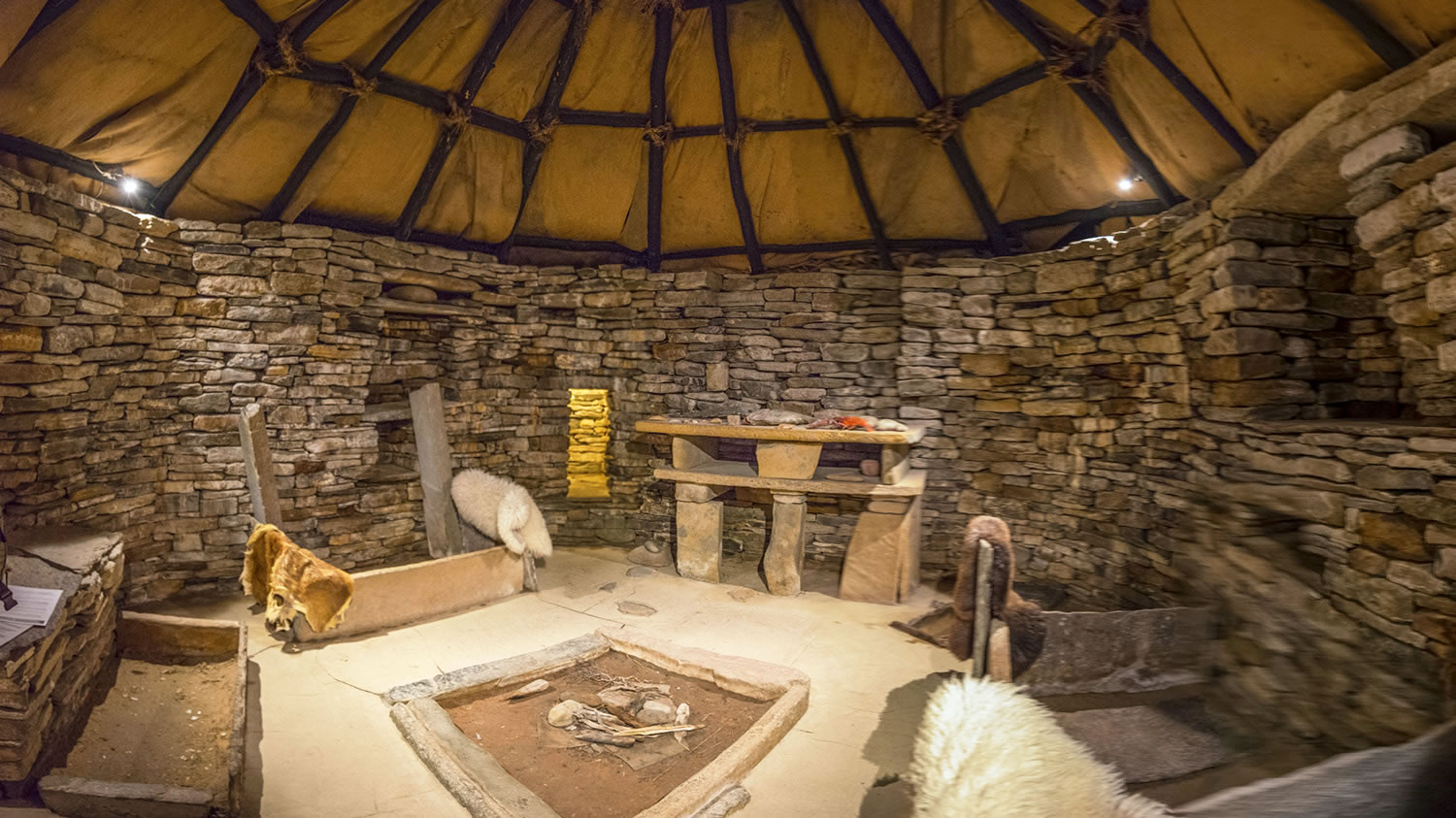
Unlike many archaeological sites where only foundations survive, Skara Brae preserves walls, passageways, furniture, hearths, and internal arrangements.
Discovery
Skara Brae was exposed by coastal erosion.
A major storm in the nineteenth century revealed stone structures hidden beneath layers of sediment.
Archaeological excavation subsequently demonstrated that the site was much older than originally expected.
The Stone Village
Skara Brae consisted of several interconnected houses.
The buildings were constructed largely from local stone.
The settlement's walls and passageways create an unusually coherent picture of Neolithic domestic architecture.
Semi-Subterranean Construction
Many houses were built partially into earlier accumulated midden material.
This provided:
insulation;
structural support;
and protection from the harsh Orkney climate.
The result was a remarkably warm and sheltered living environment.
Interior Furniture
One of Skara Brae's most famous features is its stone furniture.
Houses contain:
beds;
dressers;
storage compartments;
shelves;
and hearths.
These features remain fixed in place.
The Stone Dresser
The stone dresser is one of the settlement's iconic features.
Its precise purpose remains debated.
It may have served as:
storage;
display;
or a symbolic focal point.
Its prominent position suggests that it may have had more than a purely practical function.
Hearths
Central hearths provided:
heat;
light;
and cooking.
The presence of hearths demonstrates that houses were organized around domestic activities.
Food
Skara Brae's inhabitants practiced agriculture and livestock management.
They also exploited marine resources.
Their diet could include:
barley;
cattle;
sheep;
fish;
shellfish;
and wild resources.
Grooved Ware
Skara Brae is closely associated with Grooved Ware, a distinctive Neolithic pottery tradition characterized by horizontal grooves and geometric decoration.
Grooved Ware is important because it appears at several major ceremonial sites across Britain.
Its distribution suggests cultural connections between communities.
Social Organization
Constructing the settlement required cooperation.
People had to:
quarry stone;
transport materials;
build houses;
maintain pathways;
and manage food production.
The village therefore reflects organized community life.
Why Was Skara Brae Abandoned?
The exact reasons are uncertain.
Possible factors include:
environmental change;
coastal transformation;
social changes;
changing settlement patterns;
or gradual relocation.
The site was eventually abandoned and buried beneath sediments.
Coastal Erosion Today
The same coastline that helped reveal Skara Brae now threatens its preservation.
Waves and storms continue to erode the surrounding landscape.
Protecting the site is therefore an ongoing archaeological challenge.
UNESCO World Heritage Site
Skara Brae forms part of the Heart of Neolithic Orkney UNESCO World Heritage Site.
The broader site includes:
Maeshowe;
the Ring of Brodgar;
and the Stones of Stenness.
Together, these monuments demonstrate the extraordinary cultural complexity of Neolithic Orkney.
Why Skara Brae Matters
Skara Brae provides one of the most detailed pictures of prehistoric domestic life in Britain.
Its preserved architecture allows archaeologists to reconstruct:
house organization;
food preparation;
storage;
social relationships;
and environmental adaptation.
Conclusion
Skara Brae is remarkable because it transforms the Neolithic from an abstract archaeological period into something tangible.
The stone beds, hearths, shelves, passageways, and houses reveal where people lived, cooked, slept, worked, and stored possessions.
The settlement demonstrates that 5,000 years ago, people in Orkney created sophisticated communities capable of adapting to a harsh island environment.