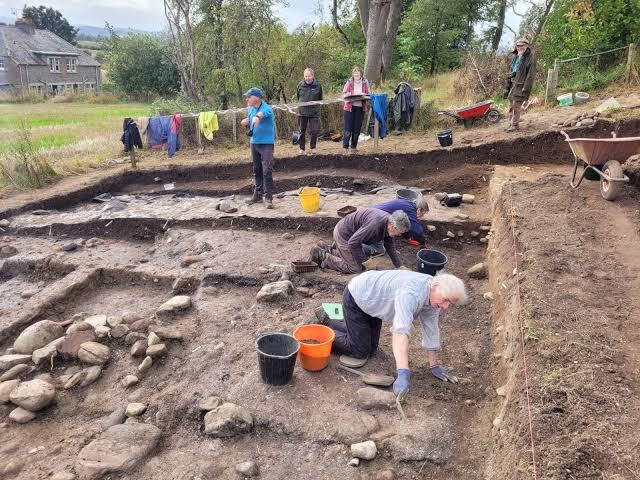
Staosnaig, on the island of Colonsay in Scotland's Inner Hebrides, provides important evidence for Mesolithic coastal life.
The site is particularly significant because of its shell midden, an accumulation of discarded marine shells and other food remains.
Shell middens are essentially archaeological records created by repeated human consumption.
They can preserve evidence of:
diet;
seasonality;
coastal environments;
cooking practices;
and settlement patterns.
The Mesolithic Scottish Coast
Around 6,000 years ago, Scotland's coastal landscapes were inhabited by hunter-gatherer communities.
The sea was an enormous source of food.
People could exploit:
shellfish;
fish;
seabirds;
seals;
and other marine resources.
What Is a Shell Midden?
A shell midden is a deposit created when people repeatedly discard shells after consuming shellfish.
Over time, these remains accumulate into substantial layers.
Middens may also contain:
animal bones;
charcoal;
stone tools;
pottery in later contexts;
and other domestic waste.
Limpets and Other Shellfish
The Staosnaig midden contains large quantities of marine shell.
Shellfish such as limpets could be collected relatively easily from rocky shorelines.
They provided:
protein;
minerals;
and reliable food.
Why Shellfish Were Valuable
Shellfish have an important advantage for hunter-gatherers:
They cannot easily escape.
At low tide, people could collect large quantities from exposed rocks.
This made coastal environments highly productive.
Seasonality
Shell remains can help researchers investigate seasonality.
The growth patterns of shells can preserve information about when an animal was harvested.
This can help determine whether people occupied the site during:
summer;
winter;
or multiple seasons.
Coastal Mobility
The inhabitants of Colonsay were probably highly mobile.
They could travel between:
islands;
beaches;
forests;
freshwater environments;
and inland hunting grounds.
Boats would have been extremely valuable for this lifestyle.
Mesolithic Seafaring
The existence of Mesolithic settlements on islands demonstrates that people possessed some form of watercraft.
Wooden boats rarely survive archaeologically.
However, island occupation itself provides strong evidence that people had the technological ability to cross stretches of water.
Stone Tools
The inhabitants produced stone tools for:
cutting;
hunting;
woodworking;
and processing food.
Raw materials could sometimes be transported from other locations.
This provides clues about mobility and exchange.
Fire and Food Preparation
Charcoal and burned shell can indicate cooking.
Shellfish could have been:
roasted;
steamed;
boiled;
or cooked directly over fires.
Repeated cooking activity contributed to the growth of the midden.
The Landscape of Colonsay
Colonsay contains a mixture of:
rocky shorelines;
beaches;
grasslands;
freshwater resources;
and woodland.
This ecological diversity provided a wide range of food sources.
Beyond Shellfish
A shell midden should not be interpreted as evidence that people ate only shellfish.
The midden represents what happened to be discarded in one particular location.
People could simultaneously consume:
deer;
fish;
birds;
nuts;
and plants.
Why Staosnaig Matters
Staosnaig demonstrates how Mesolithic communities used coastal environments intensively.
It provides evidence for:
marine resource exploitation;
island settlement;
food processing;
seasonality;
and mobility.
Conclusion
The shell midden at Staosnaig is essentially a prehistoric food archive.
Each layer of shell represents past human activity, allowing archaeologists to reconstruct how people interacted with the Scottish coastline thousands of years ago.
The site demonstrates that Mesolithic communities were not simply terrestrial hunters.
They were also skilled coastal foragers who understood tides, marine resources, seasonal patterns, and island environments.