Star Carr is one of the most important Mesolithic archaeological sites in Britain and one of the most significant prehistoric sites in Europe. Located near the former shores of Lake Flixton in North Yorkshire, England, the site preserves extraordinary evidence of human activity approximately 10,700 years ago, during the early Mesolithic period.
What makes Star Carr exceptional is not simply its age. The combination of waterlogged preservation, organic artifacts, animal remains, dwellings, hunting equipment, and evidence of ritual behavior provides an unusually detailed picture of hunter-gatherer life shortly after the end of the last Ice Age.
Britain After the Ice Age
Around 10,700 years ago, Britain was undergoing major environmental transformation.
The great ice sheets that had covered northern Europe were retreating, and temperatures were becoming warmer. Forests gradually expanded across landscapes that had previously been dominated by open tundra and grassland.
Animals such as:
red deer;
roe deer;
elk;
wild cattle;
aurochs;
wild boar;
and other species
inhabited the changing environment.
Human communities adapted to these new ecological conditions.
The Mesolithic Period
The Mesolithic, or Middle Stone Age, represents the period between the Paleolithic hunter-gatherer world and the later Neolithic farming societies.
Mesolithic communities generally depended on combinations of:
hunting;
fishing;
gathering;
trapping;
and seasonal movement.
They were not simply wandering aimlessly.
Archaeological evidence demonstrates that many Mesolithic communities possessed detailed knowledge of landscapes and returned repeatedly to productive locations.
The Lakeside Environment
Star Carr was located beside a former lake or wetland.
Water environments were extremely productive.
They provided:
fish;
waterfowl;
reeds;
aquatic plants;
drinking water;
and access to animals coming to the water.
The lakeshore therefore became an ideal location for repeated human occupation.
The Preservation Miracle
One of Star Carr's greatest archaeological advantages is its waterlogged environment.
When organic materials become buried in oxygen-poor wet sediments, microorganisms responsible for decomposition can be greatly restricted.
As a result, materials that normally disappear within decades or centuries can survive for thousands of years.
At Star Carr, archaeologists discovered preserved:
wood;
antler;
bone;
plant material;
and other organic remains.
This dramatically expands our understanding of Mesolithic life.
Red Deer Antler Headdresses
Perhaps the most famous discoveries from Star Carr are modified red deer skulls and antlers.
These objects have frequently been interpreted as headdresses or masks.
The skull was carefully modified, and holes were made through the antler bases.
The objects could potentially have been worn over the head.
Their precise purpose remains uncertain.
They may have been associated with:
hunting;
ritual;
transformation;
animal symbolism;
or social identity.
Why Deer Were Important
Red deer were major resources for Mesolithic communities.
They provided:
meat;
hides;
sinew;
bones;
and antler.
Antler was especially useful because it was strong but relatively workable.
It could be fashioned into:
tools;
points;
handles;
and other implements.
Hunting Technology
Star Carr has provided evidence for sophisticated hunting equipment.
Antler points and other tools demonstrate that hunters possessed specialized technology for exploiting large game.
Hunting required detailed knowledge of:
animal behavior;
seasonal movements;
terrain;
and vegetation.
Wooden Structures
Evidence of wooden platforms or trackways has also been found at Star Carr.
Working with wood required considerable skill.
The presence of carefully worked timber demonstrates that Mesolithic people could undertake substantial construction projects.
These structures may have allowed people to move across wet ground or access particular areas of the lake margin.
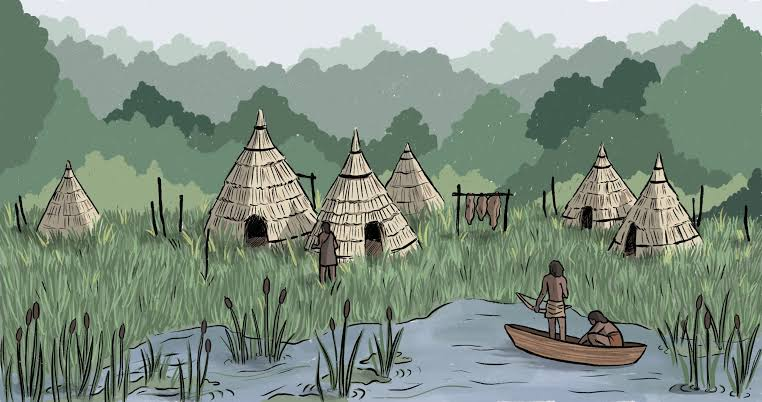
Houses and Shelters
Evidence from the site has also contributed to understanding Mesolithic domestic structures.
The discovery of postholes and other remains suggests that people constructed substantial shelters rather than simply sleeping outdoors.
These structures may have been temporary or seasonal, but they demonstrate deliberate planning.
Fishing
The lakeside setting would have provided excellent opportunities for fishing.
Although organic fishing equipment is difficult to preserve at most archaeological sites, Star Carr's wet environment provides a much better record.
Fishing technology may have included:
wooden equipment;
bone points;
traps;
and other implements.
Plant Resources
Mesolithic people did not live entirely on meat.
They exploited a wide range of plant foods.
Possible resources included:
nuts;
berries;
roots;
seeds;
and edible leaves.
Wetland environments could provide additional plant resources.
Seasonal Movement
Star Carr may have been part of a wider seasonal settlement system.
Rather than remaining permanently in one location, groups could move between different landscapes according to resource availability.
A lakeside camp might be especially valuable during certain seasons when:
fish were abundant;
deer congregated;
plants became available;
or migratory birds arrived.
Social Organization
The construction of shelters and specialized tools indicates cooperation.
People had to coordinate:
hunting;
food processing;
tool production;
construction;
and movement.
The existence of unusual ritual objects also suggests that social and symbolic life was important.
Ritual and Identity
The deer headdresses are particularly significant.
If they were used ceremonially, they could indicate beliefs involving humans and animals.
A person wearing a deer headdress might symbolically become:
a deer;
a spirit;
a hunter;
or a ritual specialist.
We cannot know exactly what Mesolithic people believed.
Nevertheless, the artifacts demonstrate that their society involved symbolic behavior beyond basic survival.
Climate Change
The people of Star Carr lived during a period of rapid environmental change.
The landscape was becoming increasingly wooded.
This affected:
animal populations;
hunting strategies;
plant availability;
and travel routes.
Mesolithic communities adapted to these transformations.
Why Star Carr Matters
Star Carr is important because it provides unusually detailed evidence for early Holocene life in Britain.
It demonstrates that Mesolithic people possessed:
sophisticated hunting technology;
woodworking skills;
complex social organization;
symbolic traditions;
and extensive knowledge of wetland environments.
Conclusion
Star Carr provides one of the clearest windows into Mesolithic Britain.
Its waterlogged sediments preserved artifacts that would normally have vanished, allowing archaeologists to reconstruct a world of hunters, fishermen, craftsmen, and ritual practitioners living beside a post-Ice Age lake.
The famous deer antler headdresses are perhaps the site's most mysterious objects, but they are only one part of a much larger story.
Star Carr demonstrates that Britain's hunter-gatherers were technologically skilled, environmentally knowledgeable, and culturally complex thousands of years before the arrival of agriculture.