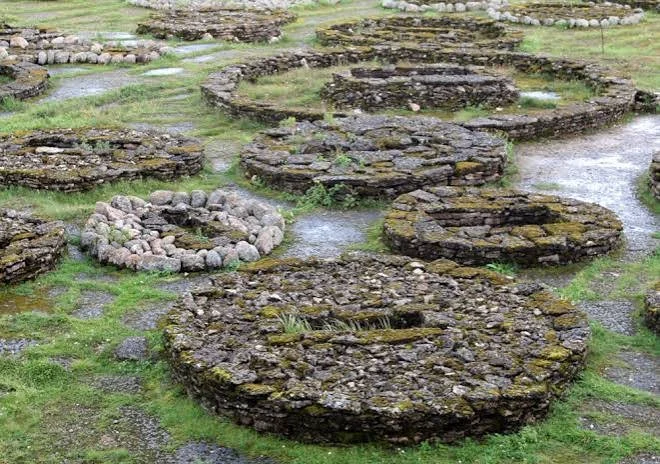
Archaeologists have identified a submerged stone construction thought to be connected to the ancient city of Chersonesus, located in present-day Sevastopol in occupied Ukraine.
Chersonesus was founded around 2,500 years ago as a Greek colony by settlers from Heraclea Pontica. In the Early Middle Ages, it came under Byzantine control while maintaining a level of autonomy.
Because of its isolated position, the city served as a key lookout over Black Sea trade routes and was also used as a place of exile for notable figures, including Popes Clement I and Martin I, as well as the deposed Byzantine emperor Justinian II.
The city declined after being attacked by Mongol forces in 1299. Byzantine sources last reference Chersonesus in 1396, and archaeological evidence indicates it was abandoned soon afterward. In 2013, its ruins—such as temples, residential buildings, and a theater—were designated a UNESCO World Heritage Site.
A recent underwater investigation employed non-invasive methods, including Bottom Electrical Resistivity Tomography (ERT), to examine the coastline for hidden archaeological remains.
The survey, led by Vladimir Glazunov of Saint Petersburg Mining University, revealed a long stone rampart that is partly visible on land. Researchers believe it may have been part of the city’s defensive infrastructure or a hydraulic feature used to manage the shoreline.
The structure measures roughly 23 meters long and 10 meters wide, with a vertical height difference of more than two meters.
Excavation of stones from the rampart uncovered several artifacts dating mainly to the medieval period, such as ceramic shards, a fragment of marble architectural decoration, and a limestone drinking vessel. Further research is scheduled for the next field season.