
Introduction
Beekeeping has a long and complex history.
Honey provided sweetness, energy, and medicinal applications, while beeswax was valuable for candles, waterproofing, cosmetics, adhesives, modeling, and craft production.
Evidence from ancient societies demonstrates that humans did not merely collect wild honey. In some regions, they developed organized systems for managing bee colonies.
The archaeology of beekeeping therefore provides insights into agriculture, trade, technology, ecology, and household economies.
Wild Honey Collection
The earliest relationship between humans and bees was probably hunting or collecting honey from wild colonies.
Rock art and other archaeological evidence from several regions depicts people interacting with bees or collecting honey.
Wild honey collection could be dangerous and required specialized knowledge.
From Collection to Management
Beekeeping represents a different relationship.
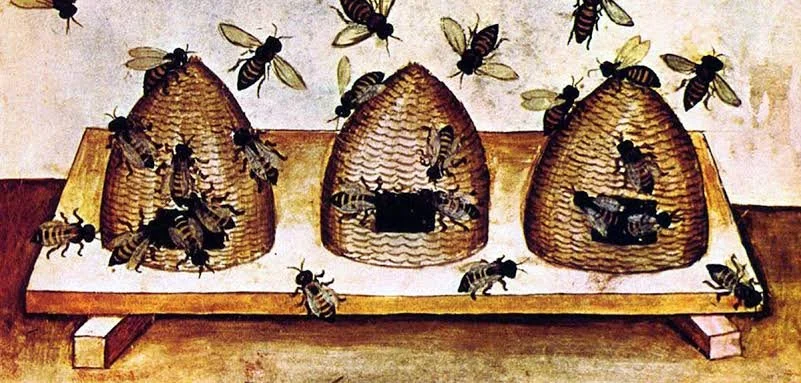
Instead of finding wild colonies, people provide structures in which bees can establish colonies.
These structures can include:
hollow logs
baskets
clay vessels
wooden boxes
specialized architectural hives
The transition between honey collection and deliberate management probably occurred gradually and differently in different regions.
Ancient Egyptian Beekeeping
Ancient Egypt provides some of the clearest evidence for organized beekeeping.
Egyptian art depicts beekeepers working with hives.
Beeswax and honey were used in religious, medicinal, culinary, and practical contexts.
The Nile Valley's agricultural environment was well suited to bee management.
Archaeological Hives
Ancient hives can sometimes be identified through their architecture.
Clay tube hives are particularly distinctive.
Rows of cylindrical ceramic structures could provide nesting spaces for bee colonies.
Archaeological discoveries of such installations provide direct evidence for organized beekeeping.
Honey Residues
Chemical analysis can sometimes identify traces associated with honey, beeswax, or other bee products.
Lipid and molecular analysis may reveal residues absorbed into pottery.
However, beeswax contamination can occur during later handling.
Context is therefore essential.
Beeswax and Craft Production
Beeswax had many uses beyond food.
It could be used in:
lost-wax casting
waterproofing
adhesives
cosmetics
medicine
writing tablets
religious objects
The presence of beeswax in archaeological contexts can therefore indicate several different activities.
Trade
Honey and beeswax were valuable commodities.
Beeswax in particular could be transported and traded over long distances because it was useful and relatively stable.
Trade in bee products connected agricultural communities with craft industries and urban markets.
Environmental Archaeology
Beekeeping also provides information about ancient landscapes.
Bees require flowering plants.
A large beekeeping operation therefore depends on suitable vegetation.
Pollen analysis can help reconstruct the plants available to ancient bees.
In some cases, researchers can analyze pollen preserved in honey or archaeological residues.
Social Organization
Large-scale beekeeping requires labor and management.
Hive production, colony maintenance, honey harvesting, processing, storage, and transportation all involve specialized activities.
This means that beekeeping can provide evidence for economic organization.
Modern Relevance
Ancient beekeeping also has environmental significance today.
Historical evidence demonstrates the long relationship between humans and pollinating insects.
Understanding ancient management practices can contribute to discussions about biodiversity, agricultural systems, and the conservation of pollinators.
Conclusion
The archaeology of ancient beekeeping reveals a sophisticated relationship between humans, insects, plants, and trade.
From wild honey collection to organized hive systems, the history of apiculture demonstrates how communities learned to manage biological resources.
Honey and beeswax were not minor commodities. They could support food systems, medicine, religion, manufacturing, and long-distance exchange.
Studying ancient beekeeping therefore provides a valuable window into the economic and ecological organization of past societies.





