A Connected Ancient World
Long before modern technology, the Bronze Age world was already interconnected through vast trade networks that linked Europe, Africa, and Asia. Goods moved across thousands of kilometers, creating an ancient system of communication often described as a prehistoric “internet.”
Goods That Traveled Across Continents
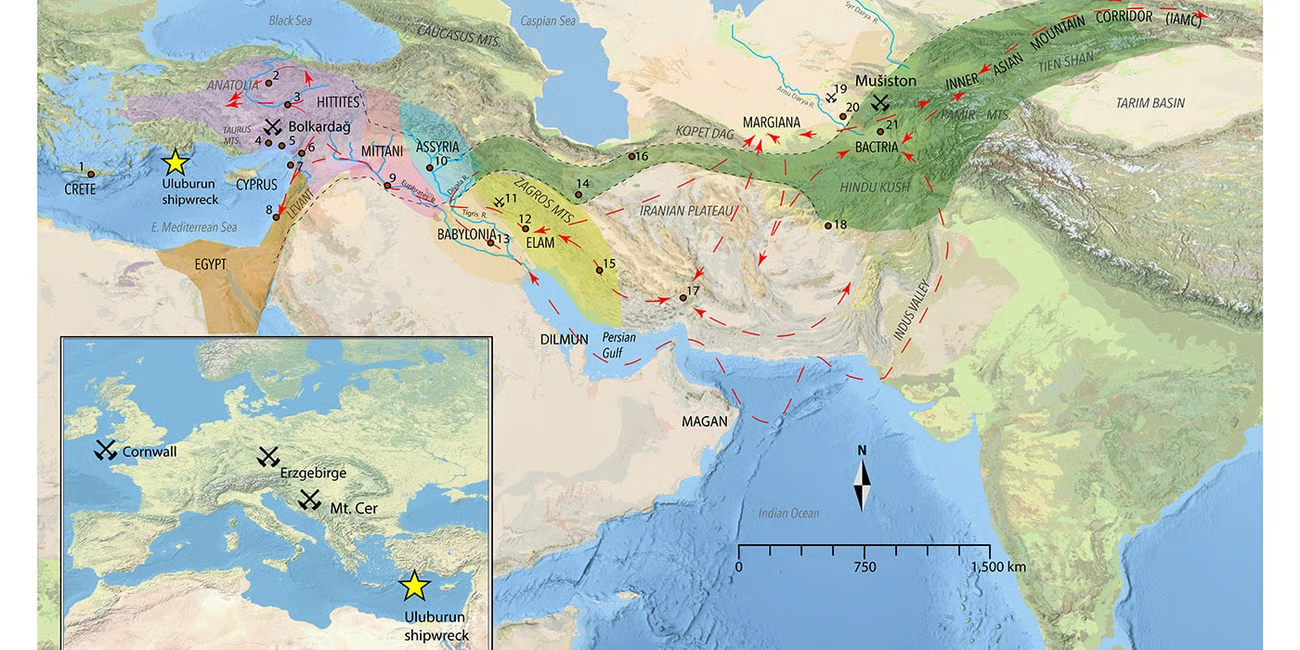
Tin from Central Asia was transported to Mesopotamia and the Mediterranean to produce bronze. Amber from the Baltic reached Mycenaean Greece. Lapis lazuli from Afghanistan appeared in Egyptian tombs. These exchanges prove sustained, organized trade rather than occasional contact.
Trade as Cultural Exchange
Trade routes carried more than materials. Religious ideas, artistic styles, myths, and technologies spread along the same paths. Writing systems influenced one another, and shared iconography appeared across distant regions.
Languages and Diplomacy
Diplomatic correspondence, such as the Amarna Letters, reveals kings communicating across empires using shared languages and protocols. These letters show a world of political alliances, marriages, and negotiations maintained through long-distance networks.
Collapse of the Network
When the Bronze Age trade system collapsed around 1200 BCE, civilizations fell rapidly. This demonstrates how deeply interconnected they were—when trade stopped, economies, food supplies, and political stability collapsed together.