• MAIN PAGE
  • LATEST NEWS
    • Lost Cities
    • Archaeology's Greatest Finds
    • Underwater Discoveries
    • Greatest Inventions
    • Studies
    • Blog
  • PHILOSOPHY
  • HISTORY
  • RELIGIONS
    • Africa
    • Anatolia
    • Arabian Peninsula
    • Balkan Region
    • China - East Asia
    • Europe
    • Eurasian Steppe
    • Levant
    • Mesopotamia
    • Oceania - SE Asia
    • Pre-Columbian Civilizations of America
    • Iranian Plateau - Central Asia
    • Indus Valley - South Asia
    • Japan
    • The Archaeologist Editor Group
    • Scientific Studies
    • Aegean Prehistory
    • Historical Period
    • Byzantine Middle Ages
    • Predynastic Period
    • Dynastic Period
    • Greco-Roman Egypt
  • Rome
  • PALEONTOLOGY
  • About us
Menu

The Archaeologist

  • MAIN PAGE
  • LATEST NEWS
  • DISCOVERIES
    • Lost Cities
    • Archaeology's Greatest Finds
    • Underwater Discoveries
    • Greatest Inventions
    • Studies
    • Blog
  • PHILOSOPHY
  • HISTORY
  • RELIGIONS
  • World Civilizations
    • Africa
    • Anatolia
    • Arabian Peninsula
    • Balkan Region
    • China - East Asia
    • Europe
    • Eurasian Steppe
    • Levant
    • Mesopotamia
    • Oceania - SE Asia
    • Pre-Columbian Civilizations of America
    • Iranian Plateau - Central Asia
    • Indus Valley - South Asia
    • Japan
    • The Archaeologist Editor Group
    • Scientific Studies
  • GREECE
    • Aegean Prehistory
    • Historical Period
    • Byzantine Middle Ages
  • Egypt
    • Predynastic Period
    • Dynastic Period
    • Greco-Roman Egypt
  • Rome
  • PALEONTOLOGY
  • About us

New Dates Push Back Occupation of Mohenjo-Daro

April 8, 2026

Mohenjo-Daro Found to Be Older Than Previously Believed

Archaeologists working with the Sindh Directorate General of Antiquities & Archaeology have uncovered new evidence suggesting that the ancient city of Mohenjo-Daro is older than previously thought.

Recent radiocarbon dating indicates that the city was already inhabited between 2700 and 2600 B.C., pushing its origins back by around 200 years.

A Major Urban Center of the Ancient World

Located along the Indus River in present-day southwestern Pakistan, Mohenjo-Daro was one of the largest cities of the Indus Valley Civilization.

Spanning approximately 590 acres, the city is believed to have supported a population of at least 40,000 people—a remarkable figure for its time. The site is especially known for its carefully planned layout and extensive use of baked brick architecture, which has survived for thousands of years.

Advanced Infrastructure Ahead of Its Time

Excavations at Mohenjo-Daro have revealed an impressive level of urban planning and engineering. Among the most notable features are:

  • Public baths and water reservoirs

  • Numerous wells distributed throughout the city

  • A sophisticated drainage system, including sewage pits

These elements highlight the city’s advanced understanding of sanitation and water management, setting it apart as one of the most technologically developed settlements of the ancient world.

New Findings From the Stupa Mound Area

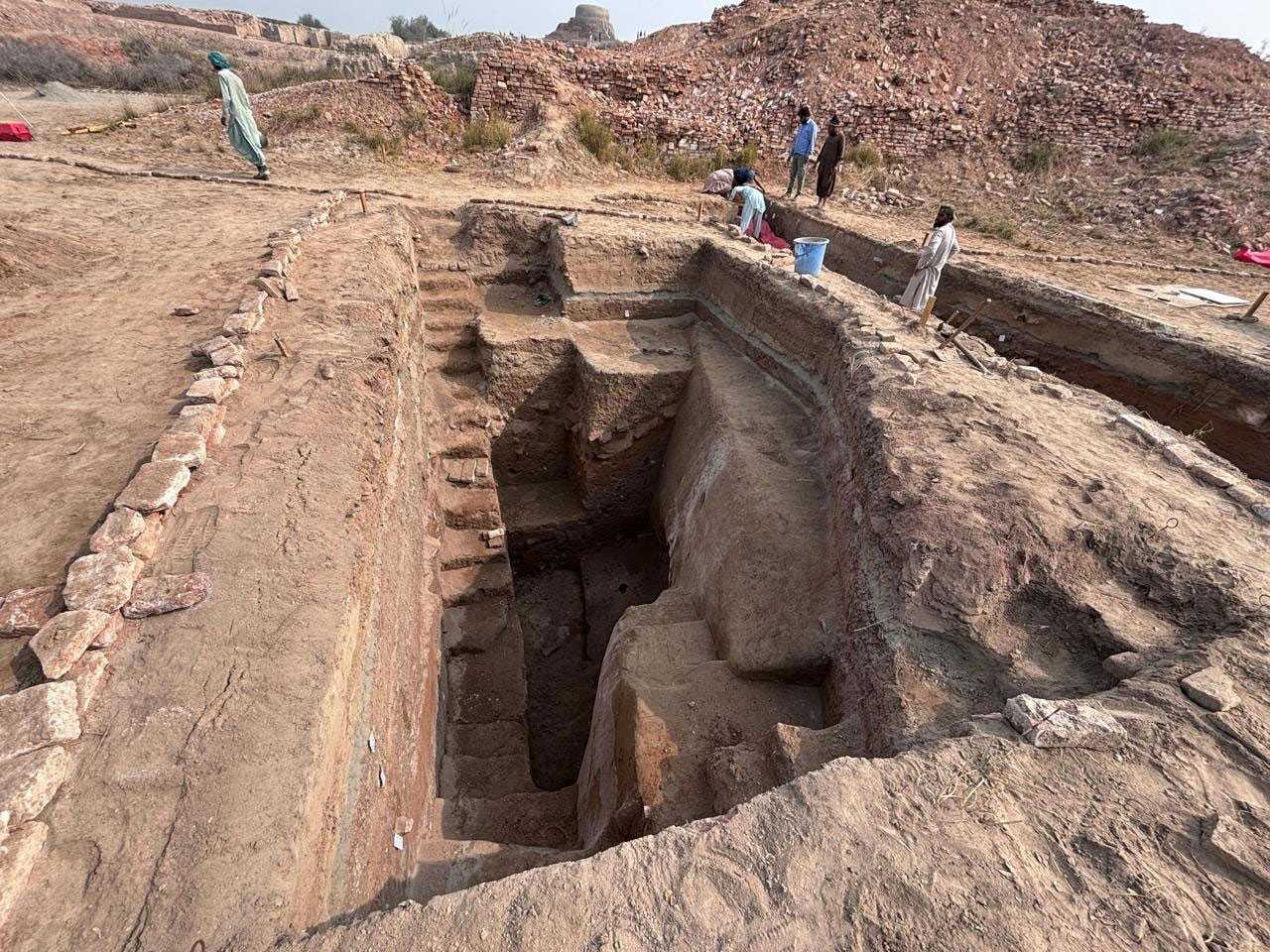
The updated dating comes from samples taken near the western Stupa Mound, a prominent part of the site. Researchers analyzed materials from a mudbrick wall surrounding this area, leading to the revised timeline.

Further analysis shows that these defensive or structural walls were not only built early but were also expanded and maintained until at least 2200 B.C., suggesting long-term occupation and continued development.

Ongoing Research and Future Plans

Archaeologists now plan to trace the full extent of the wall encircling the Stupa Mound. Their goal is to identify possible entrances, such as gates, and better understand how the structure functioned within the city.

Redefining the Timeline of an Ancient Civilization

These new findings offer a deeper understanding of Mohenjo-Daro’s origins and growth. By pushing back the timeline of its occupation, researchers are gaining clearer insight into how early urban centers developed in the Indus Valley.

As studies continue, Mohenjo-Daro remains a key site for uncovering the complexities of one of the world’s earliest and most advanced civilizations.
← Buried at a Doorway for 5,000 Years: Ancient Bread Reveals a Lost Recipe—and a RitualAncient human lineage discovered in China →
Featured
image_2026-04-07_233322976.png
Apr 8, 2026
Legendary Lost Medieval City Discovered in Chechnya May Rewrite the History of the North Caucasus
Apr 8, 2026
Read More →
Apr 8, 2026
image_2026-04-07_233156977.png
Apr 8, 2026
Buried at a Doorway for 5,000 Years: Ancient Bread Reveals a Lost Recipe—and a Ritual
Apr 8, 2026
Read More →
Apr 8, 2026
image_2026-04-07_233025122.png
Apr 8, 2026
New Dates Push Back Occupation of Mohenjo-Daro
Apr 8, 2026
Read More →
Apr 8, 2026
image_2026-04-07_232645298.png
Apr 8, 2026
Ancient human lineage discovered in China
Apr 8, 2026
Read More →
Apr 8, 2026
image_2026-04-07_232114216.png
Apr 8, 2026
The Hidden Temples Beneath Modern Cities
Apr 8, 2026
Read More →
Apr 8, 2026
image_2026-04-07_232004976.png
Apr 7, 2026
The Ritual Masks of Early Human Civilizations
Apr 7, 2026
Read More →
Apr 7, 2026
read more

Powered by The archaeologist