• MAIN PAGE
  • LATEST NEWS
    • Lost Cities
    • Archaeology's Greatest Finds
    • Underwater Discoveries
    • Greatest Inventions
    • Studies
    • Blog
  • PHILOSOPHY
  • HISTORY
  • RELIGIONS
    • Africa
    • Anatolia
    • Arabian Peninsula
    • Balkan Region
    • China - East Asia
    • Europe
    • Eurasian Steppe
    • Levant
    • Mesopotamia
    • Oceania - SE Asia
    • Pre-Columbian Civilizations of America
    • Iranian Plateau - Central Asia
    • Indus Valley - South Asia
    • Japan
    • The Archaeologist Editor Group
    • Scientific Studies
    • Aegean Prehistory
    • Historical Period
    • Byzantine Middle Ages
    • Predynastic Period
    • Dynastic Period
    • Greco-Roman Egypt
  • Rome
  • PALEONTOLOGY
  • About us
Menu

The Archaeologist

  • MAIN PAGE
  • LATEST NEWS
  • DISCOVERIES
    • Lost Cities
    • Archaeology's Greatest Finds
    • Underwater Discoveries
    • Greatest Inventions
    • Studies
    • Blog
  • PHILOSOPHY
  • HISTORY
  • RELIGIONS
  • World Civilizations
    • Africa
    • Anatolia
    • Arabian Peninsula
    • Balkan Region
    • China - East Asia
    • Europe
    • Eurasian Steppe
    • Levant
    • Mesopotamia
    • Oceania - SE Asia
    • Pre-Columbian Civilizations of America
    • Iranian Plateau - Central Asia
    • Indus Valley - South Asia
    • Japan
    • The Archaeologist Editor Group
    • Scientific Studies
  • GREECE
    • Aegean Prehistory
    • Historical Period
    • Byzantine Middle Ages
  • Egypt
    • Predynastic Period
    • Dynastic Period
    • Greco-Roman Egypt
  • Rome
  • PALEONTOLOGY
  • About us

The Jōmon Pottery of Ancient Japan

January 2, 2026

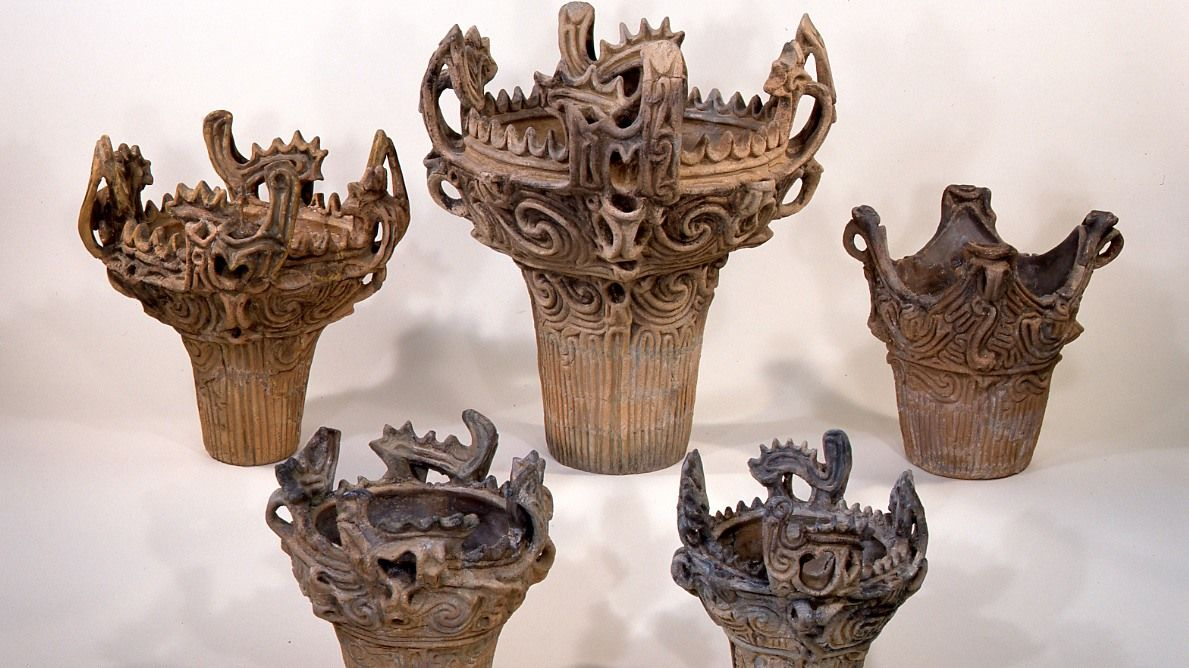
The Jōmon culture of ancient Japan, dating back to around 14,000 BCE, is known for producing some of the earliest pottery in human history. The word “Jōmon” means “cord-marked,” referring to the distinctive rope patterns pressed into wet clay before firing.

Unlike agricultural societies, the Jōmon people were hunter-gatherers, making their pottery especially remarkable. These vessels were used for cooking, storage, and ceremonial purposes. Over time, pottery styles became increasingly elaborate, with flame-like rims and complex decorative designs.

Jōmon pottery reflects both practical needs and spiritual expression. Many vessels were associated with rituals and burial practices, suggesting symbolic meaning beyond everyday use. Figurines called dogū are believed to represent fertility, protection, or spiritual power.

The sophistication of Jōmon pottery challenges the assumption that pottery developed only after farming. It demonstrates that artistic expression and technological innovation can arise in diverse cultural contexts.
← The First Chariots in Human HistoryThe Ancient Greek Concept of the Soul →
Featured
image_2026-01-02_154214698.png
Jan 2, 2026
The Mythical Phoenix Across Ancient Cultures
Jan 2, 2026
Read More →
Jan 2, 2026
image_2026-01-02_153752881.png
Jan 2, 2026
The First Chariots in Human History
Jan 2, 2026
Read More →
Jan 2, 2026
image_2026-01-02_153652162.png
Jan 2, 2026
The Jōmon Pottery of Ancient Japan
Jan 2, 2026
Read More →
Jan 2, 2026
image_2026-01-02_153238013.png
Jan 2, 2026
The Ancient Greek Concept of the Soul
Jan 2, 2026
Read More →
Jan 2, 2026
image_2026-01-02_153121480.png
Jan 2, 2026
The Lost City of Çatalhöyük
Jan 2, 2026
Read More →
Jan 2, 2026
image_2026-01-02_153036267.png
Jan 2, 2026
The Ancient Trade Networks of the Sahara
Jan 2, 2026
Read More →
Jan 2, 2026
read more

Powered by The archaeologist