• MAIN PAGE
  • LATEST NEWS
    • Lost Cities
    • Archaeology's Greatest Finds
    • Underwater Discoveries
    • Greatest Inventions
    • Studies
    • Blog
  • PHILOSOPHY
  • HISTORY
  • RELIGIONS
    • Africa
    • Anatolia
    • Arabian Peninsula
    • Balkan Region
    • China - East Asia
    • Europe
    • Eurasian Steppe
    • Levant
    • Mesopotamia
    • Oceania - SE Asia
    • Pre-Columbian Civilizations of America
    • Iranian Plateau - Central Asia
    • Indus Valley - South Asia
    • Japan
    • The Archaeologist Editor Group
    • Scientific Studies
    • Aegean Prehistory
    • Historical Period
    • Byzantine Middle Ages
    • Predynastic Period
    • Dynastic Period
    • Greco-Roman Egypt
  • Rome
  • PALEONTOLOGY
  • About us
Menu

The Archaeologist

  • MAIN PAGE
  • LATEST NEWS
  • DISCOVERIES
    • Lost Cities
    • Archaeology's Greatest Finds
    • Underwater Discoveries
    • Greatest Inventions
    • Studies
    • Blog
  • PHILOSOPHY
  • HISTORY
  • RELIGIONS
  • World Civilizations
    • Africa
    • Anatolia
    • Arabian Peninsula
    • Balkan Region
    • China - East Asia
    • Europe
    • Eurasian Steppe
    • Levant
    • Mesopotamia
    • Oceania - SE Asia
    • Pre-Columbian Civilizations of America
    • Iranian Plateau - Central Asia
    • Indus Valley - South Asia
    • Japan
    • The Archaeologist Editor Group
    • Scientific Studies
  • GREECE
    • Aegean Prehistory
    • Historical Period
    • Byzantine Middle Ages
  • Egypt
    • Predynastic Period
    • Dynastic Period
    • Greco-Roman Egypt
  • Rome
  • PALEONTOLOGY
  • About us

The Mystery of the Sea Peoples: Destroyers of Empires

November 29, 2025

Who Were They—and Why Did They Change the Ancient World?

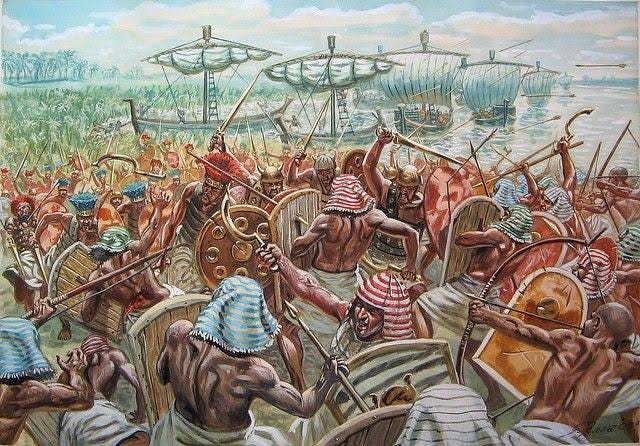
Around 1200 BCE, several Mediterranean civilizations collapsed. Many historians link this upheaval to the Sea Peoples, groups of mysterious raiders who attacked Egypt and other coastal regions.

What We Know

Egyptian records describe them as warriors arriving by land and sea, armed with unique weapons and wearing distinctive feathered helmets.

Their Impact

They contributed to the fall or weakening of:

  • The Hittite Empire

  • Cities across the Levant

  • Many Bronze Age kingdoms

Theories About Their Origins

Possibilities include:

  • Displaced groups from the Aegean

  • Environmental migrants

  • Former mercenaries

No single theory fully explains their identity.

A Turning Point

Their invasions helped usher in the end of the Bronze Age and the beginning of new political and cultural landscapes.
← The Symbolism of the Ankh in Ancient EgyptThe First Known Human Settlements →
Featured
image_2026-01-13_145551915.png
Jan 13, 2026
Archaeologists Say They’ve Unearthed a Massive Medieval Cargo Ship That’s the Largest Vessel of Its Kind Ever Found
Jan 13, 2026
Read More →
Jan 13, 2026
image_2026-01-13_142940648.png
Jan 13, 2026
600-year-old Viking shipwreck is the largest of its kind
Jan 13, 2026
Read More →
Jan 13, 2026
image_2026-01-13_141554876.png
Jan 13, 2026
The wild reason ancient statues always have tiny p*nises, because I bet you’ve wondered
Jan 13, 2026
Read More →
Jan 13, 2026
image_2026-01-13_135852029.png
Jan 13, 2026
Carnoustie Stone Age hall challenges view of Scotland’s early people
Jan 13, 2026
Read More →
Jan 13, 2026
image_2026-01-13_135115162.png
Jan 13, 2026
Archaeologists Found an Entirely New Language Among the Ruins of an Ancient Empire
Jan 13, 2026
Read More →
Jan 13, 2026
image_2026-01-13_134311101.png
Jan 13, 2026
Poison Detected on 60,000-Year-Old Arrowheads
Jan 13, 2026
Read More →
Jan 13, 2026
read more

Powered by The archaeologist