Introduction
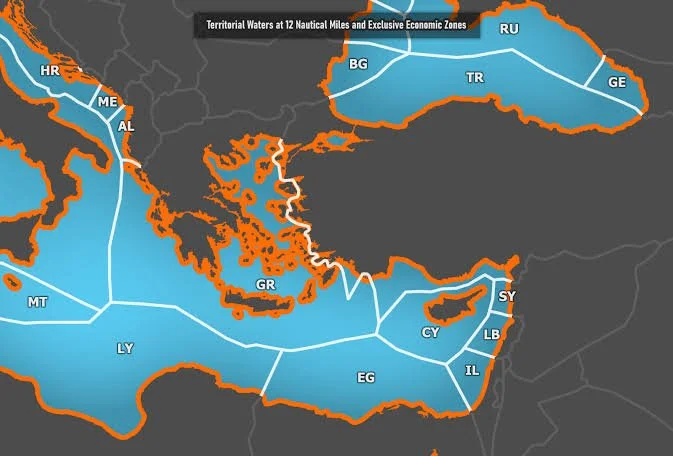
The Mediterranean Sea has connected communities through fishing, migration, travel, warfare, and trade for thousands of years. Islands occupy distinctive positions within this network. Some are large enough to support extensive settlements and agricultural systems, while smaller islands may have served as stopping points, resource locations, or meeting places for people traveling between larger landmasses.
The idea that small islands functioned as neutral trade zones raises important questions about exchange and political relationships. An island could offer a convenient location for meeting traders from different communities, particularly when direct exchange on the mainland was difficult or politically sensitive.
However, neutrality is not an automatic property of an island. It must be established through historical, archaeological, and political evidence rather than inferred from a site's geographic position alone.
Why Small Islands Could Be Useful for Trade
Small islands can occupy strategic locations along maritime routes. They may provide shelter, fresh water, anchorage, or opportunities to repair boats and obtain supplies.
An island located between larger settlements can become a natural meeting point. Traders might exchange goods there before continuing their journeys, reducing the need to travel deep into another community's territory.
However, many small islands lack reliable water, fertile soil, or safe harbors. Some may have been unsuitable for sustained settlement and used only during particular seasons.
The usefulness of an island therefore depends on its geography, resources, and relationship to surrounding maritime routes.
What Does Neutrality Mean?
A neutral trade zone would be a place where people from different political or cultural groups could exchange goods under conditions that reduced the risk of direct conflict.
Neutrality might be supported by customary rules, shared religious significance, local authorities, or agreements between trading communities. In some cases, an island could simply be remote enough from major political centers to provide a convenient meeting point.
Archaeologically, neutrality is difficult to demonstrate because it is a political relationship rather than a physical feature.
Evidence might include written agreements, repeated cross-cultural exchanges, shared use of a trading location, or historical descriptions of protected markets. Without such evidence, it is safer to describe an island as a possible meeting point or exchange location rather than a confirmed neutral zone.
Archaeological Evidence for Trade
Researchers investigate trade through imported pottery, metals, glass, coins, weights, seals, and other objects. Differences between local and nonlocal materials can help reconstruct the movement of goods.
A small island containing artifacts from several regions may have participated in maritime exchange. However, the presence of foreign objects does not automatically prove that the island hosted a market.
The objects could have arrived through shipwrecks, later occupation, gifts, personal possessions, or other forms of movement.
The strongest interpretation combines artifact provenance with settlement evidence, harbor features, storage facilities, and patterns of repeated activity.
Harbors, Anchorages, and Maritime Infrastructure
A small island may contain natural coves or sheltered waters suitable for anchoring. In some cases, people may have constructed landing places, storage areas, or other facilities to support maritime activity.
Underwater archaeology can reveal anchors, pottery, cargo remains, and other material associated with shipping. However, underwater finds can be displaced by currents, storms, and later human activity.
A shipwreck near an island does not prove that the island functioned as a trade center. The vessel may have been passing through rather than visiting the shore.
Researchers must distinguish between evidence of maritime movement and evidence of exchange conducted on the island itself.
Goods and Exchange Networks
Trade goods can reveal connections between distant communities. Pottery may indicate the movement of containers and their contents, while metal objects can provide clues about production and distribution.
Organic commodities such as grain, oil, wine, fish, and textiles may be harder to trace because they do not always survive archaeologically.
An island with diverse artifacts may have served as a point where goods were transferred between vessels or exchanged between groups. Yet the precise structure of the network may remain uncertain.
Goods can pass through multiple intermediaries, and an artifact's origin does not identify the full route it traveled.
Political Rivalry and Shared Interests
Trade can continue between communities that compete politically. The economic benefits of exchange may encourage cooperation even when relations are tense.
A small island might provide a place where merchants could meet without entering the territory of a rival community. In other circumstances, an island could be controlled by a powerful group and used to regulate trade.
These possibilities have different political implications. A location used by multiple groups is not necessarily neutral; it may be governed by one group that permits others to trade there.
Archaeological evidence must be combined with historical sources and regional political context to distinguish these arrangements.
Religious Sanctuaries and Exchange
Some islands contain sanctuaries or other places of religious importance. Such locations may attract visitors from different communities, creating opportunities for exchange alongside ceremonial activity.
Religious gatherings can bring people together at predictable times and provide a setting for gifts, offerings, and commercial transactions.
However, the presence of a sanctuary does not prove that a site functioned as a neutral market. Trade might have occurred nearby, during particular events, or not at all.
Researchers should investigate the relationship between religious activity and commerce through spatial evidence, artifacts, and reliable historical accounts.
Seasonality and Temporary Occupation
Small islands may be occupied seasonally because of fishing, sailing conditions, agricultural cycles, or the availability of resources.
Temporary camps can be difficult to distinguish from short-lived trading settlements. Both may contain hearths, pottery, tools, and food remains.
The scale and composition of the assemblage can help, but no single indicator is decisive.
Evidence of storage, standardized measures, imported goods, and repeated activity may support a commercial interpretation. Yet researchers should remain open to other explanations, including fishing, pilgrimage, and seasonal resource collection.
Environmental Change and Island Connectivity
Sea levels, coastal erosion, storms, and changes in harbor conditions can alter an island's usefulness over time.
An island that once had a sheltered anchorage may become exposed, while sediment accumulation can make another location less accessible to boats.
These changes affect the archaeological record. Ancient landing places may now lie underwater or inland, and former routes may no longer be practical.
Environmental reconstruction helps researchers understand why an island became important and how its role changed.
Conclusion
Small Mediterranean islands could have served as useful places for maritime exchange, especially when they offered sheltered anchorages or occupied positions along busy routes. Their archaeological remains may reveal connections between communities and the movement of goods across the sea.
However, the idea of a neutral trade zone requires more evidence than geographic convenience or the presence of imported artifacts. Researchers must establish how the site was used, who controlled access, and whether different groups could exchange goods under shared or protected conditions.
By combining underwater archaeology, artifact provenance, settlement analysis, environmental reconstruction, and historical sources, researchers can investigate whether particular islands functioned as meeting places, commercial centers, religious destinations, or strategic outposts. Their roles were likely to vary over time, reflecting the changing balance between geography, politics, and maritime opportunity.