• MAIN PAGE
  • LATEST NEWS
    • Lost Cities
    • Archaeology's Greatest Finds
    • Underwater Discoveries
    • Greatest Inventions
    • Studies
    • Blog
  • PHILOSOPHY
  • HISTORY
  • RELIGIONS
    • Africa
    • Anatolia
    • Arabian Peninsula
    • Balkan Region
    • China - East Asia
    • Europe
    • Eurasian Steppe
    • Levant
    • Mesopotamia
    • Oceania - SE Asia
    • Pre-Columbian Civilizations of America
    • Iranian Plateau - Central Asia
    • Indus Valley - South Asia
    • Japan
    • The Archaeologist Editor Group
    • Scientific Studies
    • Aegean Prehistory
    • Historical Period
    • Byzantine Middle Ages
    • Predynastic Period
    • Dynastic Period
    • Greco-Roman Egypt
  • Rome
  • PALEONTOLOGY
  • About us
Menu

The Archaeologist

  • MAIN PAGE
  • LATEST NEWS
  • DISCOVERIES
    • Lost Cities
    • Archaeology's Greatest Finds
    • Underwater Discoveries
    • Greatest Inventions
    • Studies
    • Blog
  • PHILOSOPHY
  • HISTORY
  • RELIGIONS
  • World Civilizations
    • Africa
    • Anatolia
    • Arabian Peninsula
    • Balkan Region
    • China - East Asia
    • Europe
    • Eurasian Steppe
    • Levant
    • Mesopotamia
    • Oceania - SE Asia
    • Pre-Columbian Civilizations of America
    • Iranian Plateau - Central Asia
    • Indus Valley - South Asia
    • Japan
    • The Archaeologist Editor Group
    • Scientific Studies
  • GREECE
    • Aegean Prehistory
    • Historical Period
    • Byzantine Middle Ages
  • Egypt
    • Predynastic Period
    • Dynastic Period
    • Greco-Roman Egypt
  • Rome
  • PALEONTOLOGY
  • About us
No results found

The Role of the Sacred River Ganges in Ancient Hinduism

December 7, 2025

Life, Purity, and Devotion

The Ganges River has been central to Hindu belief for millennia, symbolizing purity, life, and divine presence. Its waters connect humans with gods and ancestors.

Religious Practices

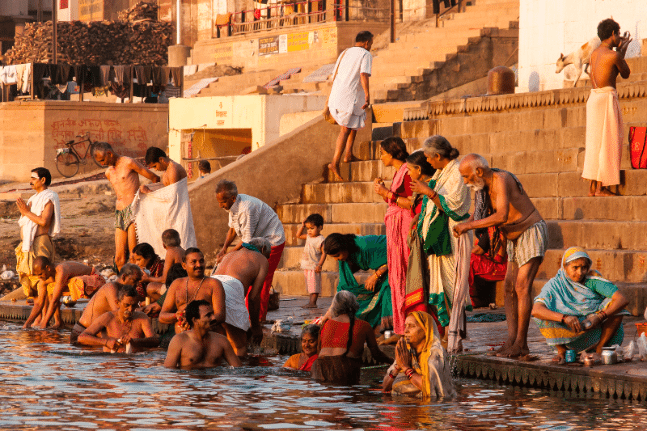
Bathing in the river is believed to cleanse sins and facilitate spiritual renewal. Temples, rituals, and festivals line its banks, reflecting its central role in daily and sacred life.

Cultural Significance

The Ganges influenced settlement patterns, agriculture, and trade. Cities like Varanasi became pilgrimage centers, integrating religious devotion with social and economic activity.

Symbolism and Myth

Personified as the goddess Ganga, the river embodies life-giving force, fertility, and divine protection, linking humans with cosmic order and spiritual continuity.
← The Ancient Science of Metallurgy and Weapon CraftingThe Lost Kingdom of the Scythians: Nomadic Warriors of the Steppe →
Featured
image_2026-06-06_173339440.png
June 6, 2026
The Viking Age Runestones: The Jelling Stones and the Christianization of Denmark
June 6, 2026
Read more →
June 6, 2026
image_2026-06-06_172957786.png
June 6, 2026
Ancient Egyptian Funerary Art: The Fayum Mummy Portraits
June 6, 2026
Read more →
June 6, 2026
image_2026-06-06_172922034.png
June 6, 2026
The Roman Theater of Aspendos: The Best Preserved Roman Stage
June 6, 2026
Read more →
June 6, 2026
image_2026-06-06_172834793.png
June 6, 2026
Ancient Greek Sanctuaries: The Oracle of the Dead at Ephyra
June 6, 2026
Read more →
June 6, 2026
image_2026-06-06_172801052.png
June 6, 2026
The Minoan Civilization: The Social Status of Women in Crete
June 6, 2026
Read more →
June 6, 2026
image_2026-06-06_172641628.png
June 6, 2026
Roman Military Strategy: The Use of the Testudo Formation
June 6, 2026
Read more →
June 6, 2026
read more

Powered by The archaeologist