In the ancient world, poison was one of the most feared and sophisticated tools of power. Long before modern chemistry, civilizations developed complex knowledge of toxic substances derived from plants, minerals, and animals. This early toxicology was often guarded as secret knowledge, passed down among healers, priests, royal servants, and assassins. Poisons were used not only to kill but also to manipulate, incapacitate, or protect rulers from assassination.
Ancient India’s Arthashastra describes poisons in remarkable detail, including methods of administration through food, drink, cosmetics, clothing, and even jewelry. Royal courts employed poison tasters and specialists trained to detect subtle signs of contamination. Similarly, in ancient China, texts documented toxic herbs and antidotes, while Daoist alchemists experimented with mercury and arsenic—sometimes with deadly consequences.
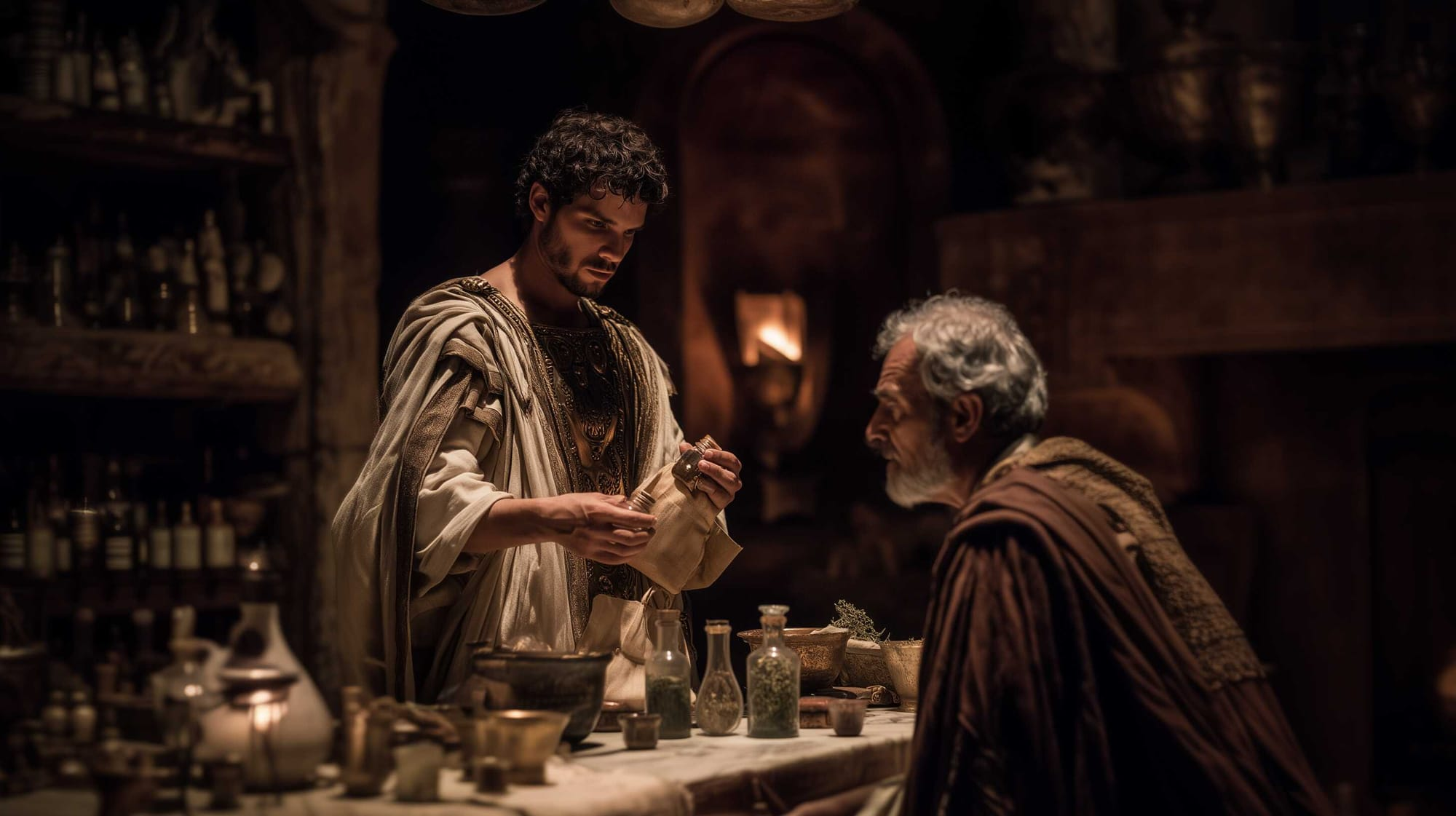
In the Greek and Roman worlds, poison played a central role in politics. Hemlock, the poison used to execute Socrates, was a legally sanctioned substance. Roman emperors such as Nero and Claudius were rumored to rely on poison experts like Locusta, who engineered tailored toxins for specific victims. Poison became a weapon of intrigue, allowing assassinations to appear as illness or natural death.
Knowledge of antidotes developed alongside poisons. Mithridates VI of Pontus famously consumed small doses of toxins daily to build immunity, a practice now known as mithridatism. His antidote formula, believed to contain dozens of ingredients, influenced medical traditions for centuries.
Poison mastery created an atmosphere of paranoia in royal courts. Meals were tested, kitchens guarded, and servants monitored. This fear shaped political culture, reinforcing secrecy, surveillance, and ritual purification. Poisons thus represent not only early scientific knowledge but also the darker side of power, where survival depended on mastering nature’s most lethal substances.