• MAIN PAGE
  • LATEST NEWS
    • Lost Cities
    • Archaeology's Greatest Finds
    • Underwater Discoveries
    • Greatest Inventions
    • Studies
    • Blog
  • PHILOSOPHY
  • HISTORY
  • RELIGIONS
    • Africa
    • Anatolia
    • Arabian Peninsula
    • Balkan Region
    • China - East Asia
    • Europe
    • Eurasian Steppe
    • Levant
    • Mesopotamia
    • Oceania - SE Asia
    • Pre-Columbian Civilizations of America
    • Iranian Plateau - Central Asia
    • Indus Valley - South Asia
    • Japan
    • The Archaeologist Editor Group
    • Scientific Studies
    • Aegean Prehistory
    • Historical Period
    • Byzantine Middle Ages
    • Predynastic Period
    • Dynastic Period
    • Greco-Roman Egypt
  • Rome
  • PALEONTOLOGY
  • About us
Menu

The Archaeologist

  • MAIN PAGE
  • LATEST NEWS
  • DISCOVERIES
    • Lost Cities
    • Archaeology's Greatest Finds
    • Underwater Discoveries
    • Greatest Inventions
    • Studies
    • Blog
  • PHILOSOPHY
  • HISTORY
  • RELIGIONS
  • World Civilizations
    • Africa
    • Anatolia
    • Arabian Peninsula
    • Balkan Region
    • China - East Asia
    • Europe
    • Eurasian Steppe
    • Levant
    • Mesopotamia
    • Oceania - SE Asia
    • Pre-Columbian Civilizations of America
    • Iranian Plateau - Central Asia
    • Indus Valley - South Asia
    • Japan
    • The Archaeologist Editor Group
    • Scientific Studies
  • GREECE
    • Aegean Prehistory
    • Historical Period
    • Byzantine Middle Ages
  • Egypt
    • Predynastic Period
    • Dynastic Period
    • Greco-Roman Egypt
  • Rome
  • PALEONTOLOGY
  • About us

The Trade Routes of the Phoenicians

December 26, 2025

Origins of Phoenician Trade
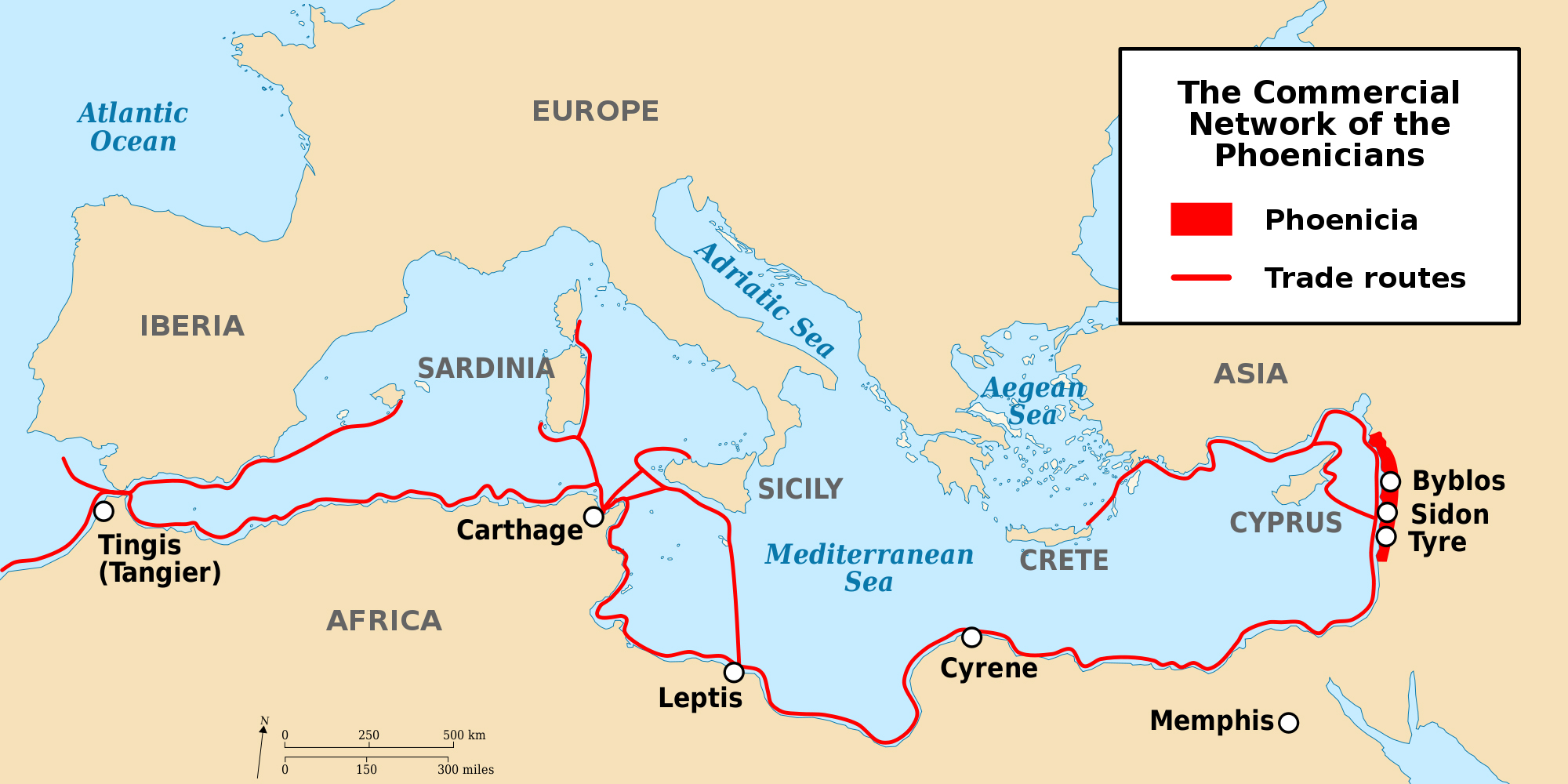
Phoenicia, located in modern-day Lebanon and Syria, flourished around 1500–300 BCE. Its coastal cities, such as Tyre, Sidon, and Byblos, became hubs of maritime trade, facilitating exchange between Mesopotamia, Egypt, and the western Mediterranean.

Maritime Expertise
Phoenicians were skilled sailors and shipbuilders. Their long, maneuverable ships enabled exploration, colonization, and trade over vast distances. Advanced navigation techniques, including the use of the stars and coastal landmarks, allowed them to traverse the Mediterranean safely.

Commodities and Influence
Phoenicians traded cedarwood, purple dye, glass, olive oil, and metals. Their trade networks spread not only goods but cultural and technological innovations, including the alphabet, which influenced Greek and Latin writing systems.

Colonization and Expansion
Phoenician merchants founded colonies, most notably Carthage, extending their economic and cultural influence. These settlements facilitated local trade and served as strategic points for long-distance commerce.

Legacy
Phoenician trade shaped the Mediterranean economy, culture, and communication systems. Their maritime prowess, commercial networks, and alphabet left a lasting legacy, influencing subsequent civilizations across Europe, Africa, and the Near East.
← The Influence of the Vedas on Hindu CivilizationThe Sacred Geometry of Ancient Temples →
Featured
image_2025-12-26_142742324.png
Dec 26, 2025
The Influence of the Vedas on Hindu Civilization
Dec 26, 2025
Read More →
Dec 26, 2025
image_2025-12-26_142623633.png
Dec 26, 2025
The Trade Routes of the Phoenicians
Dec 26, 2025
Read More →
Dec 26, 2025
image_2025-12-26_141148626.png
Dec 26, 2025
The Sacred Geometry of Ancient Temples
Dec 26, 2025
Read More →
Dec 26, 2025
image_2025-12-26_140534254.png
Dec 26, 2025
The Siege Warfare of the Assyrians
Dec 26, 2025
Read More →
Dec 26, 2025
image_2025-12-26_140331631.png
Dec 26, 2025
The Oracle Bones of Shang China
Dec 26, 2025
Read More →
Dec 26, 2025
image_2025-12-26_134900603.png
Dec 26, 2025
The Ancient Kingdom of Axum
Dec 26, 2025
Read More →
Dec 26, 2025
read more

Powered by The archaeologist