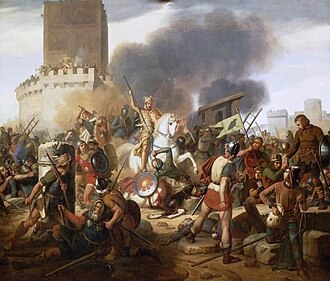
The Viking Siege of Paris: Archaeology of the 9th Century Conflict
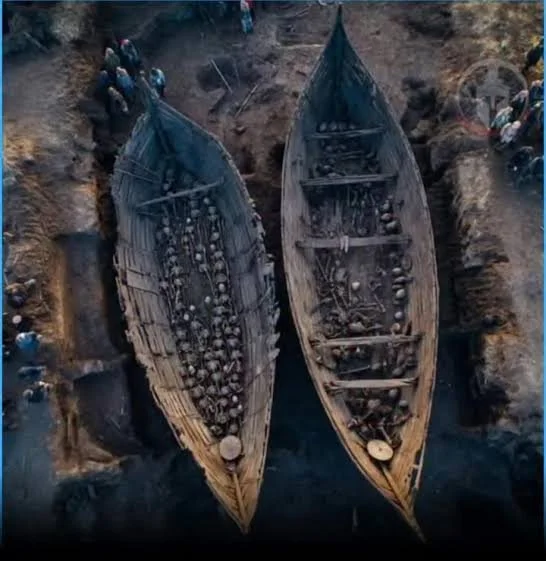
The Siege of Paris in 885–886 CE remains one of the most dramatic confrontations of the Viking Age. A massive fleet of hundreds of Viking ships, carrying an estimated 30,000 warriors, sailed up the Seine to challenge the Frankish Empire. Unlike the quick "hit-and-run" raids of previous decades, this was a prolonged, tactical siege that tested the limits of early medieval urban defense.
1. The Fortifications: The Île de la Cité
In the 9th century, Paris was largely confined to the Île de la Cité, an island in the middle of the Seine. Following earlier Viking raids, the Frankish king Charles the Bald had ordered the city’s Roman walls to be reinforced and new defenses to be built.
The Low Bridges: The most critical defense consisted of two bridges—the Grand Pont (North) and the Petit Pont (South)—that blocked the river. These bridges were fortified with wooden towers (châtelets) that prevented the Viking longships from sailing further inland.
Archaeological Traces: Excavations on the Île de la Cité have revealed traces of these late Carolingian reinforcements. Archaeologists have found evidence of deep pits and post-holes intended for massive defensive timbers, as well as the remains of the Roman stone walls that were frantically patched with rubble during the 9th-century incursions.
2. Viking Siege Technology and Tactics
The 885 siege marked a shift in Viking warfare from raiding to sophisticated siegecraft. According to the monk Abbo Cernuus, an eyewitness, the Vikings employed weapons typically associated with Roman or Byzantine warfare.
Battering Rams and Catapults: The Vikings constructed protective sheds (vineae) to move battering rams toward the city towers. They also used mangonels (catapults) to hurl stones into the city.
Fire Ships: In a desperate attempt to destroy the wooden Grand Pont, the Vikings filled three of their ships with dry wood and lit them aflame, drifting them toward the bridge. However, the ships ran aground before hitting their target—a moment captured in historical chronicles and supported by riverbed silt analysis showing 9th-century charcoal deposits.
3. The Archaeological Evidence of Conflict
While the wooden structures of 9th-century Paris have mostly rotted away, the "invisible" evidence of the siege remains in the soil.
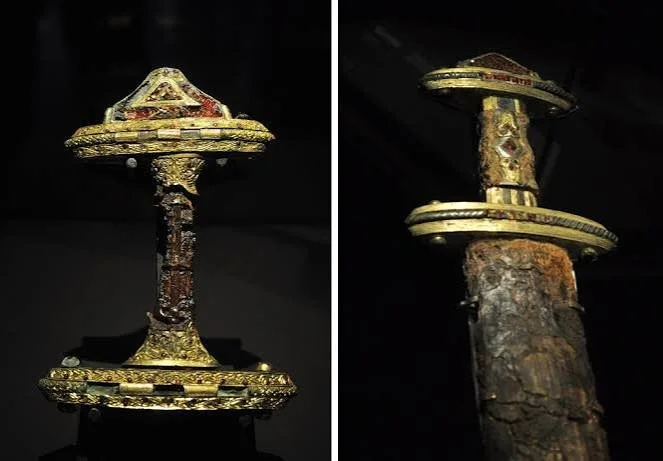
Weaponry Finds: Dredging operations in the Seine have recovered numerous Viking-style swords, spearheads, and battleaxes dating to the mid-to-late 9th century. Many of these items show signs of battle damage, such as notched blades or bent tips.
Arrowheads: Archaeologists have uncovered a high concentration of Carolingian and Scandinavian arrowheads near the site of the former bridges. The variation in tip design—some broad for tearing flesh, others narrow and "bodkin" shaped for piercing mail—highlights the intensity of the exchange.
The "Viking" Camp: While the primary Viking camp at Saint-Germain-des-Prés has been largely built over, small finds of Scandinavian-style jewelry and coins in the surrounding areas suggest the presence of a semi-permanent settlement during the eleven-month siege.
4. The Outcome: A Ransom of Gold
The siege ended not with a military breakthrough, but with a controversial political deal. Charles the Fat, the Frankish Emperor, arrived with a relief army but chose to negotiate rather than fight.
The Danegeld: Charles promised the Vikings 700 pounds of silver to leave Paris and allowed them to continue up the Seine to raid Burgundy, which was then in revolt.
Political Shift: This "cowardly" deal led to the eventual deposition of Charles the Fat and the rise of Odo, Count of Paris, whose heroic defense of the city laid the foundations for the future Capetian dynasty and the modern French state.