The Caral-Supe Civilization: The Oldest Urban Center in the Americas
While the great civilizations of the Maya, Aztecs, and Incas are household names, the foundations of complex society in the Americas were laid thousands of years earlier in the arid Norte Chico region of north-central Peru. The Caral-Supe civilization, which flourished between 3000 and 1800 BCE, represents the oldest known urban center in the Americas—thriving at the same time the Great Pyramids were being built in Egypt.
1. The Sacred City of Caral
Located in the Supe Valley, about 120 miles north of Lima, Caral is the most impressive of the approximately 30 major centers found in the region.
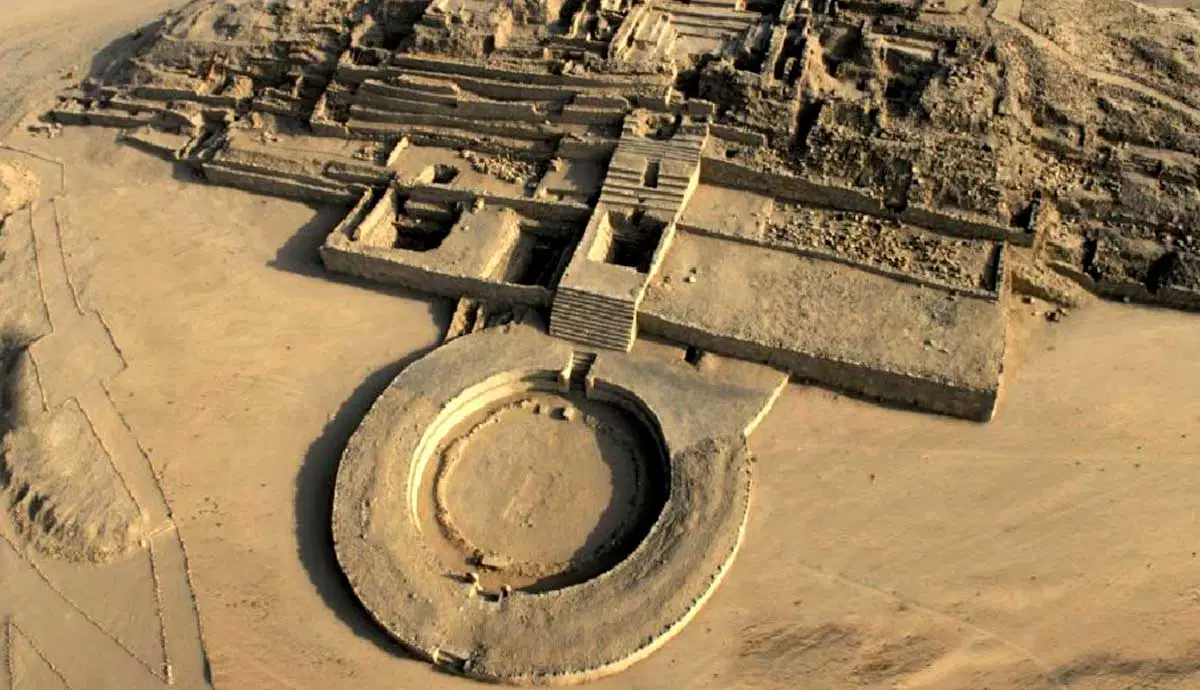
Monumental Architecture: The city spans over 150 acres and is dominated by six massive earth-and-stone platform mounds, known as pyramids. The largest, the Pirámide Mayor, stands nearly 60 feet tall and is as long as four football fields.
Circular Plazas: A signature feature of Caral-Supe architecture is the sunken circular plaza. These served as ceremonial and social hubs, likely used for religious rituals that unified the growing urban population.
A City Without Walls: Notably, Caral lacks defensive walls, battlements, or evidence of warfare. This suggests a civilization built on trade and religion rather than military conquest.
2. The Maritime-Foundations Theory
For decades, archaeologists believed that all great civilizations began with the surplus of a cereal grain (like wheat in Mesopotamia or maize in Mexico). Caral challenged this "breadbasket" model.
Cotton and Fish: The inhabitants of Caral did not rely on grain. Instead, they grew massive amounts of cotton, which they used to make sophisticated fishing nets.
Symbiotic Trade: They traded their cotton nets to coastal fishing villages in exchange for protein-rich seafood, such as anchovies and sardines. This "Maritime Foundation of Andean Civilization" allowed for a massive population explosion without traditional agriculture.
3. Scientific and Musical Achievement
The people of Caral were not just builders; they were sophisticated engineers and artists.
Quipu (The String Records): Archaeologists discovered a quipu (a series of knotted strings) at the site. This suggests that the complex record-keeping system famously used by the Incas 4,000 years later actually had its origins in Caral.
Musical Hoards: One of the most stunning finds was a hoard of 32 flutes made of condor and pelican bones, and 38 cornets made of deer and llama bones. This indicates that music played a central role in their religious and social ceremonies.
Earthquake Engineering: To protect their massive pyramids, the builders used "shicras"—woven reed bags filled with stones. These functioned as a rudimentary seismic mitigation system, allowing the structures to shift slightly during tremors without collapsing.
4. The Enigma of the Decline
Around 1800 BCE, the Caral-Supe civilization began to decline. The cities were abandoned, and the population moved further north and into the highlands.
Climate Change: Many researchers believe a series of prolonged droughts, combined with El Niño-driven flooding and sandstorms, choked the irrigation canals and made the Supe Valley uninhabitable.
Tectonic Shifts: Evidence suggests that massive earthquakes may have destabilized the landscape, causing mountain landslides that buried fertile coastal lands.