The Temple of Solomon: Searching for Physical Evidence in Jerusalem
The Temple of Solomon, also known as the First Temple, is described in the Hebrew Bible as a magnificent structure built by King Solomon in the 10th century BCE on Mount Moriah. It served as the spiritual and political center of ancient Israel until its destruction by the Babylonians in 586 BCE. Despite its historical and religious significance, finding direct physical evidence of the structure remains one of the most complex challenges in biblical archaeology.
1. The Archaeological Barrier: The Temple Mount
The primary reason for the lack of direct evidence is the site itself. The First Temple is believed to have stood on the Temple Mount (Har HaBayit) in the Old City of Jerusalem.
Continuous Use: The site has been built over repeatedly. King Herod the Great radically transformed the topography in the 1st century BCE to build the Second Temple, and today, the site is home to the Dome of the Rock and the Al-Aqsa Mosque.
Political and Religious Sensitivity: Because the Temple Mount is a holy site for Jews, Christians, and Muslims, large-scale archaeological excavations on the platform itself are strictly prohibited.
The Second Temple Overhang: Herod’s massive retaining walls (including the Western Wall) likely encased or destroyed any remaining surface-level foundations of Solomon’s earlier structure.
2. Indirect Evidence: "Proxies" of the First Temple
Since archaeologists cannot dig under the Temple Mount, they look for "proxies"—contemporary structures or artifacts that reflect the architectural and cultural world of 10th-century Jerusalem.
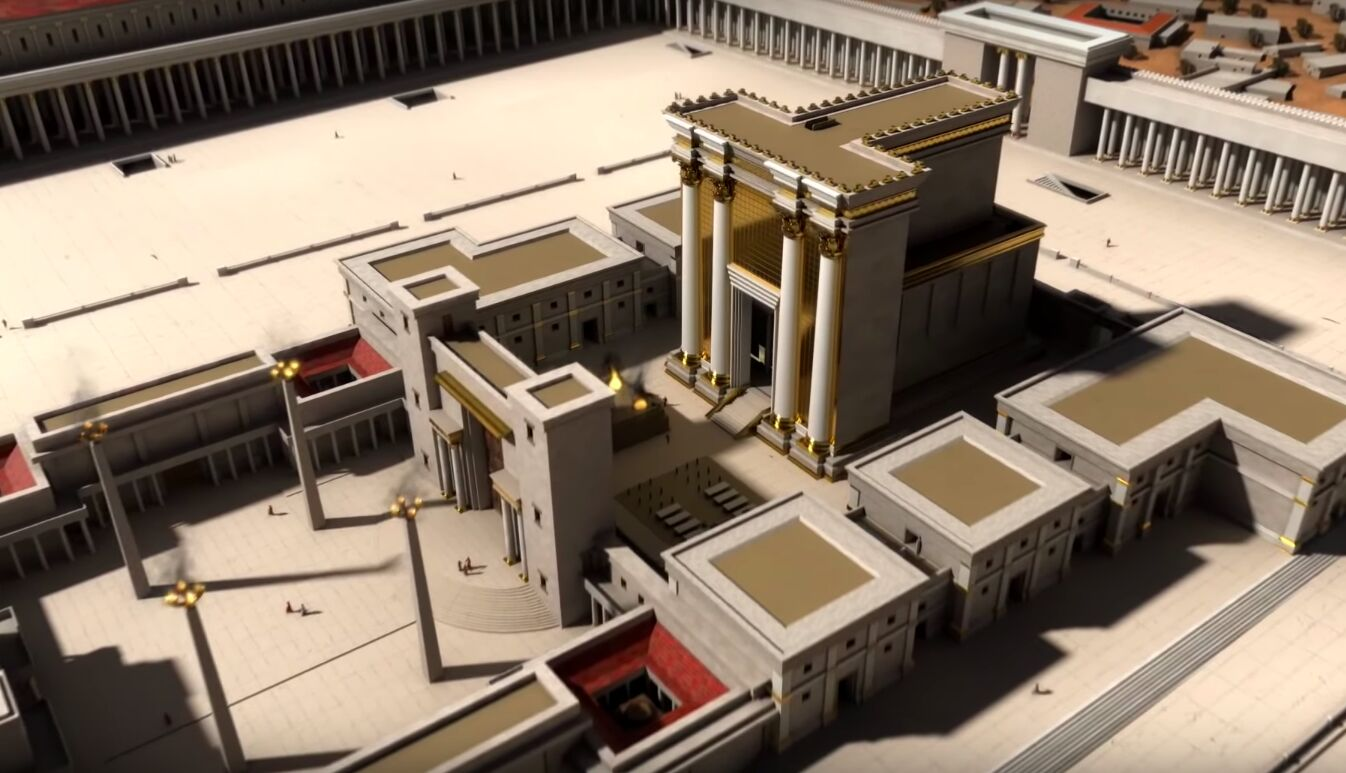
The "Ain Dara" Temple: In northern Syria, archaeologists discovered a temple at Ain Dara that dates to the same period. It shares a striking "tripartite" layout with the biblical description of Solomon’s Temple: a porch (ulam), a main hall (heikhal), and a "Holy of Holies" (debir).
Proto-Aeolic Capitals: Distinctive stone capitals (the tops of columns) featuring stylized palm fronds have been found in the City of David and at other royal sites like Hazor and Megiddo. These represent the "Solomonic" architectural style mentioned in the Bible.
The Ophel Excavations: Just south of the Temple Mount, archaeologists like Eilat Mazar have uncovered massive 10th-century BCE walls and a gatehouse. Some argue these are part of the royal fortifications built by Solomon to connect his palace to the Temple.
3. The Temple Mount Sifting Project
In 1999, unauthorized construction on the Temple Mount resulted in thousands of tons of ancient soil being dumped in the Kidron Valley. Since 2004, the Temple Mount Sifting Project has been systematically washing this "debris" to recover artifacts.
First Temple Period Finds: While no "building blocks" of the temple were found, the project has recovered:
Seal Impressions (Bullae): Clay seals belonging to high-ranking officials mentioned in the Bible.
Weights: Stone scales used for trade, indicating a sophisticated central administration.
Pottery: Shards dating back to the Iron Age II (10th–6th centuries BCE), proving human activity on the Mount during the First Temple era.
4. Technical Challenges and the "Minimalist" Debate
The search for Solomon’s Temple is at the center of a major debate in archaeology between "Maximalists" (who believe the biblical account is largely historical) and "Minimalists" (who believe the United Monarchy was a much smaller, less grand entity).
The Radiocarbon Problem: Determining the exact date of 10th-century structures is difficult because of a "plateau" in the radiocarbon calibration curve, leading to a margin of error that covers several decades.
Absence of Evidence vs. Evidence of Absence: Archaeologists caution that the lack of a "foundation stone" with Solomon’s name on it does not mean the building didn't exist; rather, it reflects the total destruction of the site and the limitations of modern access.