The Varangian Guard was one of the most elite and feared military units in history. Serving as the personal bodyguards to the Byzantine Emperors in Constantinople (the "Queen of Cities"), these Northmen traded the cold fjords of Scandinavia for the golden palaces of the East.
Their story is a fascinating blend of archaeology, Norse sagas, and Byzantine court records, detailing how "barbarians" from the north became the most trusted protectors of the Roman successors.
1. The Birth of the Guard: The 6,000-Man Gift
The Guard was officially formed in 988 CE during the reign of Emperor Basil II (the "Bulgar-Slayer").
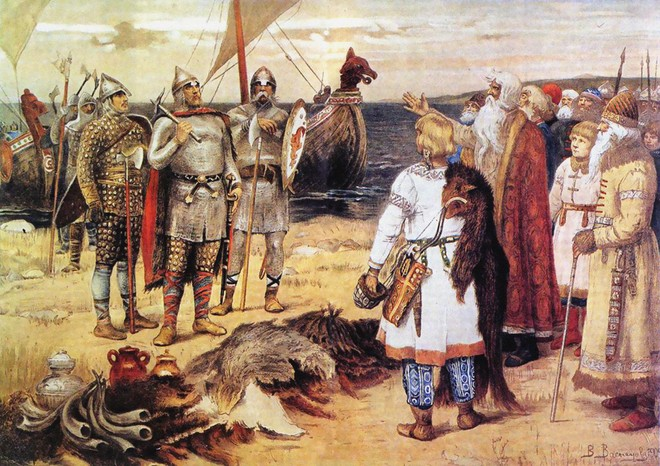
The Deal: Facing a massive rebellion, Basil turned to the Kievan Rus’ prince, Vladimir the Great. In exchange for the hand of the Emperor's sister, Anna, in marriage, Vladimir sent 6,000 Viking warriors to Constantinople.
Why Vikings? Basil II distrusted his own Greek subjects, who were prone to political intrigue and coups. The Northmen, however, were famously loyal to the man who paid them and were largely indifferent to local Byzantine politics.
2. The Weapon of Choice: The Dane Axe
The Varangians were known to the Byzantines as the Pelekyphoroi—the "Axe-bearers." * The Great Axe: Their primary weapon was the two-handed Dane Axe, which could be up to 1.5 meters long. It was capable of cleaving through a horse’s head or a man's shield with a single blow.
Psychological Warfare: Clad in heavy mail and carrying their massive axes, the sight of a wall of Varangians was often enough to break the morale of enemy forces before the fighting even began.
3. Life in Miklagard: "The Great City"
The Vikings called Constantinople Miklagard. For a warrior from a small village in Norway or Sweden, the city was a sensory overload of marble, gold, and silk.
The Guard’s Perks: They were paid astronomical sums of gold. Beyond their salary, they had the "Right of the Palace"—the privilege of plundering the Emperor’s treasury for as much gold as they could carry in their hands upon the death of a ruler.
The "Wine-Bags": Byzantine writers often looked down on the Varangians' heavy drinking and boisterous behavior, but they never questioned their ferocity in battle.
4. The Graffiti of Hagia Sophia
Archaeology has provided "first-hand" evidence of the Varangians' presence in the heart of the city.
The Runic Inscriptions: High in the gallery of the Hagia Sophia, the great cathedral of Constantinople, scholars discovered 9th-century runic graffiti.
"Halfdan was here": One inscription, worn down by centuries of hands, simply reads "Halfdan..." It is a poignant reminder that these elite guards were often bored soldiers, passing the time during long church services by carving their names into the marble.
5. Famous Members: Harald Hardrada
Perhaps the most famous Varangian was Harald Sigurdsson, later known as Harald Hardrada ("The Hard Ruler").
The Mercenary General: Harald fled Norway and served in the Guard for a decade (c. 1034–1043). He fought in Sicily, North Africa, and Jerusalem, accumulating a hoard of gold so large that it took several ships to transport it back to Scandinavia.
From Guard to King: Using his Byzantine wealth, Harald eventually became King of Norway. His death at the Battle of Stamford Bridge in 1066 is often cited as the official end of the Viking Age.
6. The English Transition
After the Norman Conquest of England in 1066, the composition of the Guard changed dramatically.
The Anglo-Saxon Influx: Thousands of displaced Anglo-Saxons fled England to avoid Norman rule. Because they shared a similar Germanic culture and axe-wielding tradition with the Northmen, they were recruited into the Varangian Guard in massive numbers.
New England: By the late 11th century, the Guard was increasingly "English," even founding a settlement on the Black Sea coast which they allegedly named "Nova Anglia" (New England).
7. The End of the Guard
The Varangian Guard served the Empire for over 400 years, but their power waned as the Byzantine Empire’s treasury emptied.
1204 CE: During the Fourth Crusade, the Varangians were among the few defenders who stayed at their posts to fight the Latin crusaders who breached the walls of Constantinople.
Disappearance: They were mentioned sporadically until the late 14th century, but by then, they were a ceremonial relic of a once-unstoppable force.
The Varangian Guard represents the ultimate Viking success story: men who traveled thousands of miles to find fortune, leaving their marks on the walls of the world's most beautiful cathedral and serving as the iron shield of a dying Empire.