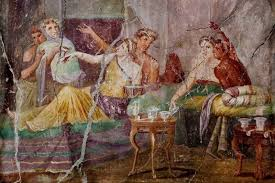
To the ancient Romans, wine was not a luxury—it was a necessity of life, consumed by everyone from the Emperor to the enslaved. However, if you were to taste a glass of authentic Roman vinum today, you might not even recognize it as wine. It was a thick, pungent, and highly alcoholic substance that was almost never drunk "neat."
Archaeology and ancient texts like those by Pliny the Elder and Columella have allowed modern researchers to recreate the complex viticulture of the Roman Empire.
1. The Terroir: Smoked and Salted
The Romans were the first to classify "grand cru" vineyards. The most famous was Falernian, grown on the slopes of Mount Falernus. It was said to be so strong it could be set on fire.
The Sea Water Secret: In areas like Kos and Rhodes, Romans added sea water to the must (unfermented grape juice). This acted as a preservative and, according to ancient tasters, "sharpened" the sweetness of the grapes.
The Fumarium: To accelerate the aging process, Romans would place wine jars in a heated chamber called a fumarium. This gave the wine a smoky, charred flavor that was highly prized.
2. Fermentation in Clay: The Dolium
Unlike the oak barrels used in modern winemaking, the Romans fermented their wine in massive clay jars called Dolia.
The Burial Method: These jars were often buried up to their necks in the ground (dolia defossa) to maintain a constant, cool temperature during the long fermentation process.
The Lining: To make the porous clay waterproof, the interiors were coated with pitch (resin). This imparted a strong, pine-like flavor similar to modern Greek Retsina.
3. The Art of the Blend: Mulsum and Conditum
Because Roman wine was often harsh, the real "flavoring" happened at the table. Drinking wine undiluted (merum) was considered a sign of "barbarism" or chronic alcoholism.
Mulsum: A popular aperitif made by mixing four parts wine with one part honey. It was served at the start of a banquet to stimulate the appetite.
Conditum Paradoxum: A "spiced wine" that included honey, pepper, mastic, laurel, saffron, and even date pits. This created a complex, syrupy drink that masked any bitterness from the pitch-lined jars.
4. The Flora: Lead and Preservatives
Archaeological analysis of Roman wine dregs has revealed a darker side to their chemistry.
Defrutum and Sapa: To sweeten and preserve wine, Romans boiled down unfermented grape juice in lead vessels to create a thick syrup. This created lead acetate, also known as "sugar of lead." While it made the wine taste delicious and prevented it from turning to vinegar, it likely contributed to chronic lead poisoning among the elite.
Herbal Infusions: They also added preservatives like wormwood, myrrh, and iris to prevent the wine from spoiling during long-distance shipping across the Empire.
5. Recreating the "Dregs": The Pompeii Experiment
Archaeologists at Pompeii have used "experimental archaeology" to bring Roman wine back to life. By studying the root casts found in the ash, they replanted the exact ancient grape varieties—such as Piedirosso and Scythe—using the same spacing and trellising methods used 2,000 years ago.
The Result: Modern recreations like Villa dei Misteri show that Roman wine was likely heavy, floral, and deeply amber in color, rather than the clear reds and whites we prefer today.
6. Posca: The Soldier's Drink
While the elite drank honeyed Falernian, the Roman legions conquered the world on Posca. This was a mixture of sour wine (or vinegar) and water, sometimes flavored with herbs.
The Utility: It wasn't for the taste; the acidity of the vinegar killed bacteria in the water, making it safe for soldiers to drink from local streams. It was the "Gatorade" of the ancient world—providing hydration, Vitamin C, and a safe energy boost.
Roman wine was a sensory experience that combined the sweetness of honey, the heat of pepper, the smokiness of the fumarium, and the resinous tang of pitch. It was a drink designed to last, to travel, and to reflect the status of the person holding the silver cup.